


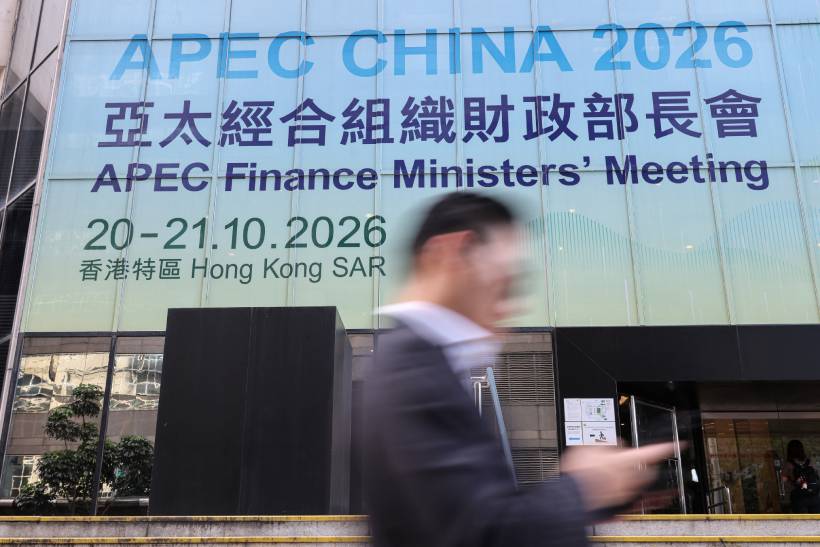
Finance ministers from the Asia-Pacific Economic Cooperation (APEC) forum have agreed to strengthen economic policy coordination and financial systems as the region faces mounting uncertainty from geopolitical conflicts, economic fragmentation and rapid technological change.
Chinese Finance Minister Lan Foan said on Wednesday that member economies had agreed to improve communication and coordination on macroeconomic policies to address external risks and protect regional economic stability.
“All members agreed that we should enhance the soundness of our macroeconomic policies,” Lan said following the meeting.
The agreement reflects growing concern among Asia-Pacific economies about their exposure to global economic shocks. Governments are seeking to maintain sustainable public finances, strengthen domestic demand and identify new sources of growth while navigating geopolitical tensions and the uncertain economic effects of artificial intelligence.
Stay ahead of the geopolitical week.
MD Briefing delivers expert analysis across five global fronts — the Indo-Pacific, energy, geoeconomics, European security, and the Middle East — every Monday morning. Free.
Why Is APEC Emphasising Economic Coordination?
APEC’s latest discussions focused on strengthening fiscal and financial systems to help member economies withstand uncertainty. Better coordination could help governments respond more effectively to external shocks, particularly when trade disruptions, geopolitical tensions and financial volatility threaten regional growth.
However, closer policy coordination does not necessarily mean that members will adopt identical economic strategies. APEC economies have different fiscal capacities, development priorities and levels of exposure to global markets. Their ability to translate shared commitments into practical measures will therefore remain important.
Ministers also highlighted the need to balance economic support with fiscal discipline. Lan said policies supporting households and investment in people could increase consumer spending, strengthen domestic demand and improve productivity. At the same time, governments must ensure that public finances remain sustainable.
The challenge is to support economic activity without allowing spending commitments and financial vulnerabilities to undermine long-term stability.
Can Artificial Intelligence Deliver New Sources of Growth?
Artificial intelligence and other emerging technologies featured prominently in the discussions, with Lan identifying their potential to raise productivity and create new opportunities for economic growth.
The potential benefits, however, are not guaranteed. Singapore’s Second Minister for Finance, Jeffrey Siow, warned that global growth faced risks from prolonged conflicts, worsening geopolitical fragmentation and the possibility that productivity gains from AI would fall short of expectations.
His remarks highlight a central uncertainty for policymakers: although AI could transform industries and improve efficiency, its economic benefits may be unevenly distributed. Smaller businesses, in particular, may lack the financing, technical expertise and workforce skills needed to adopt new technologies.
Siow said APEC could help small and medium-sized enterprises make greater use of AI by connecting industry partners, technology providers and training institutions.
Such cooperation could help businesses access technical support and develop the skills needed to benefit from digital transformation. Its effectiveness will depend on whether these initiatives translate into affordable tools, practical training and wider access to financing.
Why Is Digital Infrastructure Financing Important?
Alongside the ministers’ discussions, APEC released a policy statement on financing digital infrastructure across the Asia-Pacific region. The initiative aims to strengthen regional trade, improve economic connectivity and expand commercial opportunities.
The statement encouraged member economies to develop digital infrastructure that is accessible, secure, reliable and resilient. It also called for greater digital literacy, improved interoperability and stronger cross-border digital connectivity.
These priorities are increasingly important as businesses depend on digital systems to manage supply chains, access markets and conduct transactions across national borders. Uneven infrastructure and incompatible systems can raise costs, restrict participation and limit the benefits of regional economic integration.
The statement also outlined complementary roles for governments, private companies and multilateral development banks.
Governments were encouraged to establish supportive regulatory and policy environments, while private companies were expected to contribute capital and develop new financing methods. Multilateral development banks could help prepare investment-ready projects and attract additional funding.
This division of responsibilities is intended to mobilise investment while reducing risks associated with complex infrastructure projects. However, financing gaps, regulatory differences and unequal technological capacity could still slow implementation across the region.
What Comes Next for Asia-Pacific Economies?
The meeting also produced outcomes concerning financial access, opportunities for young finance professionals and fiscal policies intended to support households. Together, these priorities suggest that APEC members are seeking to connect macroeconomic stability with investment, technological development and broader economic participation.
The wider test will be whether these commitments lead to measurable improvements in resilience and productivity. Stronger coordination may help governments manage shared risks, but it cannot eliminate the effects of prolonged conflicts, geopolitical divisions or an unexpectedly weak return on technological investment.
For developing economies and smaller businesses, access to affordable finance, reliable digital infrastructure and relevant skills will be particularly important. Without these foundations, the benefits of AI adoption and regional connectivity could remain concentrated among larger companies and more advanced economies.
APEC’s latest agreement provides a framework for cooperation, but its impact will depend on how member economies implement the commitments and coordinate their domestic priorities. In an increasingly uncertain global economy, the region’s ability to turn shared policy goals into practical action could prove as important as the agreement itself.
With information from Reuters.
