


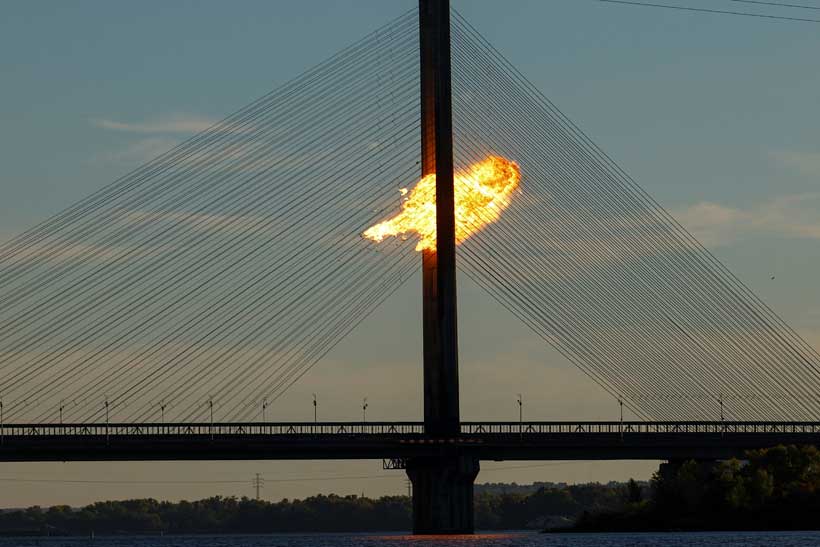
Russian strikes killed four people in Ukraine, including two elderly residents in the northeastern Kharkiv region, as attacks targeted energy infrastructure and civilian sites across the country. The strikes came hours after US President Donald Trump urged Kyiv to agree to peace terms with Moscow, highlighting the growing pressure on Ukraine as diplomatic efforts continue.
Ukrainian police said two people were killed in the capital, Kyiv, after a drone struck an apartment building. The other victims were an 83-year-old man and an 81-year-old woman killed outside Kharkiv.
The overnight attacks also damaged energy facilities in several regions, raising concerns about the security of Ukraine’s electricity supply as winter approaches. Meanwhile, relations between Washington and Kyiv have come under renewed strain over military support and the handling of warnings about incoming Russian attacks.
Why Is Russia Intensifying Its Attacks Before Winter?
Ukrainian Prime Minister Sergii Koretskyi said Russian forces targeted power facilities in the Kyiv, Volyn, Odesa and Mykolaiv regions. Civilian businesses in at least two other regions were also attacked.
Stay ahead of the geopolitical week.
MD Briefing delivers expert analysis across five global fronts — the Indo-Pacific, energy, geoeconomics, European security, and the Middle East — every Monday morning. Free.
A university building and a shopping centre in central Ukraine were struck, while injuries were reported in the Poltava, Lviv, Cherkasy and Chernihiv regions.
Russia’s Defence Ministry said its forces had struck a warehouse complex used to store drones in Poltava, as well as an electrical substation supplying Ukraine’s defence and industrial sectors and logistics facilities in Kyiv. Moscow also claimed to have hit a ship carrying military cargo to Ukraine as it headed towards the port of Odesa.
The latest attacks come amid a broader Russian campaign against Ukraine’s energy infrastructure. Repeated strikes on electricity generation, transmission and distribution facilities threaten to leave households and businesses vulnerable to power shortages during the colder months, when demand for heating and electricity rises.
For Kyiv, protecting the energy network is both a humanitarian priority and a military challenge. Disruptions can affect hospitals, essential services, industrial production and the logistical systems needed to sustain the war effort.
Can Trump Pressure Kyiv Into Accepting a Deal?
Trump urged Ukraine on Tuesday to reach an agreement to end the conflict, arguing that Moscow wanted a settlement. His comments come as Washington continues efforts to negotiate an end to the war, which has lasted more than four years.
However, the latest attacks underline the difficulties facing any diplomatic initiative. While negotiations may create opportunities to reduce the fighting, continued Russian strikes place additional pressure on Ukraine and complicate efforts to establish the conditions for a lasting settlement.
Relations between the United States and Ukraine have also deteriorated over military coordination. Ukrainian President Volodymyr Zelenskiy has reported a pause in advance warnings of missile strikes and limitations affecting Elon Musk’s Starshield satellite communications system.
Such developments are particularly significant for Ukraine, which relies on Western assistance and technological support to strengthen its air defences, maintain communications and respond to Russian attacks.
Any peace agreement would also need to address the security arrangements that Kyiv believes are necessary to prevent renewed hostilities. Pressure to accept terms without credible safeguards could create further tensions between Ukraine and its Western partners.
What Could the Putin-Witkoff Meeting Achieve?
US special envoy Steve Witkoff was due to meet Russian President Vladimir Putin in St Petersburg on Wednesday for discussions on Ukraine. The meeting could offer another opportunity to explore possible terms for ending the conflict, although its outcome remains uncertain.
The diplomatic activity is taking place alongside continued military operations. The governor of Russia’s Leningrad region, which surrounds St Petersburg, said Russian forces had shot down three drones over the region on Wednesday.
The incident illustrates how the conflict continues to pose security risks beyond the immediate front lines, even as diplomatic contacts proceed.
For Washington, the challenge is to translate pressure on both sides into an agreement that can be implemented. For Moscow, battlefield operations may provide leverage in negotiations. For Kyiv, the central question remains whether a settlement can protect its sovereignty and provide credible guarantees against future attacks.
Why Does the Latest Escalation Matter?
The combination of renewed attacks on energy infrastructure and high-level diplomatic engagement highlights the competing pressures shaping the war. Ukraine faces the immediate task of protecting civilians and maintaining essential services through winter, while its leadership must assess the terms and risks of a possible settlement.
The attacks also demonstrate that diplomatic momentum does not necessarily translate into a reduction in violence on the ground. Until negotiations produce concrete commitments and a workable framework for ending hostilities, Ukraine’s energy system and civilian population are likely to remain exposed to further attacks.
The central test for Trump’s peace initiative will therefore be whether it can move beyond calls for an agreement and produce terms that both sides can accept and sustain. For Ukraine, the urgency of winter preparations makes that challenge even more consequential.
With information from Reuters.
