


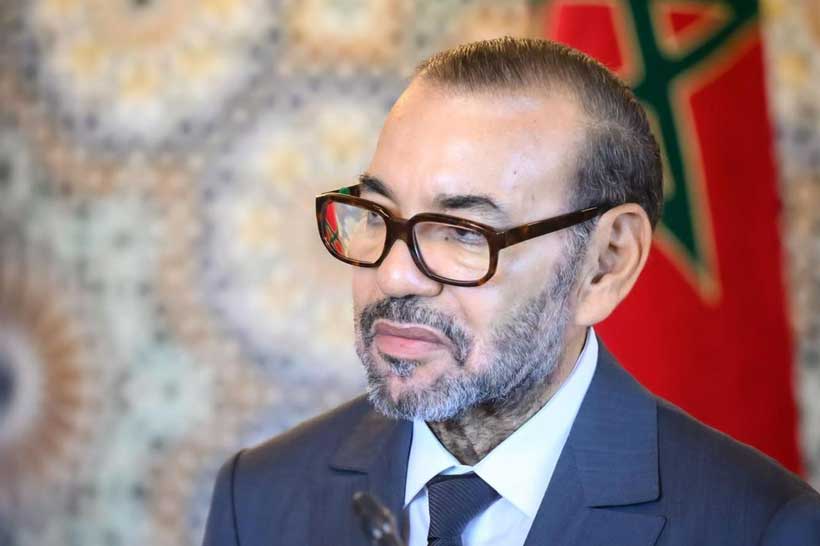
Under King Mohammed VI, Morocco has pursued a foreign policy consistently guided by the imperative of preserving its sovereign freedom of action in an international order marked by profound inequalities of power. From Washington to Paris, Madrid, Berlin and Stockholm, successive diplomatic crises have tested the Kingdom’s ability to defend its fundamental interests while sustaining partnerships essential to its security and economic development. The King’s management of these challenges has progressively established a distinctive practice of statecraft, combining strategic continuity, diplomatic judgment and the development of national capabilities.
The political conviction underpinning this approach was expressed with particular clarity at the Morocco–Gulf Cooperation Council Summit in Riyadh on April 20, 2016, when King Mohammed VI declared that Morocco was free in its decisions and choices and was not the exclusive preserve of any country. This affirmation reflected a longstanding principle of royal diplomacy, according to which the Kingdom’s alliances and international commitments remain compatible with the independence of judgment required to defend its sovereign interests.
This position has acquired particular significance in relations with stronger powers. Royal diplomacy has sought to influence their calculations by making Morocco’s sovereign interests inseparable from the wider political, economic and security considerations governing bilateral relations. Such an approach constitutes the reengineering of power relations: the capacity to modify the strategic calculations of partners without attempting to overturn the material hierarchy between states.
The King’s foreign policy has reinforced this diplomatic approach through the development of infrastructure, industrial capabilities, intelligence cooperation and African connectivity. These assets contribute to active functional sovereignty, allowing Morocco to convert its geographic position and national resources into strategic influence.
Stay ahead of the geopolitical week.
MD Briefing delivers expert analysis across five global fronts — the Indo-Pacific, energy, geoeconomics, European security, and the Middle East — every Monday morning. Free.
The Moroccan Sahara occupies a central place in this architecture. In his address of August 20, 2022, King Mohammed VI established the Sahara issue as a defining criterion for assessing Morocco’s international partnerships. Territorial integrity thus acquired an explicit place in the hierarchy of interests governing relations with foreign powers, regardless of their historical importance or economic weight.
The diplomatic crises of the past two decades reveal how these principles have operated under different distributions of power.
Washington and Madrid — Sovereignty within the Limits of Power
The Moroccan-American crisis of 2013 confronted King Mohammed VI with a proposal from Washington to extend the mandate of the United Nations Mission for the Referendum in Western Sahara (MINURSO) to include human rights monitoring. For Rabat, the initiative threatened an arrangement central to the political management of the Sahara dispute.
The United States occupied a decisive position in the Security Council and remained Morocco’s principal security partner. The Kingdom had obtained Major Non-NATO Ally status in 2004, while the bilateral free trade agreement, implemented in 2006, reinforced extensive economic and strategic cooperation. Counterterrorism, intelligence sharing and regional security gave both governments substantial reasons to preserve the relationship.
Rabat opposed the proposed mandate extension while maintaining diplomatic engagement with Washington. Security Council Resolution 2099, adopted in April 2013, did not include the contested provision. The King’s visit to Washington that November reaffirmed the partnership with President Barack Obama. Their joint statement recognized Morocco’s autonomy initiative as serious, realistic and credible within the United Nations political process.
Morocco had exercised non-confrontational diplomatic deterrence, defending a fundamental interest while preserving the strategic foundations of its American alliance.
Washington’s recognition of Moroccan sovereignty over the Sahara in December 2020, under President Donald Trump, belonged to a different geopolitical sequence, involving wider regional arrangements and the resumption of Moroccan-Israeli relations. Its connection with 2013 lay in the continuity of the King’s sovereign objective and his sustained engagement with successive American administrations. The preservation of the alliance had allowed Morocco to pursue its interests until a different political configuration emerged.
The confrontation with Spain over Leila Island, known as Perejil, in July 2002 presented a more immediate military danger. The island possessed limited strategic value, but competing sovereignty claims threatened to transform a localized incident into a confrontation between neighboring states.
Spain’s conventional military superiority, reinforced by its membership of NATO and the European Union, made prolonged escalation particularly costly for Morocco. American mediation under Secretary of State Colin Powell restored the previous situation without resolving the underlying sovereignty disagreement.
The King’s management of the episode preserved Morocco’s position while containing the risks of military escalation. The governing calculation concerned the relative importance of the territorial claim, the costs of confrontation and the preservation of future diplomatic options.
Washington and Madrid demanded different responses. The American dispute required political resistance within an established alliance; the Spanish confrontation required military restraint without abandonment of the sovereign claim. Both demonstrated the importance of adjusting diplomatic instruments to the available balance of power.
France under Macron — Strategic Patience and the Reassessment of Historical Privilege
The deterioration of Franco-Moroccan relations between 2021 and 2024 affected a partnership sustained by historical familiarity, economic integration and extensive institutional ties. Visa restrictions, allegations concerning Pegasus surveillance software, denied by Morocco, and disagreements over the Sahara progressively weakened political confidence.
These tensions coincided with France’s declining political and military influence in the Sahel and Morocco’s expanding African partnerships. The regional environment was changing, placing increasing pressure on the historical assumptions governing relations between Paris and Rabat. King Mohammed VI maintained Morocco’s sovereign position through a prolonged period of diplomatic distance. Commercial, social and security ties nevertheless preserved the foundations of cooperation.
Royal diplomacy exercised strategic control of diplomatic time. Rabat could sustain political disagreement while retaining the possibility of rapprochement as French strategic calculations evolved. This required both diplomatic patience and sufficient alternatives to avoid a settlement dictated by the urgency of reconciliation.
In July 2024, President Emmanuel Macron informed King Mohammed VI that France considered the present and future of Western Sahara to lie within the framework of Moroccan sovereignty. His state visit to Morocco in October confirmed the rapprochement and opened a renewed phase of cooperation.
The French decision emerged amid a broader reassessment of Paris’s African interests and regional partnerships. Morocco’s diplomatic achievement lay in maintaining the continuity of its sovereign objective throughout the dispute and securing renewed cooperation after France had revised a position that had become a persistent source of disagreement.
This experience gives substance to crisis-transformation diplomacy. The settlement altered the political assumptions governing the partnership, placing relations with France on terms more consistent with Morocco’s contemporary strategic position.
Historical privilege had ceased to provide sufficient grounds for political accommodation on matters of territorial integrity. France remained an essential partner, but the relationship increasingly depended on the convergence of strategic interests rather than the inheritance of diplomatic familiarity.
Spain under Sánchez — Geography and the Politics of Interdependence
The Moroccan-Spanish crisis of 2021 exposed the vulnerabilities of a relationship shaped by geographical proximity and extensive mutual dependence. Madrid’s decision to admit Polisario Front leader Brahim Ghali for medical treatment, under circumstances Rabat considered incompatible with bilateral trust, provoked a serious diplomatic confrontation.
The subsequent migration events in Ceuta demonstrated how quickly political disagreements could affect border management and vulnerable populations. Yet the underlying relationship rested on interests neither government could readily disregard.
Morocco and Spain occupy a strategic space connecting the Atlantic and Mediterranean. Maritime commerce, migration, energy exchanges, intelligence cooperation and cross-border economic networks have made their security and prosperity increasingly interdependent.
Under King Mohammed VI, Morocco has strengthened the economic and security functions through which this geography acquires political value. The resulting engineering of interdependence gives the Kingdom greater relevance to its partners by developing capabilities whose disruption would impose substantial costs. Such influence remains reciprocal and depends on the reliability of the relationships sustaining it.
In March 2022, Prime Minister Pedro Sánchez endorsed Morocco’s autonomy initiative as the most serious, realistic and credible basis for resolving the Sahara dispute. His visit to Rabat the following month established a new framework for political consultation and bilateral cooperation.
Spain’s decision represented a significant diplomatic realignment, although it did not constitute formal legal recognition of Moroccan sovereignty over the Sahara. Nor did the rapprochement resolve the separate questions of Ceuta, Melilla or maritime delimitation.
The strategic significance of this development extends to Morocco’s capacity to organize regional connectivity. The StraitBelt Doctrine, which I developed in earlier studies, examines how the Kingdom can translate its Atlantic and Mediterranean position into geopolitical influence through ports, logistics networks, energy corridors and security cooperation.
King Mohammed VI’s Atlantic initiatives, African economic engagement and infrastructure policies have progressively strengthened the material foundations of this orientation. Their diplomatic value derives from Morocco’s growing contribution to the circulation of goods, energy and strategic services across interconnected regional spaces.
The durability of this influence will depend on competitiveness, technological competence and institutional reliability. Geography provides opportunities; the capacity to sustain essential regional functions gives them strategic weight.
Germany and Sweden — Rebuilding Confidence and Preventing Diplomatic Precedents
The diplomatic crisis with Germany in 2021 demonstrated the limits of economic cooperation when political confidence deteriorates. Disagreements intensified following American recognition of Moroccan sovereignty over the Sahara, alongside differences concerning Libya and security cooperation.
In March 2021, Morocco suspended institutional contacts with the German embassy and subsequently recalled its ambassador from Berlin for consultations. The rupture remained contained, preserving economic relations and institutional channels necessary for eventual reconciliation.
The formation of Olaf Scholz’s government opened a new phase of engagement. In January 2022, German President Frank-Walter Steinmeier addressed a message to King Mohammed VI emphasizing bilateral cooperation and Morocco’s autonomy initiative.
The joint declaration of August 25, 2022 established a framework for enhanced cooperation and strategic dialogue. Germany described the Moroccan autonomy initiative as a serious and credible effort and a good basis for a mutually acceptable solution within the United Nations process. The rapprochement restored political confidence and provided a more explicit institutional framework for addressing strategic questions. Morocco had defended its position while preserving the economic foundations of a relationship important to both governments.
Sweden presented a different diplomatic challenge.
In December 2012, a parliamentary initiative supported recognition of the Sahrawi Arab Democratic Republic, whose independence claim is advanced by the Polisario Front. The formation of a Social Democratic–Green coalition government in 2014 increased concern in Rabat that this parliamentary position might become official Swedish policy.
Recognition by a European Union member state could have established a consequential diplomatic precedent. Moroccan engagement therefore concentrated on the political and institutional processes preceding a governmental decision.
In January 2016, Sweden announced that it did not intend to recognize the Sahrawi republic, following its assessment of recognition criteria and the United Nations political process. The outcome was consistent with Morocco’s diplomatic objective while also reflecting Stockholm’s own legal and political considerations.
Rabat’s engagement illustrated preemptive diplomacy, directed at the formation of foreign-policy decisions before they acquire governmental authority. This approach corresponded to the importance King Mohammed VI had attached to initiative and anticipation in his address of October 11, 2013.
The Swedish position subsequently evolved. In January 2026, Stockholm expressed support for Morocco’s autonomy initiative as a credible basis for negotiations in light of Security Council Resolution 2797, while reaffirming its commitment to a mutually acceptable political solution within the United Nations framework.
The distinction between the two stages is important. Sweden’s decision against recognition in 2016 did not automatically entail its subsequent support for the Moroccan initiative. The latter emerged within a different diplomatic and international context.
Germany and Sweden illustrate separate applications of royal diplomacy. Berlin required the restoration of political confidence after a rupture. Stockholm called for sustained engagement with the political processes capable of producing an adverse recognition decision. Both cases demonstrate the importance of understanding how foreign governments formulate their positions and how those calculations can evolve.
The Royal Doctrine: From Diplomatic Autonomy to the Architecture of Power
The diplomatic record of King Mohammed VI reveals a sustained effort to strengthen Morocco’s position within an international order governed by unequal distributions of power. The crises with Washington, Madrid, Paris, Berlin and Stockholm differed in their causes, instruments and outcomes. Their common significance lies in the preservation of Morocco’s sovereign objectives through the adaptation of diplomatic methods to changing circumstances.
The permanence of national interests does not require the permanence of diplomatic methods. This distinction has guided the King’s management of relationships in which political disagreement could not be allowed to jeopardize the Kingdom’s long-term security and international position.
Royal diplomacy has developed a practice of negotiated sovereignty, combining firmness on territorial integrity and other fundamental interests with considerable flexibility in the conduct of bilateral negotiations. Its effectiveness depends on an accurate understanding of the institutions, domestic pressures and geopolitical priorities shaping foreign decisions.
The management of diplomatic time occupies an important place in this practice. Morocco’s ability to withstand periods of strained relations has strengthened its negotiating position when changing international circumstances created opportunities for renewed engagement. Strategic patience has been accompanied by anticipation, allowing the Kingdom to preserve its objectives while adjusting its instruments.
The diversification of partnerships has widened the options available to Moroccan diplomacy. King Mohammed VI’s visits to Russia and China in 2016, the expansion of African economic relations and the strengthening of Atlantic cooperation reflect an orientation toward networked strategic autonomy.
Morocco has maintained its traditional alliances while developing additional sources of investment, technology, economic cooperation and diplomatic support. This diversification reduces the political exposure associated with excessive dependence on a single partner without requiring equidistance between competing powers.
Strategic autonomy also rests on productive and technological strength. Under King Mohammed VI, investments in industrial capacity, energy infrastructure, transport networks and strategic connectivity have reinforced the material foundations of the Kingdom’s foreign policy.
These developments contribute to productive diplomatic sovereignty, through which national capabilities support independent political choices and reduce critical external dependencies. Their wider geopolitical significance lies in Morocco’s increasing participation in Atlantic, Mediterranean and African economic systems.
The StraitBelt Doctrine provides a framework for understanding how this connectivity can become a durable instrument of influence. Morocco’s capacity to organize regional commercial, logistical, energy and security flows expands the range of interests linking the Kingdom to its partners. Sustaining that position requires competitive infrastructure, technological adaptation and institutional reliability.
Thus, the crises examined here demonstrate the importance of distinguishing tactical de-escalation from strategic transformation. The Leila Island confrontation required the containment of military escalation. The disagreement over MINURSO was resolved within the existing American alliance. The subsequent rapprochements with France, Spain and Germany involved more substantial adjustments to the political foundations of bilateral relations.
The continuity of royal leadership has provided a strategic horizon extending beyond changes of government and electoral cycles. This continuity acquires practical value through capable institutions, reliable intelligence, economic performance and the anticipation of foreign political decisions.
Consequently, Royal diplomacy has developed elements of multilevel strategic prevention, addressing political, institutional and security developments before they generate costly confrontations.
Under King Mohammed VI, Morocco’s strategic autonomy has taken shape through the defense of territorial integrity, the diversification of international partnerships and the consolidation of national economic, technological and security capabilities. These foundations give substance to a Moroccan doctrine of strategic sovereignty, centered on the Kingdom’s ability to defend its fundamental interests and influence the calculations of its international partners.
The durability of this autonomy will depend on Morocco’s capacity to strengthen its productive foundations, broaden its diplomatic options and preserve the independence of judgment that has guided the King’s foreign policy. The architecture of Moroccan power will ultimately be measured by the Kingdom’s ability to sustain its sovereign choices in an international order where disparities of power remain a permanent feature of relations between states.
