


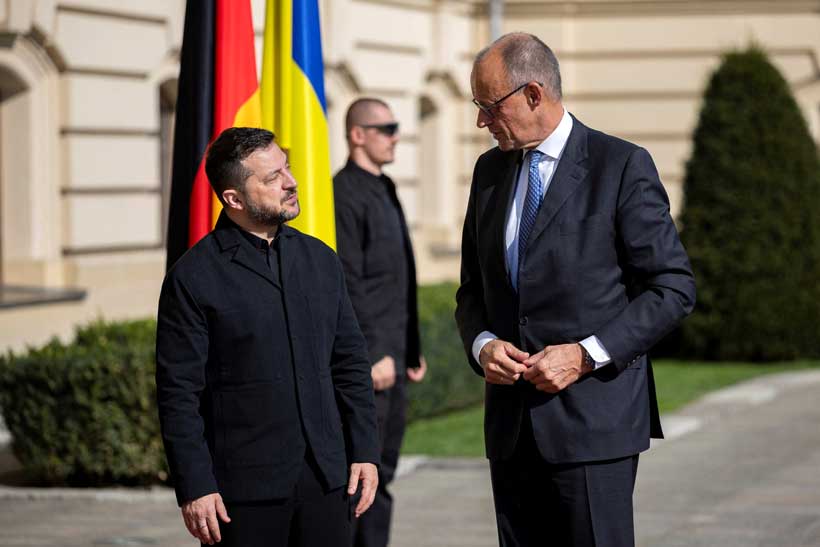
European Union leaders are preparing to reaffirm their support for Ukrainian President Volodymyr Zelenskiy as US President Donald Trump criticises Kyiv’s attacks on Russian oil refineries and uncertainty grows over future American military assistance.
Zelenskiy is attending an EU summit in Brussels at a critical moment for Ukraine, which continues to face Russian missile and drone attacks while preparing for another winter of war. Concerns over potential reductions in US intelligence sharing and weapons support have increased pressure on European governments to strengthen their assistance.
Speaking upon his arrival at the summit on Friday, Zelenskiy said Kyiv wanted to end the war but had seen no indication that Moscow was ready to do so. He stressed that Ukraine’s preparations for winter required not only energy supplies but also air defence systems and financial assistance.
The discussions are expected to focus on Ukraine’s immediate military requirements, its funding needs for the remainder of 2026 and preparations for 2027.
Stay ahead of the geopolitical week.
MD Briefing delivers expert analysis across five global fronts — the Indo-Pacific, energy, geoeconomics, European security, and the Middle East — every Monday morning. Free.
Trump Criticises Ukraine’s Attacks on Russian Refineries
The latest tensions followed Trump’s announcement last weekend that Ukraine and Russia had agreed not to target each other’s energy infrastructure. Zelenskiy subsequently declared that Kyiv was abandoning the proposed energy ceasefire, after which Ukrainian forces struck a Russian oil refinery southeast of Moscow.
Trump condemned the attack in an interview with Newsmax, arguing that Ukrainian strikes were driving up global oil prices.
The US president has linked his criticism to rising energy costs ahead of November’s midterm elections, which could have domestic political consequences for his administration.
Washington is also considering easing sanctions on vessels belonging to the so-called shadow fleet that transports oil and petroleum products from countries including Russia, according to a US official.
These developments have raised concerns among European leaders about the direction of American policy towards Moscow and Kyiv, particularly as the EU continues to provide financial and military support to Ukraine.
Dutch Prime Minister Rob Jetten criticised Trump’s remarks, arguing that the language used was inappropriate and that supporting Ukraine was also in Washington’s interests.
Can Europe Close Ukraine’s Funding Gap?
Ukraine’s financial requirements remain a central challenge for European governments as the war continues to drain public resources and military supplies.
Zelenskiy previously told Reuters that Kyiv had agreed on a plan with European partners to close a $27 billion shortfall in military spending for 2026. The funding would help Ukraine procure the drones needed to sustain its military operations into early 2027.
However, Ukrainian Finance Minister Sergii Marchenko has warned that the country still faces an unfunded budget gap of $32.6 billion for 2027, excluding an estimated $40 billion in direct military supplies from international partners.
The figures highlight the scale of the challenge facing Kyiv as uncertainty over American assistance places greater responsibility on European capitals.
Jetten said he was dissatisfied with the number of countries willing to pledge additional financial assistance, although he expected further commitments of military support.
Belgian Prime Minister Bart De Wever also questioned whether European governments would sustain their financial commitments as the conflict continues.
His remarks underscored a growing concern within the EU: even if European leaders agree on the need to support Ukraine, maintaining that commitment over an extended war will require substantial resources and political consensus.
Europe Faces Rising Energy Costs and Security Pressures
The summit is taking place against a backdrop of rising energy prices linked to the Iran war, which has exposed divisions among EU member states over how to respond to the economic consequences.
Trump’s criticism of Ukrainian attacks on Russian energy infrastructure adds another complication. European governments must balance their support for Kyiv with concerns about energy security, inflation and the wider economic effects of disruptions to oil supplies.
Meanwhile, Russian President Vladimir Putin has played down the impact of Ukrainian attacks on Russian refineries, saying they had caused nothing particularly significant.
Moscow has also taken retaliatory economic measures against European countries supporting Ukraine. On the eve of the Brussels summit, Russia moved to place local assets belonging to French, German, Swedish and Dutch companies under temporary management.
The move adds to tensions between Moscow and European governments as the conflict increasingly affects economic relations beyond the battlefield.
Russian Attacks Intensify Pressure on Kyiv
The latest Russian attacks have reinforced Ukraine’s urgent demand for additional air defence and energy assistance.
Drone strikes on Kharkiv killed three people, according to local authorities. Attacks in the Volyn region, which borders Poland, left approximately 370,000 people without electricity, while emergency power cuts were introduced in Kyiv during Russian strikes, according to energy provider DTEK.
These attacks illustrate the challenge Ukraine faces in protecting critical infrastructure as winter approaches. The country needs continued military assistance to defend its cities while securing the funding required to maintain essential services and sustain its war effort.
For Zelenskiy, the Brussels summit offers an opportunity to turn European political support into concrete commitments on financing, weapons and energy security.
What Comes Next for Ukraine?
The immediate question is whether European leaders can provide enough financial and military assistance to help Ukraine withstand another winter while maintaining its defence against Russian forces.
Washington’s position adds uncertainty. Trump’s criticism of Ukrainian strikes and the administration’s consideration of sanctions relief for Russian oil shipments raise questions about how closely US and European policies will remain aligned.
European governments must also contend with competing domestic priorities, higher energy costs and the prospect of a prolonged conflict.
The summit may reinforce Europe’s commitment to Ukraine, but political declarations alone will not resolve Kyiv’s growing financial and military needs. The durability of that support will depend on whether EU member states are prepared to provide the resources required to sustain Ukraine through 2027 and beyond.
With information from Reuters.
