


Ethiopia and Sudan have closed each other’s consulates near their shared border and expelled diplomatic staff, marking a further deterioration in relations as both countries accuse the other of supporting armed opponents in their respective conflicts.
The diplomatic measures have intensified concerns that Sudan’s civil war and renewed instability in Ethiopia’s Tigray region could become increasingly interconnected, potentially drawing more countries into a wider confrontation in the Horn of Africa.
Sudan accuses Ethiopia of allowing the paramilitary Rapid Support Forces (RSF) to operate from its territory, while Addis Ababa alleges that Khartoum is supporting rebels in northern Ethiopia. Both governments deny the accusations.
Consulates Closed as Diplomatic Tensions Escalate
Ethiopia closed the Sudanese consulate in the border town of Assosa and ordered its six diplomats to leave within 48 hours, according to a senior Ethiopian official. The official did not provide a reason for the decision.
Stay ahead of the geopolitical week.
MD Briefing delivers expert analysis across five global fronts — the Indo-Pacific, energy, geoeconomics, European security, and the Middle East — every Monday morning. Free.
Sudan subsequently closed Ethiopia’s consulate in the eastern city of Gedaref and expelled the diplomats working there, two Sudanese officials said.
The reciprocal closures represent a significant deterioration in diplomatic relations between neighbouring countries already facing serious internal security challenges.
Although neither government has publicly presented the consulate closures as a step towards military confrontation, the measures reflect the growing mistrust surrounding allegations of cross-border interference.
Sudan Accuses Ethiopia of Supporting the RSF
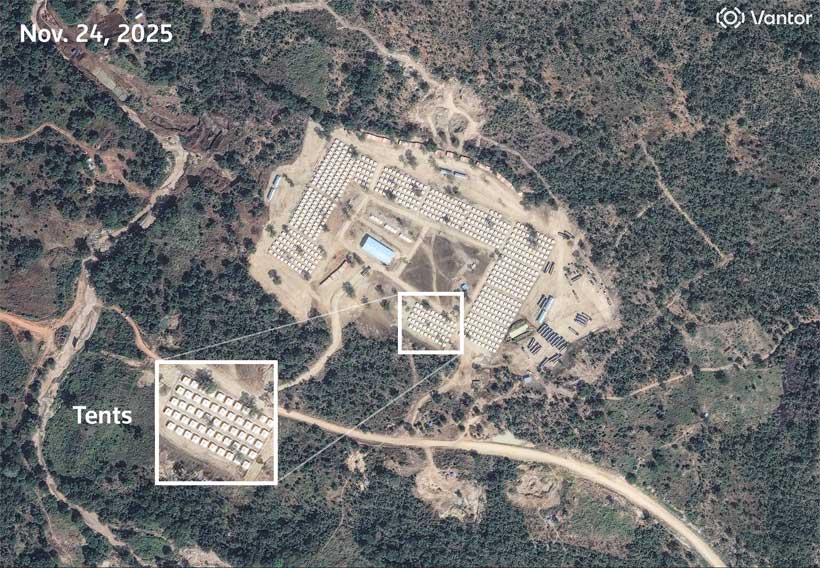
The latest diplomatic dispute is rooted partly in Sudan’s accusation that Ethiopia has allowed the RSF to use its territory to launch attacks against Sudanese infrastructure.
On Sunday, Sudan’s government said it had submitted a complaint to the United Nations Security Council and the African Union’s Peace and Security Council. It accused Ethiopia of permitting the paramilitary group to launch suicide drone attacks against civilian infrastructure from Ethiopian territory.
Addis Ababa has denied supporting the RSF. The Ethiopian prime minister’s office did not immediately respond to a request for comment on the latest diplomatic developments.
Sudan’s civil war began in April 2023 when fighting erupted between the Sudanese Armed Forces and the RSF. The conflict has displaced more than 14 million people, according to UN figures, creating one of the world’s most severe humanitarian crises.
Any external support for either side could further complicate efforts to contain the conflict and increase the risks of regional involvement.
Ethiopia Accuses Sudan of Backing Tigrayan Rebels
The accusations also extend to Ethiopia’s internal security situation.
Addis Ababa has accused Sudan, Egypt and Eritrea of supporting Tigrayan rebels who launched an offensive against government forces in September. All three countries have rejected the allegations.
The dispute is particularly sensitive because Ethiopia’s conflict in Tigray has already had serious regional implications. Relations between the federal government and neighbouring states remain vulnerable to accusations of interference, while instability along international borders creates additional security concerns.
The overlapping allegations have raised fears that developments in Sudan could influence Ethiopia’s internal conflict, while tensions involving Tigrayan armed groups could further complicate relations between Addis Ababa and Khartoum.
Sudan Seeks to Avoid Direct Confrontation
Despite the escalating accusations, Sudan has indicated that it does not want the diplomatic dispute to develop into an open conflict.
Amjad Farid, political and foreign affairs adviser to Sudan’s Transitional Sovereignty Council, said the government remained committed to defending its territory but was making every possible effort to avoid an open war with Ethiopia.
His remarks suggest that Khartoum is attempting to balance its security concerns with the need to prevent another military confrontation while its own armed forces remain engaged in the civil war.
For Ethiopia, the accusations come amid continuing regional tensions and domestic security challenges. A direct confrontation with Sudan could place additional pressure on its military and diplomatic resources.
Why the Dispute Matters for the Horn of Africa
The growing tensions between Ethiopia and Sudan have implications beyond their bilateral relationship. The Horn of Africa already faces overlapping conflicts, displacement crises and competition involving neighbouring states.
The involvement of regional powers in either country’s internal conflicts could create new alliances and deepen existing rivalries. It could also make humanitarian access and diplomatic mediation more difficult, particularly in areas where fighting and insecurity have displaced large civilian populations.
The closure of consulates does not itself indicate that military escalation is inevitable. However, the reciprocal expulsions, formal complaints and competing allegations point to a serious breakdown in trust.
What Happens Next?
The immediate question is whether Ethiopia and Sudan can prevent the diplomatic dispute from turning into a more direct security confrontation.
Sudan’s complaint to international and regional institutions could increase pressure for clarification over the alleged use of Ethiopian territory by the RSF. At the same time, the accusations concerning Tigrayan rebels may further complicate efforts to rebuild relations between the two governments.
Both countries face substantial domestic challenges, making a wider conflict costly and potentially destabilising. However, as long as each government believes its internal enemies are receiving support from across the border, the risk of further escalation will remain.
The situation presents a broader challenge for regional diplomacy: preventing two separate conflicts from reinforcing one another and turning local instability into a wider crisis across the Horn of Africa.
With information from Reuters.
