


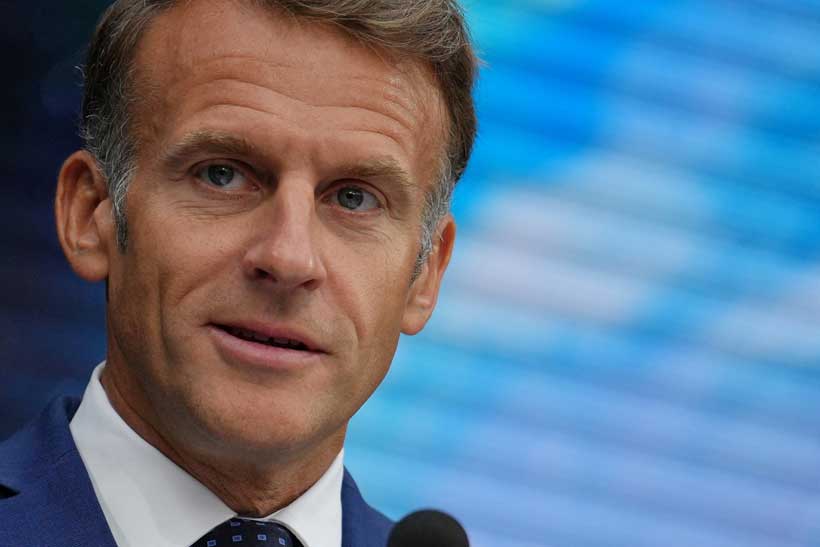
France is preparing for another major wave of demonstrations and strikes as President Emmanuel Macron seeks to contain growing public unrest five months before the presidential election. Hundreds of thousands of people are expected to take to the streets on Thursday, with trade unions, students and public-sector workers mobilising over living costs, public services and education.
The demonstrations present a fresh challenge for Macron’s government following the October 17 riots and looting, which damaged shops and public buildings and exposed weaknesses in the authorities’ response to the unrest.
The government is now seeking to prevent a repeat of those scenes while managing a protest movement that has expanded beyond its initial focus on deteriorating school conditions and opportunities for young people.
France Deploys Thousands of Police Ahead of Protests
French authorities are preparing a substantial security operation ahead of Thursday’s demonstrations. Around 70,000 police officers will reportedly be deployed nationwide, while domestic intelligence estimates that between 500,000 and 700,000 people could demonstrate outside Paris, according to BFM TV.
Stay ahead of the geopolitical week.
MD Briefing delivers expert analysis across five global fronts — the Indo-Pacific, energy, geoeconomics, European security, and the Middle East — every Monday morning. Free.
Government spokeswoman Maud Bregeon said authorities were remaining extremely vigilant and stressed that another incident on the scale of October 17 would be unacceptable.
The previous unrest caught security forces off guard, with riots and looting leaving significant damage across several cities. The government’s handling of the violence subsequently attracted criticism, increasing pressure on Macron to demonstrate that public order could be maintained.
The authorities are therefore facing a difficult balance: protecting public safety while allowing demonstrations to proceed without further escalating tensions.
Trade Unions and Students Expand the Protest Movement
The latest mobilisation has been called by several trade unions, including the left-wing CGT, and has received support from student organisations.
The Education Ministry expects 17.5% of public primary school teachers to strike, while unions have warned of disruptions to railways and public transport. Power-sector workers are also expected to participate.
Students remain an important part of the movement. Their initial grievances centred on deteriorating conditions in schools and uncertainty about future employment and opportunities, but the protests have increasingly drawn attention to broader concerns about living standards and public services.
Irma de Banville, a 19-year-old student in Paris, said some people were reluctant to participate because of fears of police violence. The government has defended police tactics while maintaining that any alleged abuses will be investigated.
These concerns illustrate the difficulties facing the authorities as they attempt to restore confidence without further alienating protesters.
Macron Seeks to Prevent a Repeat of October Unrest
Macron convened a defence and security meeting on Wednesday to prepare for the demonstrations, underlining the seriousness with which the government views the situation.
An official close to the president described the administration’s immediate objective as bringing the unrest under control and ensuring that the presidential election campaign begins in calmer conditions.
There are some indications that mobilisation has eased in certain areas. The number of high schools blockaded this week was reportedly lower than during earlier stages of the protests.
Demonstrations held nationwide last Saturday were also generally peaceful, although some clashes occurred on the fringes. Nevertheless, the scale of Thursday’s planned action suggests that public dissatisfaction remains significant.
The government’s challenge is no longer limited to preventing isolated outbreaks of violence. It must also address the wider grievances sustaining the movement.
Political Parties Look to Capitalise on Public Frustration
With the presidential election five months away, the unrest is becoming an increasingly important political issue.
Opposition parties are seeking to capitalise on dissatisfaction with living standards, public services and government policy. Candidates are also positioning themselves ahead of the election, making the government’s response to the demonstrations politically consequential.
For Macron, the protests create pressure on two fronts. The administration must maintain public order while demonstrating that it understands the economic and social concerns driving public mobilisation.
The government’s ability to manage the crisis could influence the political environment in which the election campaign unfolds. Continued unrest may give opposition parties further opportunities to challenge the president’s record, while a reduction in demonstrations could help the administration regain control of the political agenda.
Energy and Transport Disruptions Add to Economic Pressure
Thursday’s strikes could also affect essential services and economic activity. Rail and public transport disruptions may complicate daily travel, while participation by electricity-sector workers raises concerns about potential pressure on energy supplies.
State-owned utility EDF said power unions were expected to join the action. A previous electricity-sector strike in September reduced domestic power supply and affected delivery capacity at France’s largest liquefied natural gas terminal, Dunkirk LNG.
Any renewed disruption could add to the difficulties facing businesses and households already concerned about living costs.
What Happens Next for Macron?
Thursday’s demonstrations will provide an important test of whether the government can prevent a repeat of October’s violence while allowing public grievances to be expressed.
The immediate focus will be on the scale of participation, the conduct of security forces and whether strikes disrupt transport, education and energy services. Beyond the day itself, the government’s response will be judged by whether it can address the concerns that have brought students, workers and trade unions into the streets.
With the presidential election approaching, the stakes extend beyond public order. Macron must navigate a period of social and political uncertainty while opposition parties seek to turn public frustration into electoral support.
The central question is whether the government can restore calm without leaving the underlying grievances unresolved.
With information from Reuters.
