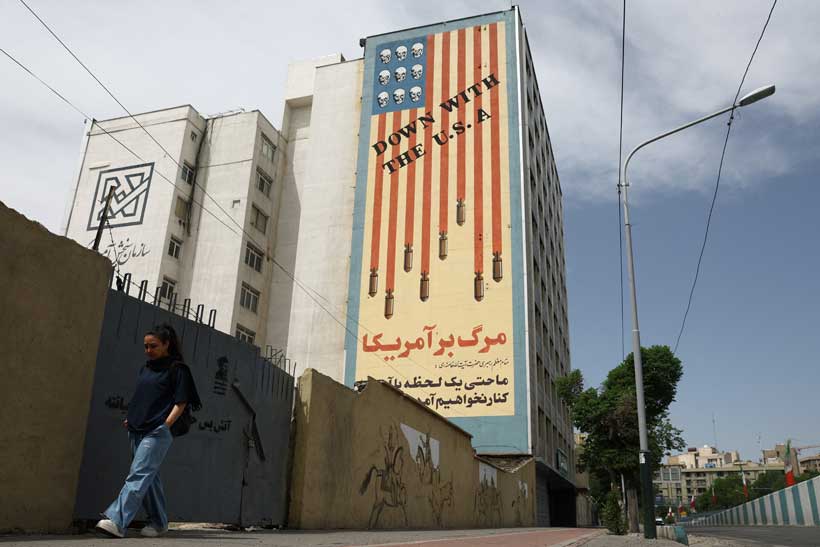
Iran’s government celebrated the Democrats’ victories in the recent midterm elections, seeing it as a rejection of the war initiated by Donald Trump. Iranian leaders claimed that this election outcome showed American voters were against war. Mohammad Baqer Qalibaf, Iran’s Parliament Speaker, emphasized that Washington should heed public opinion and avoid attacking Iran again. Supreme Leader Mojtaba Khamenei warned that U.S. hostility would continue regardless of the ruling party and cautioned against any signs of submission to the U.S.
The Democrats gained majorities in both the Senate and House, winning in traditionally Republican areas, reflecting widespread dissatisfaction with Trump’s management of the economy and his war decisions. Iranian media noted the irony of Trump’s inability to bring about regime change in Iran while losing ground in Texas. Despite their satisfaction with the election results, two senior Iranian officials expressed concern that Trump might retaliate with military action and stated that Iran was on high alert.
Iran has long viewed the U.S. as its primary enemy. During a rally marking the 1979 embassy takeover in Tehran, demonstrators expressed happiness over the election results, suggesting that the defeat of the “warmongering Republicans” signified a shift in U.S. internal conflict. Mediators are working hard to conclude the ongoing conflict, with fears of renewed combat after the elections. Trump has not ruled out resuming military operations, prompting Iran to prepare for potential retaliation.
Tensions escalated in previous months, with U.S. and Israeli attacks prompting Iranian responses and causing disruptions in global oil and gas prices. The U.S. imposed a naval blockade on Iran, adversely impacting its economy. Ahead of the elections, Iranian officials hinted that they had delayed negotiations with the U.S. to weaken Trump’s political standing.
Stay ahead of the geopolitical week.
MD Briefing delivers expert analysis across five global fronts — the Indo-Pacific, energy, geoeconomics, European security, and the Middle East — every Monday morning. Free.
The timing of the elections coincided with the anniversary of the embassy seizure, reminding Americans of Iran’s historical influence on U.S. politics. The Iran war has been largely unpopular among Americans, and its impact on rising costs featured prominently in the Democrats’ campaign. Khamenei’s comments indicated Tehran’s unwillingness to compromise on its control over the Strait of Hormuz and other demands. Trump reflected on the election outcome, attributing part of it to Iran, while a conservative newspaper in Iran declared it marked “The twilight of Trumpism.”
With information from Reuters