


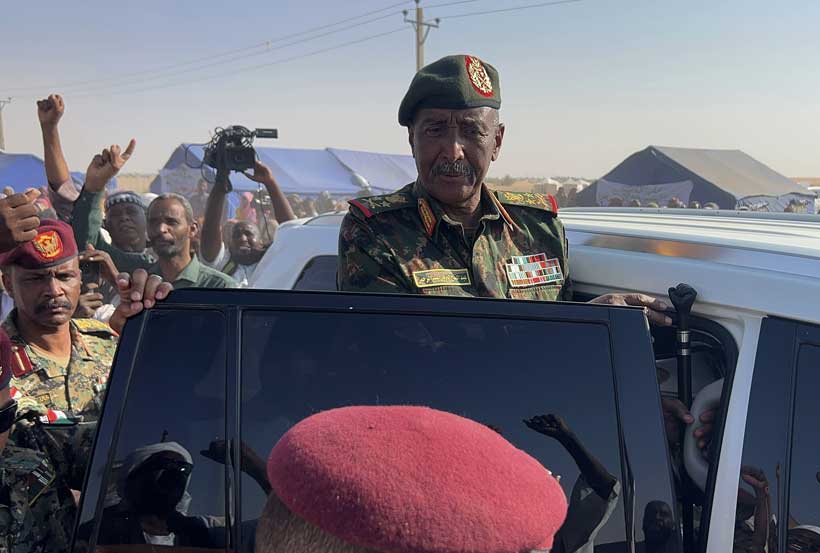
Sudan is facing renewed international pressure over allegations that its armed forces used chlorine-based chemical weapons during the country’s civil war, with several governments calling for greater transparency and cooperation with the Organisation for the Prohibition of Chemical Weapons (OPCW).
The issue was raised during the 113th session of the OPCW Executive Council, held in The Hague from 6 to 9 October 2026. The United States, Germany, Belgium, Australia, Finland, the United Kingdom and the European Union addressed the allegations, although their statements did not constitute an independent determination by the OPCW that chemical weapons had been used.
In her opening statement to the Council, OPCW Director-General Sabrina Dallafior said the Technical Secretariat continued to monitor reports of chemical weapons use in Sudan. She encouraged member states to share relevant information with the organisation.
The statements came after investigations published by The New York Times and The Washington Post on 5 September reported evidence suggesting that the Sudanese Armed Forces (SAF) had developed, stored and used chlorine-based munitions during the war against the paramilitary Rapid Support Forces (RSF).
Stay ahead of the geopolitical week.
MD Briefing delivers expert analysis across five global fronts — the Indo-Pacific, energy, geoeconomics, European security, and the Middle East — every Monday morning. Free.
According to The New York Times investigation and The Washington Post’s reporting, the material included internal documents, photographs, videos and communications involving senior Sudanese military officers. The reports said some of the communications suggested that army chief General Abdel Fattah al-Burhan had knowledge of the alleged programme. These are findings reported by the newspapers and have not been independently confirmed by the OPCW in its public statements.
A Sudanese military spokesperson rejected The New York Times’ findings as “baseless and without material foundation” and threatened legal action against the newspaper, according to Semafor. Sudan’s Foreign Ministry also said in July 2025 that Washington had presented no evidence for its allegations and that Sudan had offered to host US experts for on-site verification.
Belgium Calls for Further Information
Belgium expressed concern over reports that chlorine bombs had been used by the Sudanese army during the civil war, saying the responses provided by Sudanese authorities had not adequately addressed the seriousness of the allegations.
In its statement to the OPCW Executive Council on 7 October, Belgian Ambassador Wouter Detavernier called on Sudan to provide additional information. Belgium’s position reflects growing diplomatic pressure for a more transparent account of the alleged chemical weapons use.
The demand for clarification is significant because the allegations concern not only possible battlefield use but also reports of a broader, undeclared programme. Establishing what occurred, and whether the Chemical Weapons Convention was violated, requires evidence-based investigation rather than diplomatic statements alone.
US Maintains Sanctions and Calls for Accountability
Washington has taken measures against Sudan under US chemical and biological weapons legislation following its determination that the Sudanese government used chemical weapons in 2024.
The US State Department made that determination on 24 April 2025 and announced it publicly on 22 May. The initial sanctions were published in the Federal Register on 27 June 2025 and included restrictions on US exports and access to US government credit, subject to specified exceptions and waivers.
A second round of measures took effect on 20 July 2026. The additional sanctions notice in the Federal Register states that the US government decided to impose further measures on 23 June 2026 after determining that Sudan had not met the conditions required to avoid additional sanctions. The measures expanded restrictions under the applicable US legislation.
These actions reflect Washington’s own legal determination. They should not be confused with an independent technical finding by the OPCW, whose Secretariat has said it is monitoring reports concerning Sudan.
At the Council’s October session, US Ambassador Nicole Shampaine called for action over what Washington described as Sudan’s continued non-compliance related to its alleged 2024 use of chemical weapons. In the US statement to the Council, Shampaine urged regional groups and member states to reject candidates for the Executive Council that remained in non-compliance.
Sudan holds a seat on the OPCW’s 41-member Executive Council. The US position introduces a further diplomatic dimension to the dispute ahead of the next Conference of the States Parties, scheduled for 23–27 November 2026. Any decision affecting Council membership, however, would have to follow the organisation’s applicable procedures; the US call does not itself remove Sudan from its seat.
Germany Raises Concerns About a Possible Undeclared Programme
Germany said the recent media investigations raised questions about whether the alleged chemical weapons use in Sudan extended beyond an isolated incident.
In its statement to the OPCW on 6 October, German Ambassador Gudrun Lingner referred to published indications of an undeclared chemical weapons programme and called on Sudan’s government to complete a thorough national investigation, publish its findings promptly and cooperate fully and transparently with the OPCW.
Germany’s statement underscores the distinction between investigating an alleged use of chemical weapons and determining whether a wider programme existed. The latter would require further evidence concerning the development, storage and possible deployment of chemical munitions.
Australia and Finland Seek Transparent Answers
Australia said it was alarmed by media reports that the Sudanese Armed Forces had stockpiled and used chemical weapons. In its statement to the Council, Australian Ambassador Gregory French noted that Sudan had shared an interim report from its national investigation and called for a genuine and transparent account of any non-compliance with the Chemical Weapons Convention.
Finland likewise reiterated its serious concern over the allegations, urging Sudanese authorities to address them promptly, objectively and transparently. Its statement to the OPCW welcomed confirmation that the Technical Secretariat would continue monitoring the situation.
The statements from Germany, Australia and Finland point to a common diplomatic demand: Sudan should provide a credible account of the allegations, while the international community should distinguish between national investigations, public reporting and any findings established through the OPCW’s processes.
What Happens Next?
The allegations now pose a challenge for Sudan’s relations with the OPCW and its member states. The US sanctions are already in force, while European and other governments have called for further information and a transparent investigation.
The OPCW’s role remains central to the next stage. Its Technical Secretariat has confirmed that it is monitoring reports concerning Sudan, but public statements at the October session do not amount to an independent verification of the alleged chemical weapons use or the existence of an undeclared programme.
The outcome will depend on the evidence available, the responses provided by Sudanese authorities and any further steps agreed by member states under the Chemical Weapons Convention. Until those questions are resolved through the relevant procedures, the allegations should remain clearly attributed and distinguished from established findings.
