


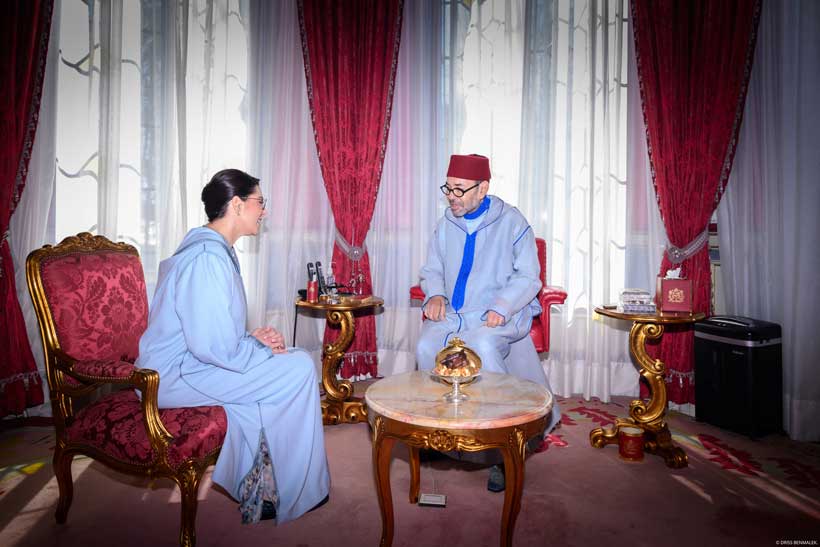
The All-China Women’s Federation (ACWF), as the highest Chinese women’s organization concerned with the issues of women in China and around the world, and all Chinese women’s federations, welcomed the appointment of Fatima Ezzahra El Mansouri as the new Prime Minister of Morocco by King Mohammed VI on September 29, 2026. This appointment was a highly significant political event for Chinese women’s circles, and official Chinese women’s organizations followed its developments and analyzed its implications for all countries in the region, both independently and within an academic context. This analysis addressed the convergence of Chinese, Moroccan, and Western feminist thought in the Middle East, emphasizing the importance of women assuming high-level positions in the Global South, the Middle East, and Africa. The appointment of Fatima Zahra Mansouri as the first woman to hold the position of Prime Minister of Morocco aligns with the strategic vision of China and Chinese women’s federations, such as the All-China Women’s Federation (ACWF), to promote women’s leadership in the Global South, particularly within the developmental and humanitarian dimensions of China’s Belt and Road Initiative. On a general level, the interpretations of these Chinese institutions regarding women assuming leadership positions following the appointment of Fatima Zahra Mansouri as the first female head of the new Moroccan government can be traced through the following points:
• The nature of official Chinese feminist relations with Middle Eastern and North African countries: The All-China Women’s Federation focuses its foreign relations, particularly with Middle Eastern and North African countries, on strengthening cooperation and exchanging experiences in the areas of women’s economic and social empowerment, while refraining from adopting or commenting on the ideological frameworks of Western feminist thought.
• The diplomatic dimensions for China of women assuming senior leadership positions in Middle Eastern countries: The Chinese side generally views women assuming senior leadership positions in friendly and partner countries like Morocco as a positive step that supports the Sustainable Development Goals and women’s political empowerment and enhances bilateral cooperation between women’s organizations in both countries.
▪︎ The Chinese Regional and Institutional Dimension in Viewing the Appointment of Fatima Zahra Mansouri in Morocco: Chinese political and media circles (including Chinese platforms in Arabic such as CGTN and China in Arabic) viewed this as a significant democratic and institutional development that enhances the presence of qualified women at the highest levels of executive power in Morocco and the Arab region. The appointment of Fatima Zahra Mansouri as the first woman to hold the position of Prime Minister in Morocco’s history garnered widespread Chinese attention and significant follow-up in Chinese political and media circles. Within this context, media platforms concerned with Arab-Chinese relations, such as Chinese channels targeting the Arab world and the China in Arabic platform, highlighted this appointment as an exceptional event and a significant institutional development reflecting the democratic maturity witnessed by the Kingdom of Morocco.
Stay ahead of the geopolitical week.
MD Briefing delivers expert analysis across five global fronts — the Indo-Pacific, energy, geoeconomics, European security, and the Middle East — every Monday morning. Free.
– The regional and institutional dimensions of this event can be interpreted from a Chinese political, media, developmental, and humanitarian perspective, as follows:
1) The Institutional and Democratic Dimension (The Perspective of Competence and Parity)
– Supporting the Institutional State: Chinese analytical readings view this appointment as an extension of a cumulative institutional process in Morocco aimed at the effective empowerment of women and the implementation of the Moroccan Constitution’s provisions related to parity and equality.
– Professional and Political Background: Chinese media outlets focused on Mansour’s legal and managerial background (as a Moroccan lawyer, former mayor of Marrakech, and former minister of housing). This background reinforces the idea that her rise to the top of the executive branch was based on proven institutional competence and practical experience in managing strategic files.
2) The Regional Dimension (Leadership in the Arab and African Region)
– A Model to Emulate: The appointment was described in Chinese circles as breaking the prevailing stereotypes about the exclusion of women from major political decision-making centers in the Arab world and North Africa.
– Coincidence with Regional Transformations: Some platforms concerned with Arab affairs, such as China in Arabic, linked this event to similar regional steps in the area, such as Algeria’s appointment of its first female Speaker of Parliament a short time ago. This indicates a general Arab regional movement towards enhancing the presence of qualified women in sovereign and legislative positions.
3) Media Coverage and Chinese Circles (China in Arabic as a Case Study)
– Coverage of the Exceptional Event: Platforms concerned with disseminating news to the Arabic-speaking Chinese community described this development as unprecedented and a first in the country’s history, highlighting the positive change in the Moroccan political landscape.
– Enhancing Morocco’s International Image: Chinese media coverage contributed to presenting Morocco as a politically and institutionally stable and developed regional partner regarding women’s empowerment issues. This is highly valued in Chinese circles, which always seek political and institutional stability among their economic partners in North Africa and the Belt and Road Initiative.
Therefore, the significance of this historic appointment of the new Moroccan Prime Minister, Fatima Zahra Mansouri, intersects with feminist thought and China’s joint development efforts and its Belt and Road Initiative, in both its developmental and humanitarian aspects, according to the following structural points:
– First: The All-China Women’s Federation’s Vision for Women’s Empowerment in Morocco as a Model to be Emulated in the Global South
The All-China Women’s Federation views the rise of women leaders in African and Arab countries as a practical model for women’s empowerment through development, a concept promoted by Beijing as an alternative to the traditional Western approach. The Chinese side sees the appointment of Mansouri as:
• Breaking stereotypes: Demonstrating the ability of women in the Global South to lead and manage complex economic and political crises.
• Strengthening partnerships between women’s organizations: This appointment opens new horizons for building strong bridges between the All-China Women’s Federation and Moroccan women’s organizations to exchange expertise in the areas of legislation, economic empowerment, and gender equality.
– Second: The Convergence of Feminist Thought (Chinese, Moroccan, and Western) in the Middle East
The new political landscape in Morocco represents a unique convergence point between three dimensions of feminist thought, as follows:
• Chinese (Developmental) Feminist Thought: Focuses on women’s economic empowerment through their integration into productive projects and infrastructure, and the provision of job opportunities as a fundamental entry point for social liberation.
• Moroccan (Rights/Identity) Feminist Thought: Combines the cultural specificity of Arab-Islamic society with constitutional modernization (Article 19 of the Moroccan Constitution concerning parity and equality).
• Western (Institutional) Feminist Thought: Focuses on breaking the glass ceiling and women’s access to the highest levels of the political hierarchy and sovereign decision-making positions.
Fatima Zahra Mansour’s academic and professional background combines these dimensions, having studied Anglo-Saxon law in the United States and business law in France. This equips her to lead a feminist and developmental dialogue that bridges the traditions of the Global South with the modernity of the West and East.
– Third: The Developmental and Humanitarian Importance of China’s Belt and Road Initiative for Women’s Empowerment
Morocco is a strategic partner of China in North Africa within the framework of the Belt and Road Initiative. The presence of a woman at the head of government contributes to strengthening the humanitarian dimension of the initiative (People-to-People Bond), through:
• Directing Chinese investments towards social sectors and women’s empowerment issues in the Global South: The women’s development agenda typically focuses on education, health, social welfare, and poverty alleviation. This aligns with the objectives of Sino-African cooperation and China’s interest in the issues of the Global South.
• Empowerment through technology and digitalization: Morocco’s drive towards digital transformation and infrastructure modernization aligns with China’s Digital Silk Road, offering promising opportunities to equip women and youth for the future job market.
• Restoring societal trust: Mansour’s commitment to providing practical solutions to the challenges facing youth and women supports a stable investment environment for joint projects between Morocco, China, and the Global South.
– We can understand this model through the following table, designed by the Egyptian researcher, as follows:
| The feminist intellectual dimension | The main focus | Its impact on the Mansour government and the Chinese Belt and Road initiative |
| Chinese (developmental) | Economic empowerment and integration in the production and infrastructure sectors | Enhancing the role of women in Belt and Road investments and logistics projects |
| Moroccan (human rights activist/local) | Balancing constitutional equality and the cultural particularities of society | Implementing the parity provisions and expanding the women’s quota in sovereign and executive positions |
| Western (institutional) | Breaking the glass ceiling and gaining actual access to decision-making centers | Strengthening Morocco’s official diplomacy as a modern state that supports women’s political leadership |
Analyzing this table practically, we find that the Chinese feminist developmental approach focuses on economic empowerment and integration into production and infrastructure sectors. This is reflected in the Mansour government and the Chinese Belt and Road Initiative, which prioritizes enhancing women’s role in Belt and Road investments and logistics projects. This will positively impact the Moroccan context (legal rights/local), balancing constitutional equality with the cultural specificities of Moroccan society and aligning with the developmental and humanitarian aspects of the Chinese Belt and Road Initiative in implementing gender parity and expanding the quota for women in sovereign and executive positions in the Global South and Africa. This supports China’s advocacy for women’s empowerment in North Africa and the Global South, countering Western influence by breaking the glass ceiling and achieving genuine access to decision-making positions within developing countries. It also rejects the Western and US model of perpetually promoting a monopoly on democracy and dividing the world into democratic/undemocratic states. Consequently, it strengthens Morocco’s official diplomacy as a modern state that supports women’s political leadership, a goal shared by China’s Belt and Road Initiative, both in its development and humanitarian aspects, which aims to extend this model to various developing countries in the Global South.
Accordingly, Mansour’s selection, according to women’s federations in China, represents a strong domestic political message. Simultaneously, it grants Morocco additional regional and international weight as a leading nation in modernizing its executive structures and supporting women’s leadership in governments and societies. This benefits the Chinese development model and the humanitarian dimension of its Belt and Road Initiative in matters of empowering Arab women and women in developing countries. Here, we find that Mansour’s leadership of the Moroccan government presents an inspiring model for countries of the Global South and confirms that comprehensive development and international cooperation initiatives such as the Belt and Road Initiative cannot achieve their humanitarian goals without the genuine and effective integration of women in leading change and decision-making.
