


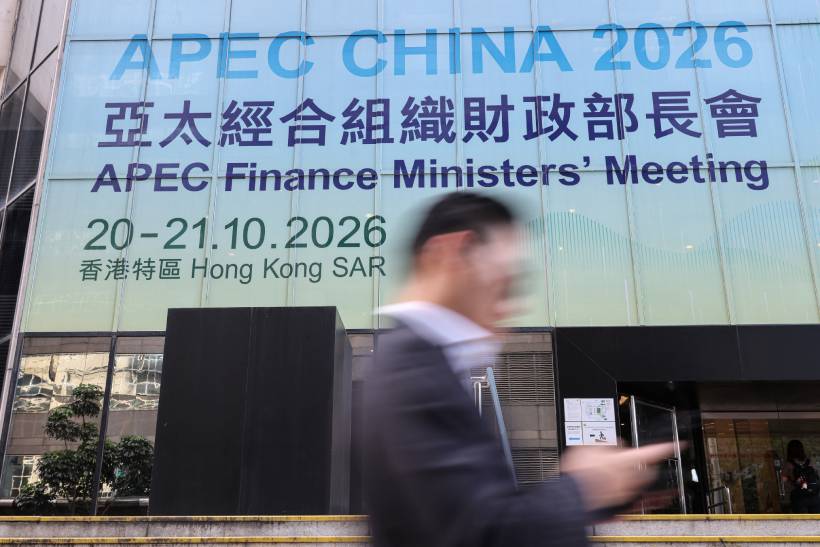
Taiwan has appointed Acer founder Stan Shih as its representative to next week’s Asia-Pacific Economic Cooperation (APEC) summit in China, while demanding written assurances from Beijing that its delegation will be allowed to participate on equal terms with other members.
The appointment comes amid increasingly strained relations between Taipei and Beijing, with China hosting the summit in Shenzhen while continuing to reject Taiwan’s separate political status. Taiwan’s request for a formal guarantee highlights the diplomatic sensitivities surrounding its participation in international organisations where Beijing seeks to limit its recognition.
The summit also carries wider geopolitical significance, as US President Donald Trump is expected to meet Chinese President Xi Jinping in Shenzhen, creating another opportunity for discussions between the world’s two largest economies.
Why Is Taiwan Demanding Written Guarantees?
Taiwan’s government said on Wednesday that Stan Shih, founder of computer manufacturer Acer, would serve as its APEC envoy.
Stay ahead of the geopolitical week.
MD Briefing delivers expert analysis across five global fronts — the Indo-Pacific, energy, geoeconomics, European security, and the Middle East — every Monday morning. Free.
Announcing the appointment, presidential spokesperson Karen Kuo said Taiwan had consistently participated in APEC meetings on an equal basis with other members. She argued that this arrangement reflected established organisational practice rather than China’s claim that Taiwan must participate under Beijing’s one-China principle.
Kuo called on China, as this year’s host, to provide written assurances that Taiwan’s delegation would be able to attend all meetings with equality, dignity and security.
Her statement reflects Taipei’s concern that Beijing could use its position as host to impose additional political conditions on Taiwan’s participation.
APEC is particularly important for Taiwan because it is one of the few international organisations in which the island participates alongside China. However, Taiwan attends under the designation Chinese Taipei, allowing its membership to continue without resolving the wider dispute over sovereignty.
China’s Taiwan Affairs Office said participation would be handled according to the one-China principle and the provisions of APEC’s memorandum of understanding. Spokesperson Zhang Han said Chinese Taipei could attend meetings as long as those established arrangements were followed.
The contrasting statements demonstrate how the two sides interpret Taiwan’s participation differently, even within an organisation built around economic cooperation.
How Does China’s One-China Policy Affect Taiwan’s Participation?
Beijing considers Taiwan part of its territory and opposes any international arrangements that could suggest the island is an independent sovereign state.
Taiwan’s democratically elected government rejects China’s sovereignty claims, arguing that only its people have the right to determine the island’s future. Neither government formally recognises the other.
The dispute has become increasingly difficult to manage under Taiwan President Lai Ching-te, whom Beijing describes as a separatist and refuses to engage with directly. Chinese military forces also operate around the island on a daily basis, adding a security dimension to the diplomatic confrontation.
For Beijing, Taiwan’s international participation must remain consistent with its one-China principle. For Taipei, participation in international forums is a way to preserve its diplomatic space and demonstrate that the island can engage with other economies independently of China’s political demands.
APEC’s economic focus provides a relatively rare platform for managing this disagreement. Its membership arrangements allow Taiwan to participate without requiring other members to settle the question of its sovereignty.
However, the need for a written guarantee suggests that even established diplomatic practices can become politically sensitive when China is responsible for organising a major international gathering.
Why Has Taiwan Questioned China’s Handling of the Invitation?
Taiwan has already participated in several APEC meetings in China this year, with its labour and finance ministers attending without reported incidents.
Nevertheless, Foreign Minister Lin Chia-lung said this month that China had not arranged for an official to personally deliver the invitation to Taiwan’s delegation for the leaders’ summit. Instead, the invitation was sent by email.
The distinction may appear procedural, but it carries diplomatic significance given the sensitivity surrounding Taiwan’s international status.
Taiwan generally appoints former government officials or prominent business executives as its APEC representatives. This approach allows the island to maintain its participation while avoiding some of the political difficulties associated with sending its sitting president or senior political leadership.
The appointment of Shih follows this established practice. He previously represented Taiwan at the 2007 APEC summit in Australia, giving him experience in navigating the diplomatic environment surrounding the island’s participation.
His business background also reflects APEC’s emphasis on regional economic cooperation, trade and investment.
What Does the Summit Mean for US-China Relations?
The Shenzhen summit is taking place at a particularly important moment in relations between Washington and Beijing.
Trump is expected to hold his third meeting of the year with Xi, creating an opportunity for the two leaders to address bilateral tensions and broader economic and strategic issues.
Taiwan is likely to remain an important source of friction between the two powers. Washington maintains relations with Taipei while opposing unilateral changes to the status quo across the Taiwan Strait. Beijing, meanwhile, regards Taiwan as a core sovereignty issue and strongly objects to what it considers foreign interference.
Although APEC is primarily an economic forum, its leaders’ summit provides opportunities for diplomatic engagement beyond trade and investment.
Taiwan’s participation could therefore become another test of how China manages its international responsibilities while maintaining its position on sovereignty. Any restrictions or unequal treatment could attract criticism from governments concerned about the island’s ability to participate in regional institutions.
What Happens Next?
The immediate question is whether Beijing will provide the written assurances requested by Taipei and allow Taiwan’s delegation to participate without additional political restrictions.
Taiwan’s previous participation in this year’s APEC meetings suggests that its attendance remains possible. However, the dispute over the invitation and the competing interpretations of the one-China principle indicate that the leaders’ summit could bring renewed diplomatic tension.
For Taiwan, participation is about more than attending an economic meeting. It is also about preserving international visibility and preventing Beijing from narrowing the island’s diplomatic space.
For China, hosting APEC offers an opportunity to demonstrate its regional leadership and strengthen its international standing. How it handles Taiwan’s delegation will therefore be closely watched by other participating economies.
The outcome may not resolve the sovereignty dispute, but it could indicate how much room remains for practical cooperation between Taiwan and China within international institutions.
With information from Reuters.
