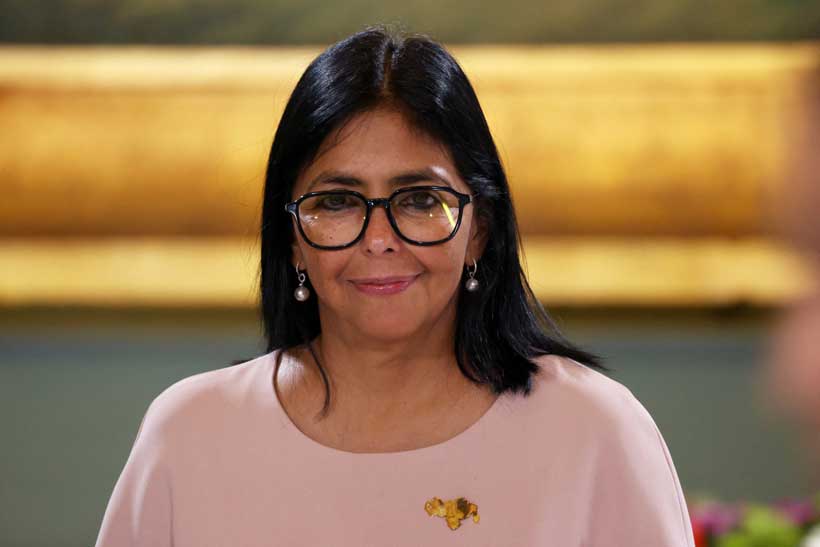
Venezuela’s interim President Delcy Rodriguez traveled to New York to attend the UN General Assembly, aiming to secure business deals related to debt, energy, and mining, highlighting her country’s openness for business after the removal of former President Nicolas Maduro by US forces in January. In her speech to the UN, she promised that Venezuela would hold elections to transition to “full democracy.” However, despite having photographs taken with US President Donald Trump, no significant agreements were reached during her visit.
Rodriguez’s visit marked her first trip to the US since Maduro’s capture and showcased the influence of Washington over her administration. Analysts noted that while Rodriguez had high visibility, tangible outcomes from her efforts were limited, with many expected agreements failing to materialize. Trump emphasized US military strength in his speech, indirectly reminding Rodriguez of the US’s dominant role in Venezuelan affairs, though he did not mention her by name during his address.
Rodriguez faced criticism for her lack of commitment to an election date, with analysts emphasizing the urgency for her to provide a timeline for voting. For months, she avoided giving clear signals about upcoming elections. Experts believe that organizing credible elections could take over a year. Both the White House and Venezuelan officials did not comment on the possibility of elections or details of discussions held during the Assembly.
Despite initial predictions of agreements being signed, no deals were announced at the end of her trip. The head of the Inter-American Development Bank mentioned working on a $2.5 billion bridge loan for Venezuela, although some members opposed this effort. Inside the UN, Rodriguez appeared isolated, with former allies distancing themselves. For example, the Cuban delegation walked out during Trump’s speech, and a meeting with Spanish Prime Minister Pedro Sanchez had an awkward tone.
Meanwhile, Russia sought to engage with Venezuelan officials regarding oil projects, and there were negotiations involving ExxonMobil. Brazil’s President Lula da Silva expressed concern that the US treats Rodriguez as subordinate, suggesting she should call for elections herself. Outside the UN, protests were held against Rodriguez, with demonstrators equating her leadership to that of Maduro’s. Following her meeting with Trump, US Secretary of State Marco Rubio stated they discussed Venezuela’s sovereign debt and political change, emphasizing the need for free elections. Reports also indicated that Venezuelan opposition leader Maria Corina Machado was barred from returning to her country, raising questions about the political landscape. Political analysts noted that Rodriguez’s position may hinge on US decisions regarding election timing.
With information from Reuters