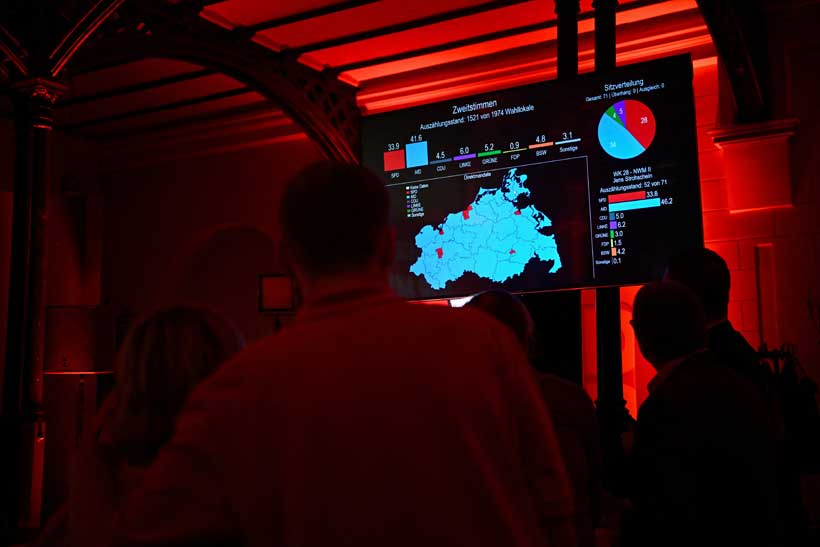
The Alternative for Germany (AfD) party won first place in state elections in northeastern Germany, marking the worst result for Chancellor Friedrich Merz’s conservative party since 1949. The AfD received 37% of the votes in Mecklenburg-Western Pomerania, followed by the Social Democrats (SPD) with 35.5%, while Merz’s conservatives received only 5.5%, narrowly making it into the state parliament. This result reinforces the AfD’s strength in national opinion polls, despite other parties’ refusal to collaborate with them.
In another election in Berlin, the far-left Linke party led with 24.5%, Merz’s party had 20%, and the AfD gained 16%. This marks the first time the Linke topped the polls in Berlin, where they aim to nationalize housing and limit rents. Merz expressed determination to continue with his reforms despite the poor results, saying he would persist in revitalizing Germany’s economy.
Merz’s future may be uncertain, as his low approval ratings and the popularity of the AfD present challenges. Manuela Schwesig, the SPD state premier of Mecklenburg-Western Pomerania, gained support by criticizing both the AfD and Merz’s government. She noted that many voters oppose Germany’s support for Ukraine and want to restore energy connections with Russia.
SPD leader Lars Klingbeil indicated the need for a new approach, highlighting voters’ concerns about pension reforms. Nonetheless, Merz stood firm on his reform agenda, viewing it as essential to combat rising authoritarianism.
The elections in these states, particularly after the AfD’s near majority in Saxony-Anhalt, have raised concerns across Europe. The AfD has transitioned from a minor eurosceptic group to the most popular party, advocating for stringent immigration policies, restoring energy ties with Russia, and leaving the euro.
Merz, elected on a promise to reform Germany’s stagnant economy, has struggled to connect with voters. Issues like high energy and housing costs have overshadowed campaigns in both regions. A voter in Schwerin expressed concern about living costs, while an elderly man demanded funds be used for domestic needs instead of foreign aid.
Overall, the exit polls highlight the growing influence of the AfD and the challenges facing Merz’s government as it navigates voter dissatisfaction and economic issues.
With information from Reuters