


China is heavily utilizing its economic tools and infrastructure financing to build deep strategic influence in Africa, integrating the continent’s nations into its Belt and Road Initiative. This economic and logistical presence represents a key means for China to expand its geopolitical weight and secure global supply chains, energy sources, and raw materials. The impact of this Chinese influence on the aforementioned vital issues is evident, as follows:
1) China’s Role in the Ports Sector and the Development of Trade Channels in Africa
China has financial, administrative, and construction stakes in more than 40 ports and 78 maritime facilities across 32 African countries. Chinese entities pursue several policies within Africa, including linking the links, meaning Beijing is pursuing a vertical integration strategy. This involves not only constructing ports but also connecting them to railway lines and industrial zones extending deep into the African continent, such as the Djibouti-Ethiopia Corridor, the Lekki Port in Nigeria, and the Mombasa Port in Kenya. However, despite the commercial nature of these Chinese ports within the African continent, Western powers are increasingly concerned about their dual-use potential and the possibility of their use as dual-use logistical platforms for the Chinese navy in the future. This could involve converting their civilian use to military purposes, especially during times of war and conflict, or using them as leverage against the United States regarding Taiwan.
2) China’s Role in the Red Sea and the Bab el-Mandeb Strait
Stay ahead of the geopolitical week.
MD Briefing delivers expert analysis across five global fronts — the Indo-Pacific, energy, geoeconomics, European security, and the Middle East — every Monday morning. Free.
The Red Sea is a vital artery connecting China’s trade with Europe via the Suez Canal in Egypt. To safeguard Chinese investments and interests, China’s investments in the Horn of Africa, a region crucial to its logistical interests, culminated in the establishment of the People’s Liberation Army’s first overseas military base in Djibouti in 2017. This base is intended to protect shipping lanes and combat piracy. In addition to its significant presence in the Suez Canal Economic Zone, Beijing has also invested heavily in Egypt to bolster its industries within the Red Sea and Suez Canal logistics hub, securing maritime shipping routes.
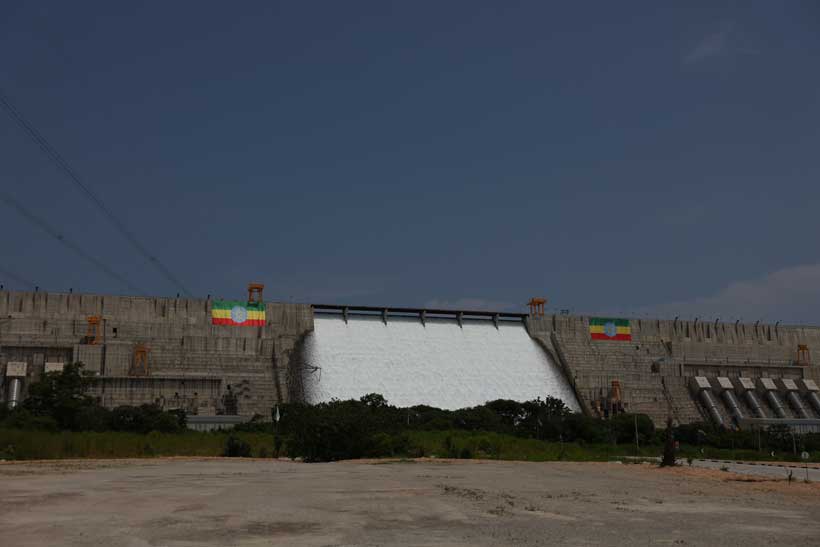
3) China’s Role in the Grand Ethiopian Renaissance Dam (GERD) Issue (Ethiopia and Egypt)
Historically, China has adopted a policy of cautious pragmatic neutrality in the GERD crisis, given its major strategic interests with both main parties to the dispute (Egypt and Ethiopia).
– With Ethiopia: China is the largest investor and primary financier of Ethiopia’s electricity and telecommunications networks. It also wields influence through leverage related to Ethiopian sovereign debt.
– With Egypt: China has vital interests in the Suez Canal, and Egypt is a leading destination for Chinese investment in the region.
However, with the escalating tensions between Egypt and Ethiopia, particularly Addis Ababa’s deliberate move to fully operate the dam and disrupt Egypt’s access to its full share of Nile waters due to the Grand Ethiopian Renaissance Dam (GERD), Beijing has adopted a more balanced approach. Recent statements following President Xi Jinping’s visit to Cairo emphasize the importance of Egypt’s water and food security while supporting binding African diplomatic solutions and hinting at its capacity to play a quiet developmental and technical mediating role rather than resorting to overt pressure.
4) The Security Portfolio and Peacekeeping
Chinese economic influence has gradually evolved into tangible security roles, with China increasingly contributing to United Nations peacekeeping forces in Africa. Beijing has expanded its military sales and joint exercises, such as transporting entire military units via strategic cargo planes and landing craft for drills with nations like Tanzania, to protect its investments and counter security threats that could disrupt trade flows.
5) Future Prospects for China’s Role and the Potential Benefits of its Influence in Africa: Two Divergent Perspectives (The Chinese Defensive Stance vs. The US/Western Stance) Opposing the Chinese Model and Presence in Africa)
The future prospects of this Chinese role and the potential benefits of its influence can be summarized through two divergent perspectives, the (Chinese view versus the US/Western) view that opposes the Chinese model and presence in Africa, The conflict between Chinese, Western, and American viewpoints, can be understood through the following table, designed by the Egyptian researcher:
| Perspective (African advantages and opportunities) – Chinese Perspective | Challenges and concerns (The other side of the coin) – Western and American Perspective |
| Bridging the infrastructure gap: Chinese investments directly contribute to the construction of vital roads, energy facilities, and ports – assets the continent lacks – thereby boosting intra-African trade | Debt trap: Several African nations (such as Kenya) face immense financial burdens and pressure to reschedule Chinese debt, a situation that could compromise their economic sovereignty |
| A politically unconditional alternative: Unlike Western institutions, China does not impose political dictates or restrictions regarding forms of governance or human rights | Opaque agreements: Many Chinese concession and port contracts in Africa lack transparency and contain clauses that undermine local control over data and customs |
| Balance and developmental mediation: China could play a future role as a guarantor of regional stability (as a mediator in the Horn of Africa and the Grand Ethiopian Renaissance Dam) to protect its interests | Arena for international conflict: Africa and its ports could become a stage for settling scores and a new Cold War between Washington and Beijing |
By understanding and analyzing the preceding table, we can arrive at the following facts to understand the Chinese and Western points of view:
– Regarding the Chinese perspective (highlighting the benefits and opportunities offered to African nations) versus the challenges and concerns (the other side of the coin promoted by Western and US powers competing with China): China defends its position by pointing to its ability to bridge Africa’s infrastructure gap. Chinese investments directly contribute to the construction of vital roads, energy facilities, and ports—infrastructure the continent lacks—thereby boosting intra-African trade. On the other hand, Western and U.S. concerns and challenges—representing the other side of the coin—come to the fore through accusations that Beijing is creating a debt trap for African nations.
This stems from the immense financial burdens and pressures to reschedule Chinese debt faced by several African countries—such as Kenya—which could compromise their economic sovereignty.
– Regarding political conditionality, China defends its development model in Africa by asserting that it imposes no political conditions, dictates, or restrictions concerning forms of governance or human rights, unlike Western and U.S. institutions. Conversely, the U.S. and the West accuse China of striking opaque agreements with impoverished African nations; they argue that many Chinese concession and port contracts lack transparency and contain clauses undermining local control over data and customs claims that China rejects.
– Regarding balance and developmental mediation, China advocates for its potential future role as a guarantor of regional stability among African nations—acting as a mediator in conflicts such as those in the Horn of Africa and the dispute over the Grand Ethiopian Renaissance Dam (GERD) between Egypt and Ethiopia—to safeguard its interests. Meanwhile, the U.S. and the West accuse China of turning Africa into an arena for international conflict, alleging that the continent and its ports could become a theater for settling scores and a new Cold War between Washington and Beijing.
Based on the preceding overview and analysis, we conclude that future Chinese influence offers tangible benefits for filling the development gap in Africa; however, realizing these benefits depends entirely on the institutional capacity of African nations to negotiate equitable terms that safeguard their sovereignty and resources, as well as on the ability to maintain greater room for maneuver in their dealings with major powers.
