


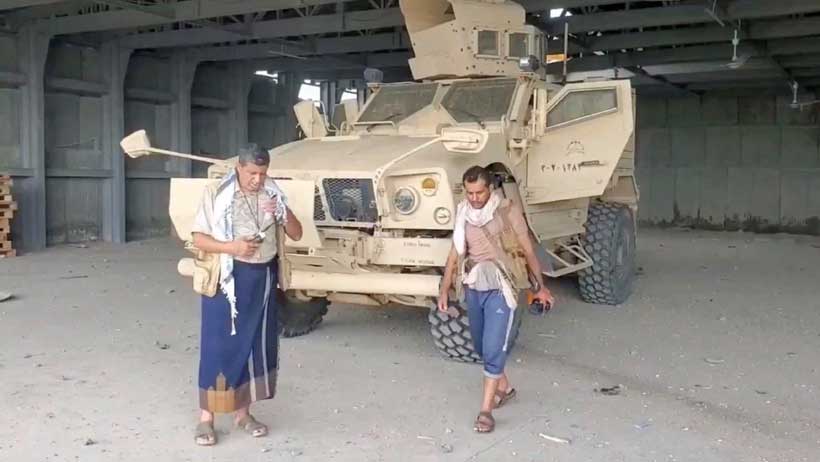
There is a particularly dark irony, at least from our perspective, in seeing the port of Mocha change hands again. This is the town that gave the world its coffee, where ancient Yemeni beans used to be loaded onto Ottoman and European ships bound for Istanbul, Amsterdam, and more. It was a place for centuries associated not with war and conquest, but with trade and commerce. On 10 September 2026, it was to change hands again, for the first time in almost a decade, with Iran-backed Houthi fighters entering the city after government forces under Tareq Saleh’s National Resistance withdrew from the area following several days of heavy fighting. The movement had only just begun when, within twenty-four hours, its fighters had crossed the water to capture Perim Island in the middle of the Bab al-Mandeb Strait itself. For those of us watching over the water from Hargeisa, this is news that affects us not only at a distance but also on our doorstep.
I want to resist the temptation, common to many commentators at present, to see the situation as just another episode in Yemen’s long-running civil war. It is that, certainly, but it has a significance beyond that which extends to the operations of a non-state armed movement backed by one of the world’s leading powers and coming closer than at any point in a decade to having real physical leverage over one of the planet’s key maritime arteries. Between ten and fifteen per cent of global seaborne trade flows through the Red Sea corridor each year, and a considerable portion of Gulf oil which no longer flows freely through the Strait of Hormuz has been rerouted through this passage. The symbolic significance of Mocha’s fall is the easy part; the implications of Houthi forces now holding positions on both shores within a day’s march of the strait’s narrowest point is another matter entirely.
Why Mocha Matters More Than Its Size Suggests
Mocha itself is not a large city, and on paper might seem something of a minor prize compared to the great battles and sieges fought during Yemen’s four-year war. Yet geography is not concerned with demography. Mocha’s location on the coast, a mere seventy-five kilometers north of the Bab al-Mandeb, means the town’s port and the coastal road leading south to Dhubab act as a springboard towards the strait proper. This implies the loss of the town meant the loss of the last remaining major government-controlled node on that coastal corridor. The almost immediate (and arguably inevitable) Houthi news that the movement had seized Perim and was now advancing on Hanish Islands adds further credence to the idea that the fall of Mocha was never in fact the main military goal. It was always about creating a bridgehead between the Houthi-held north of Yemen and the strait, completing a land corridor around the strait’s immediate approaches.
Stay ahead of the geopolitical week.
MD Briefing delivers expert analysis across five global fronts — the Indo-Pacific, energy, geoeconomics, European security, and the Middle East — every Monday morning. Free.
It is worth being precise on this point, since precision is often the first casualty when assessing war operations. Houthi spokesmen have insisted that the movement has no intention to prevent navigation through the Red Sea, merely to extend its territorial control up to a point near the coastal road. Analysts monitoring the situation have also pointed out the difference between being able to capture territory and being able to interdict shipping at will. This may not be the same thing, but intent and capability are two different considerations, and any government or shipping insurance company with vessels passing through these waters now needs to reassess the risk of sailing through this zone. The Houthis’ earlier blockade against Saudi vessels (announced in July) and the intermittent attacks that forced Saudi Arabia to temporarily halt exports through Bab al-Mandeb in the past are ample evidence of the movement’s willingness to use the strait as a means of leverage if it cannot fully control it.
Riyadh’s Uncomfortable Position
For Saudi Arabia, this is arguably the most significant military setback of the wider Iran war, which began earlier this year. The kingdom has relied on the Red Sea route precisely because the Strait of Hormuz has, until recently, been closed to much of its trade. The reports that Crown Prince Mohammed bin Salman personally appealed to Washington for direct military assistance after the Houthi advance towards Perim Island speak volumes about the kingdom’s concerns. Riyadh spent a decade and enormous resources trying to prevent this situation, wherein the Houthi movement possessed the reach and confidence to threaten both Saudi energy infrastructure and Saudi shipping at the same time. The renewed blows against Saudi cities and the reported closure of a key oil pipeline in the days surrounding the fall of Mocha suggest the kingdom is now fighting on two fronts it had already settled with the 2022 truce.
There is a deeper lesson in this situation about Saudi strategy in Yemen, and it is that the years of externally brokered ceasefires bought quiet, not victory. The underlying balance of forces on the ground never shifted decisively in the government’s favor, and the reappearance of a wider regional war against Iran meant the situation always reverted back to something resembling its initial condition.
Tehran’s Calculated Patience
On Iran’s side, the calculus looked rather different and rather more successful. Whatever the exact nature of Iranian Revolutionary Guard involvement in coordinating the Houthi advance (Yemeni government sources have accused the guards of providing direct guidance), the strategic result is a useful one for Tehran, which does not require the Iranians to commit their own forces to the front. A Houthi movement at the door of the Bab al-Mandeb provides Iran with a second potential chokepoint to threaten, doubling the pressure it can put on Gulf oil exporters and Western naval planners, which now must consider protecting two straits rather than one. This is the essence of asymmetric proxy warfare, which Iran has mastered over two decades, investing modestly in a partner movement that can, at moments of its choosing, extract disproportionate costs from far wealthier adversaries.
What This Means for the Horn of Africa
Here I must speak not only as an analyst but also as someone from a region that faces the Bab al-Mandeb from the opposite shore. Eritrea, Djibouti, Somaliland, and the wider Horn of Africa coastline all have economic and security interests in what happens on the Yemeni side, whether they like it or not. Djibouti hosts multiple foreign military bases precisely because of this strait’s strategic importance, and any prolonged instability or interdiction risk in the passage has direct consequences for the ports, transit trade, and naval logistics Djibouti and, by extension, Somaliland’s own port aspirations at Berbera rely upon.
There is a less-discussed angle worth raising, and that is the increased likelihood of outside powers, Gulf states, Türkiye, and others, taking the opportunity to consolidate security arrangements on the African shore of the strait as a hedge against potential instability on the Yemeni side. Somaliland’s strategic position along this coastline, which one Hargeisa has attempted for years to turn into economic and diplomatic leverage, therefore becomes more rather than less relevant as the northern, Yemeni side of the strait becomes less predictable. It would not surprise me if the coming months see renewed interest from Gulf capitals in security cooperation along the African littoral, not out of goodwill but out of necessity.
The Wider Regional Picture
Stepping back, what we are witnessing is the convergence of two conflicts that have, until recently, been treated as separate in most policy circles: the direct US-Israel war against Iran, which opened earlier this year, and Yemen’s long-running internal civil war. Analysts covering the region have described the Houthi advance as the most significant regional development since the wider war against Iran began. I believe this assessment is fair. The Houthis have essentially turned a domestic Yemeni conflict into a second active front of the larger regional confrontation and done so with relatively low cost to themselves while extracting maximum strategic value.
The immediate diplomatic response, an emergency session at the United Nations Security Council and calls for restraint around further Saudi reinforcement of Mocha, reflects genuine alarm but is also the realistic limit of what multilateral bodies can achieve once hostilities reach this level. Ceasefire speeches and Security Council statements rarely change the on-the-ground realities, particularly when one side perceives (correctly, in this case) itself to have the stronger hand.
What happens next will probably depend less on diplomacy in New York than on the decisions made in Riyadh, Washington, and Tehran over the next weeks. Whether Riyadh receives the direct military support it has apparently requested, whether the Houthis choose to consolidate their present gains rather than further southward movement, and whether Iran perceives this to be the correct moment to press its advantage further are all factors that will decide whether or not Bab al-Mandeb will become a genuinely contested chokepoint or enter into a new equilibrium. Either way, we can no longer assume that the strait will remain a secondary concern next to Hormuz. That is not an abstract consideration to those of us who live on the Horn of Africa. It is the water in which we sail.
