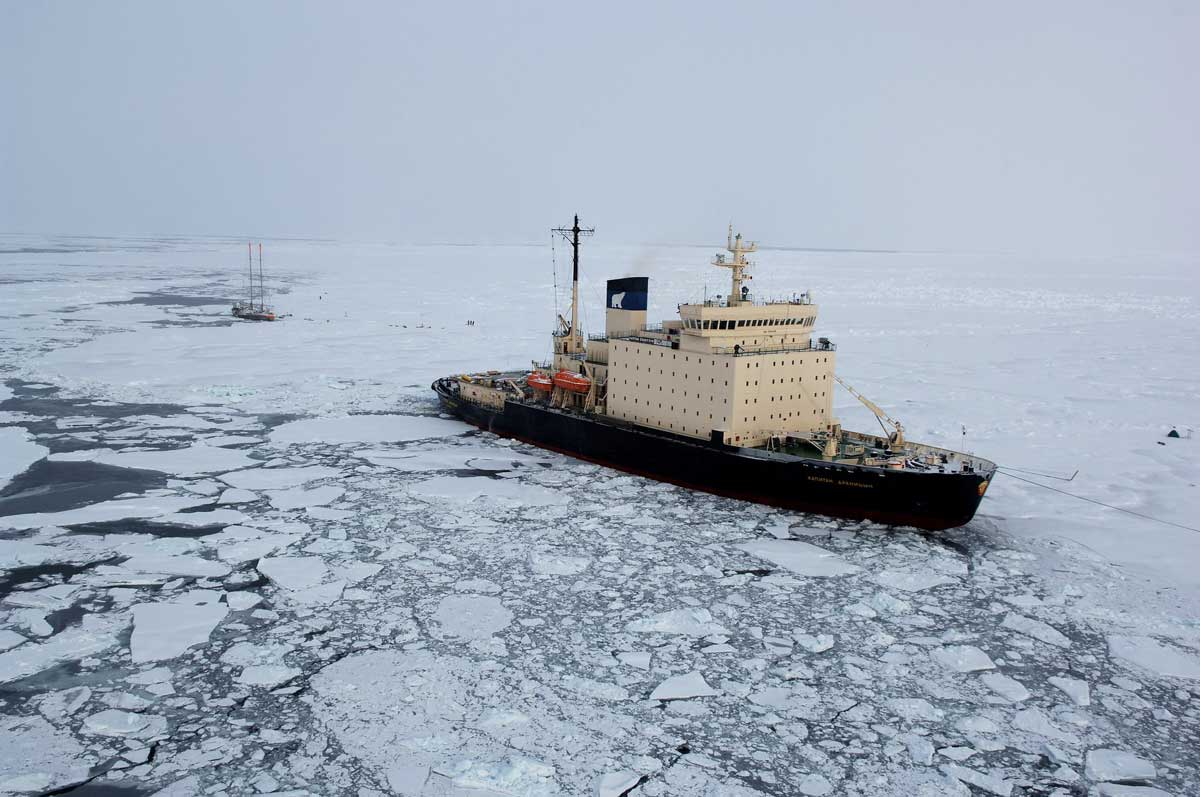
For much of modern history, the Arctic was protected by geography. Thick ice, brutal weather and distance kept it away from the busy arteries of global trade. That protection is fading. European Commission President Ursula von der Leyen’s visit to Greenland this week could easily be read as another diplomatic engagement. It was more than that. Her announcement of a €200 million EU partnership package came at a time when major powers are looking North with renewed interest. Meanwhile, Russia is sending more oil to Asia through the Northern Sea Route. These developments may appear separate but they tell the same story. The Arctic is not simply melting. It is becoming politically navigable.
Climate change is usually discussed as a threat to geography. In the Arctic, it is also changing the strategic value of geography. According to the National Oceanic and Atmospheric Administration’s (NOAA)Arctic Report Card 2025, the end of summer Arctic sea ice was 28 percent less extensive than in 2005. The remaining ice was also younger and thinner. NOAA directly links this decline with growing maritime traffic and renewed interest in resource extraction and national security. Therefore, the environmental crisis is producing a geopolitical paradox. What the planet loses in ice, states gain in access.
That access is beginning to morph into commerce. Russia’s Northern Sea Route runs along its Arctic coast and offers a shorter connection between its Western ports and Asian markets than traditional southern routes. Reuters reported in August 2026 that seven tankers had already carried around six million barrels of Russian crude towards Asia through the route this year. That was nearly half the volume transported during the whole of 2025. The route remains seasonal and difficult but it can cut roughly two weeks from voyages to China. Russia is also deploying domestically built ice class LNG carriers capable of navigating harsh Arctic conditions.
These numbers remain small beside traffic through established global chokepoints. That is precisely why they matter. Structural shifts rarely arrive with spectacular numbers. The Suez Canal has not lost its relevance and the Arctic will not replace it tomorrow. What has changed is the emergence of another strategic option. In an era when conflict and geopolitical rivalry can disrupt traditional maritime corridors, an alternative northern passage carries value beyond the cargo it transports. A shortcut becomes strategic when the longer road becomes dangerous.
Stay ahead of the geopolitical week.
MD Briefing delivers expert analysis across five global fronts — the Indo-Pacific, energy, geoeconomics, European security, and the Middle East — every Monday morning. Free.
For Moscow, the Northern Sea Route is therefore more than a commercial experiment. It can connect Russia’s vast Arctic energy resources with Asian consumers while reducing dependence on maritime spaces where Western influence is stronger. Reuters also reported that Arctic shipments offer Russian exporters advantages in navigating sanctions related pressures and inspections. This gives Moscow something increasingly valuable under economic pressure, strategic manoeuvrability. Geography, once Russia’s Arctic constraint, is slowly becoming an asset.
Greenland represents another piece of this changing cartograph. Von der Leyen’s visit placed European economic engagement directly beside questions of sovereignty and strategic competition. The new EU package covers digital connectivity, sustainable mining, energy, tourism, education, fisheries and housing. The European Commission also highlighted cooperation on critical raw materials. This matters because Greenland is no longer viewed merely as a remote Arctic territory. Its location, resources and proximity to emerging northern routes give it growing geopolitical weight.
The wider political context makes Europe’s move even more significant. Von der Leyen arrived amid repeated calls by US President Donald Trump for American control of Greenland, a position resisted by Greenlandic and Danish leaders. Therefore, Brussels is doing more than financing development. It is a signalling presence. Economic partnership is becoming a language of geopolitical commitment. Greenland, once sitting at the edge of Europe’s strategic imagination, is moving closer to its centre.
Still, reducing the Arctic to another Cold War map would be a mistake. The emerging competition is more complicated. Russia possesses the longest Arctic coastline and is investing in the Northern Sea Route. Europe wants secure access to critical minerals, connectivity and northern infrastructure. The United States sees Greenland and the wider Arctic through the lenses of security, geography and resources. China, although not an Arctic state, has also sought a larger economic role in northern shipping and resources. Their interests overlap but they are not identical. The Arctic is becoming crowded before it has become fully accessible.
This is what makes the region an emerging contested commons. The high seas have always required states to balance commerce, sovereignty, security and freedom of navigation. The Arctic adds environmental vulnerability to all four. More ships may create economic opportunities but they also increase risks in a region where accidents are difficult to manage. The International Maritime Organization’s mandatory Polar Code already covers ship design, navigation, training, search and rescue and environmental protection. Rules exist. The harder question is whether those rules can keep pace with a region whose commercial importance is beginning to overlap with strategic rivalry.
There is another concern. As accessibility grows, presence itself can become a form of power. Ports, icebreakers, satellites, mineral projects and shipping infrastructure may serve commercial purposes while creating strategic leverage. None of this makes armed conflict in the Arctic inevitable. It does mean that the boundary between economics and security is becoming thinner much like the ice itself. Where ships can sail, states will eventually compete to shape the rules of sailing.
That is why the Arctic deserves attention before it produces a crisis. Ukraine and the Middle East dominate geopolitical headlines because their consequences are immediate and visible. The transformation of the Arctic is quieter. There has been no single event declaring that a new strategic theatre has opened. Instead, tankers are moving, investment is arriving, ice is retreating and governments are repositioning. It is geopolitics by accumulation rather than explosion.
The deeper story, then, is neither von der Leyen’s visit nor Russia’s latest Arctic shipment. Both are symptoms of something larger. Climate change is altering the physical cartography on which geopolitics has traditionally been played. A region once separated from global competition by ice is increasingly connected to trade, resources and strategic rivalry. The Arctic may never become the next Suez, Ukraine or South China Sea. It does not need to. It is becoming strategically important in its own right.
No summit formally reopened the Arctic. The ice did.
The two most time sensitive anchors are verified as of 8 September 2026. Reuters confirms the €200 million EU Greenland package announced on 7 September, while the European Commission independently confirms the package and its focus on connectivity, hydropower and critical raw materials. NOAA confirms the 28 percent sea ice comparison and explicitly connects declining ice with increased maritime activity and security concerns. The IMO also confirms the Polar Code requirements used in the article.