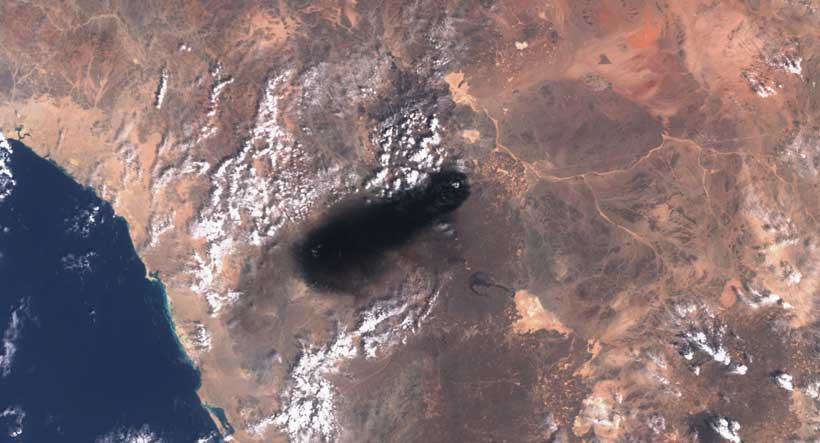
Saudi Arabia has closed its East-West oil pipeline due to a drone attack linked to Iranian-backed militias in Iraq. This pipeline is crucial for Saudi Arabia, as it allows the country to bypass the congested Strait of Hormuz, which has faced reduced tanker traffic due to an ongoing conflict between the U.S. and Iran. The Saudi Energy Ministry stated that the closure is a precautionary measure; the pipeline typically carries about 4 to 5 million barrels of oil per day, contributing 4% to 5% of global oil supply. The attack caused injuries and damage, but the exact impact on oil exports is still being evaluated.
President Trump, while attending a golf event in Ireland, suggested that Iran was likely responsible for the attack and predicted that oil prices would drop after the upcoming U.S. midterm elections. Recently, oil prices have surged, with diesel prices in the U.S. topping $6 a gallon due to tensions in the region. Reports surfaced that the Houthis, aligned with Iran, seized the strategic Perim Island in the Red Sea.
Crown Prince Mohammed bin Salman of Saudi Arabia reached out to Trump for military assistance against the Houthis, but Washington decided not to intervene directly at that moment, offering intelligence support instead. There were concerns that the attacks on the pipeline and Perim Island could escalate tensions further, especially since diplomatic efforts to resolve the war have stalled.
Iran’s parliamentary committee has stated that negotiations are futile unless the U.S. meets Iran’s demands, particularly concerning recognition of its control over the Strait of Hormuz. The Iranian foreign ministry announced plans for discussions with Gulf states in Oman regarding the strait. Meanwhile, Iraq’s government dismissed a military commander connected to the attack and has closed the Shalamcheh border crossing with Iran as a precaution to prevent further incidents.
The Saudis have not retaliated yet, following a request from Iraq’s prime minister, but they maintain the right to take necessary actions to protect their interests. Saudi Arabia’s oil production has plummeted to its lowest level in over 30 years, partly due to attacks on maritime vessels by Houthi factions. These forces, supported by Iranian guidance, are reportedly planning counterattacks to reclaim territories lost to the Houthis, who have advanced significantly along Yemen’s coast under Iranian direction. The Houthis have claimed that maritime navigation remains safe, except for Saudi vessels, which are subject to a ban.
With information from Reuters