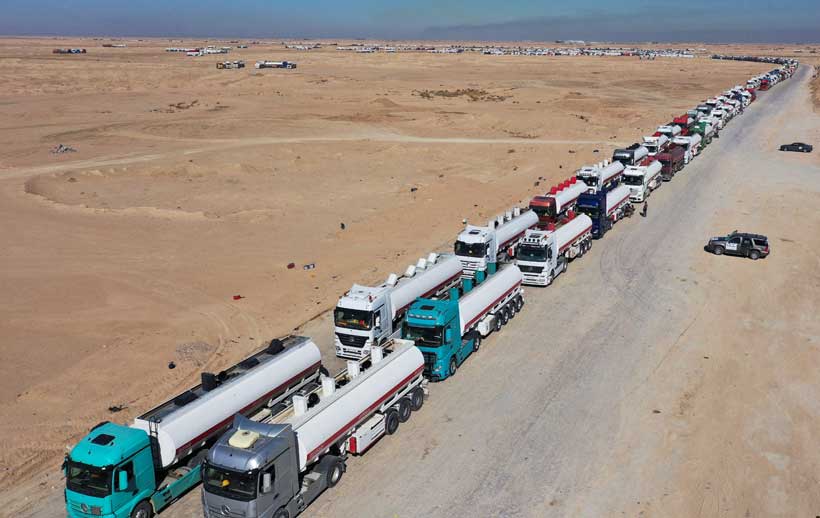
Outside a depot near Basra, many tanker trucks are lined up to load Iraqi crude oil headed for the Syrian port of Baniyas. This overland route, which had been mostly unused for years, has gained importance as Iraq seeks new ways to export oil due to disruptions in the Strait of Hormuz caused by the Iran war. The situation in Syria has improved, making this route more appealing despite higher transportation costs.
Iraq, the second-largest oil producer in OPEC, primarily exports crude from Gulf terminals, but the Syrian route now provides a key alternative for heavy crude shipments. The Qatari energy group UCC Holding has begun transporting Iraqi crude oil by truck to Baniyas, with the loading of 120,000 to 150,000 barrels per day, depending on truck availability. The oil is coming from Iraq’s southern oilfields for export to international markets.
UCC is expanding its fleet from 6,000 to 10,000 trucks and employs around 10,000 drivers. Since the agreement started on October 26, UCC has transported about 1.6 million barrels and aims to move between 5 million and 14 million barrels at a discount of $38 per barrel over three months. The oil is sent to Mediterranean refineries, while UCC receives approximately $12 per barrel for transportation costs. Iraq’s oil production reached nearly 4.5 million barrels per day in October.
With information from Reuters
Stay ahead of the geopolitical week.
MD Briefing delivers expert analysis across five global fronts — the Indo-Pacific, energy, geoeconomics, European security, and the Middle East — every Monday morning. Free.