


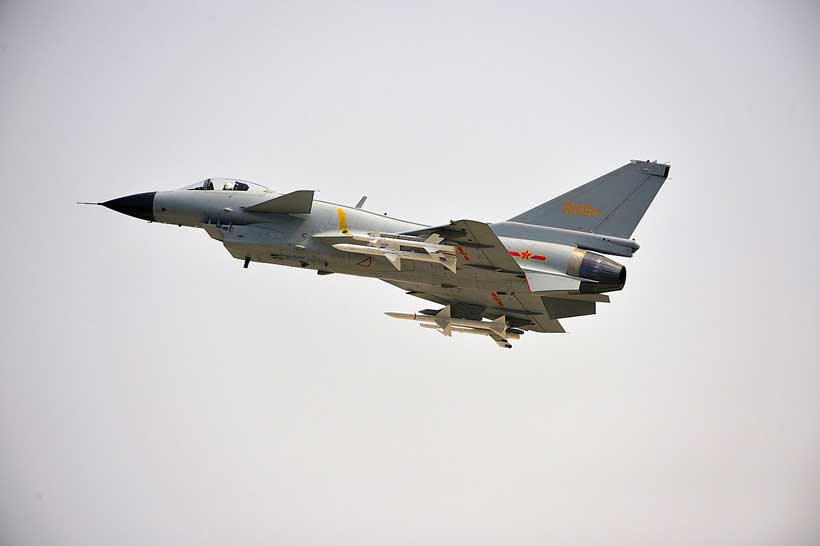
Chinese President Xi Jinping’s historic visit to Egypt (in early September 2026) is closely linked to the modernization and expansion of the Egyptian Armed Forces’ arsenal. The visit represents the highest level of political and diplomatic cover for an unprecedented leap in military cooperation between the two countries. As an Egyptian expert specializing in Chinese politics, I can analyze and summarize the dimensions of this relationship, including President Xi’s visit to Cairo and Beijing’s military rapprochement with Egypt, by examining the timing of the visit with the joint Egyptian-Chinese Civilization Eagles air exercises. The Chinese president’s visit came directly after the conclusion of these prominent joint air exercises in Egypt. These maneuvers marked the first time in the history of the African continent that advanced (Chinese J-16 fighter jets) participated. Alongside (KJ-500 early warning aircraft) and (YY-20A aerial refueling tankers).
This operational demonstration reflected Beijing’s desire to showcase the capabilities of its integrated air defense system to the Egyptian leadership, paving the way for potential arms deals. President Xi Jinping’s visit coincided with negotiations for the modernization and arming of the Egyptian Air Force by China. This visit comes at a time of growing indications of Egypt’s increasing interest in acquiring advanced Chinese fighter jets, such as the (J-10C) and perhaps the fifth-generation Chinese fighter jet, the (J-35). Through this move, Egypt seeks to modernize its air force and overcome American and European restrictions or delays in supplying it with advanced weapons or long-range missile technology, capitalizing on China’s desire to expand its presence in the Middle East defense market.
Furthermore, Egypt aims to enhance joint manufacturing and localize advanced Chinese technology in Cairo. Therefore, the defense relationship between the two countries extends beyond mere procurement to include the establishment of Chinese military industries within Egypt. China is a key partner for Egypt in the field of unmanned aerial vehicles (UAVs). Egypt and China have signed several memoranda of understanding with the Chinese company Norinco for the joint production of attack and reconnaissance drones, such as the Hamza II, using up to 85% locally sourced Egyptian components. Xi Jinping’s visit to Cairo provides direct political support to accelerate the transfer of sensitive Chinese technology to Egypt. Egypt is using its close relationship with the Chinese president and his visit as a strong political message, reaffirming Cairo’s commitment to a strategy of international balance and strategic equilibrium to diversify its arms sources. Egypt is not replacing its traditional allies, such as the United States and France, but is opening new avenues with Beijing to acquire advanced weaponry alternatives under flexible financing terms and with the transfer of advanced Chinese military technology without political constraints.
Therefore, the dimensions of Israeli concern regarding the growing military cooperation between Egypt and China and Cairo’s development of its weapons systems in an attempt to break the Western and American monopoly and change the rules of strategic military superiority in favor of Israel are becoming increasingly apparent. This is coupled with growing Israeli military apprehension about the potential erosion of its qualitative air superiority. Israeli security doctrine relies on ensuring absolute air superiority in the region, a principle deeply rooted in the historical concept of Qualitative Military Edge (QME). The United States is legally obligated to uphold this principle to guarantee Israel’s superiority over any potential Arab alliance. However, the introduction of advanced Chinese fighter jets, such as the J-10C and J-16, grants the Egyptian Air Force additional capabilities beyond the scope of American restrictions. This leads to the integration of Chinese weaponry with French Rafale aircraft, enhancing the flexibility and diversity of Egyptian combat capabilities. Tel Aviv also fears the potential for liberation from technical and political constraints. The United States often imposes restrictions on guided weapons systems, such as long-range air-to-air missiles for F-16 fighter jets.
Stay ahead of the geopolitical week.
MD Briefing delivers expert analysis across five global fronts — the Indo-Pacific, energy, geoeconomics, European security, and the Middle East — every Monday morning. Free.
Chinese weapons are often offered under less complex conditions and without severe operational restrictions that would hinder Egyptian military decision-making. This raises concerns in Israel regarding the modernization of long-range air defense systems. Therefore, Tel Aviv is closely monitoring Egypt’s acquisition of advanced Chinese air defense systems, such as the HQ-9B. These systems are comparable in effectiveness to advanced Russian systems, and their deployment would restrict Israeli reconnaissance and operational aircraft activity in the Sinai Peninsula and along the shared border. This raises concerns in Tel Aviv about the geopolitical repercussions of Egypt’s rapprochement with major powers like China, particularly in its confrontation with Israel. Israel views this Egyptian rapprochement with Beijing as a shift in the international and regional balance of power in the Middle East. Therefore, Tel Aviv fears the exchange of tactical and intelligence expertise, as well as large-scale joint exercises, such as the Civilization Eagles drills between the Egyptian and Chinese air forces.
The dimensions of this Israeli concern regarding the Egyptian-Chinese military rapprochement can be broken down into four aspects. The first is Israel’s apprehension that the US arms deals with Egypt will break the conditional nature of its arms sales, which are subject to continuous restrictions and red lines. This is especially relevant given Washington’s decades-long practice of imposing strict conditions on arms sales to Egypt to ensure that Israel’s security is not threatened. For example, the US has for years prevented Egypt from acquiring fifth-generation fighter jets, such as the F-35, or even advanced long-range air-to-air missiles, such as the Amraam, with the latest versions of Egypt’s F-16 fighters (F-16). Therefore, Cairo found the Chinese alternative. Egypt’s move towards Beijing means acquiring advanced weapons without political conditions or restrictions on their use, equipped with complete and long-range weapons packages. Herein lies the second dimension, represented in the Israeli apprehension regarding the threat to its qualitative air superiority. The introduction of modern Chinese fighters alters the balance of air power. The J-10C fighters (J-10C), known militarily as the Strong Dragon, are classified as a multi-role platform of the 4.5 generation. It features an advanced AESA radar (AESA). It is capable of carrying missiles, including (PL-15) long-range air-to-air missiles (with a range exceeding 200 km). This breaks the embargo imposed on Egypt regarding this type of munition and enables it to engage (Israeli F-15 and F-16 fighters) from safe distances.
The Chinese (J-16 fighters) are powerful, heavy support aircraft (derived from the Russian Sukhoi fighter systems). They provide Egypt with formidable offensive capabilities, a wide operational range, and a massive weapons payload, thus enhancing Egypt’s air deterrent capabilities. The third dimension lies in Israel’s apprehension regarding the independence of Egyptian military and technological decision-making and the diversification of Egyptian arms sources. This stems from Egypt’s success over the past decade in shifting from total dependence on the United States to a policy of strategic diversification, including France, Russia, Germany, and China. This shift implies Egyptian independence from maintenance and spare parts systems. Reliance on China protects Cairo from potential American pressure, such as the withholding of aircraft spare parts or the suspension of technical support during crises. The fourth dimension lies in Israel’s concern about the geopolitical implications of China’s presence in the Eastern Mediterranean with Egypt’s assistance. Israel, along with the United States, fears that military cooperation between Egypt and China paves the way for Beijing’s geopolitical influence to expand in the Suez Canal region and the Eastern Mediterranean areas of strategic and vital importance to Israeli, Western, and American security.
In short, we understand that Chinese President Xi Jinping’s visit to Egypt officially marks a new phase in military cooperation between Egypt and China. This phase moves from the mere supply of conventional equipment to an advanced strategic defense partnership encompassing modern fighter jets, drone technology, and joint manufacturing. This development is a source of concern for Israel, as it threatens Egypt’s qualitative military edge in the region, bolstered by military and arms support from Beijing.
