


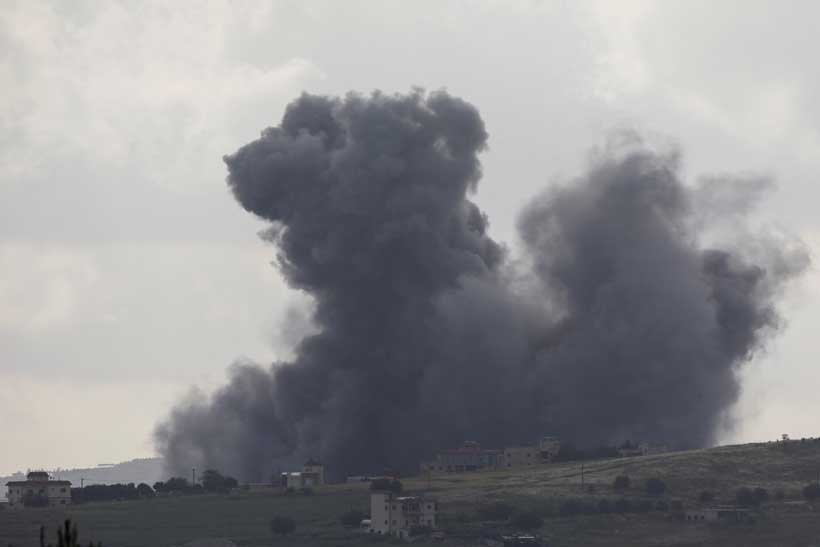
Iran has warned the United States that it would respond forcefully if Israel launches a major offensive against the Ali al Taher ridge in southern Lebanon, where Iranian Revolutionary Guard personnel are reportedly positioned alongside Hezbollah fighters. The warning highlights Tehran’s continued involvement in the Israel Hezbollah conflict despite a ceasefire agreed in June.
Iran Warns Against Israeli Advance
According to regional officials briefed on the message, Tehran warned Washington that a full scale Israeli assault on the ridge could trigger a large Iranian attack.
The message was reportedly delivered through Oman, which has played a mediating role between Iran and the United States. One official said the warning was delivered in mid August.
Iran’s reported intervention suggests that Tehran views any Israeli territorial expansion in southern Lebanon as a direct strategic threat.
Stay ahead of the geopolitical week.
MD Briefing delivers expert analysis across five global fronts — the Indo-Pacific, energy, geoeconomics, European security, and the Middle East — every Monday morning. Free.
Why Ali al Taher Matters
The mountainous ridge has significant military value because it overlooks southeastern Lebanon. Lebanese security sources say Hezbollah has established an underground command centre and weapons storage facilities there.
Israel has occupied territory south of the ridge and has identified Ali al Taher as one of its primary operational focuses.
Hezbollah has publicly claimed control of the position and warned that it would resist any Israeli attempt to advance.
IRGC Personnel Reportedly Present
Two regional officials told Reuters that more than a dozen Islamic Revolutionary Guard Corps personnel, including at least two senior officers, are positioned alongside Hezbollah fighters at the site.
Hezbollah has neither confirmed nor denied the presence of Iranian forces.
Israel has disputed the assessment, with an Israeli military source reportedly saying that it believes there are no IRGC forces inside the ridge.
Israel Applies Pressure Instead of Launching a Major Assault
Rather than immediately storming the position, Israel appears to have focused on containing the fighters inside.
According to Hezbollah and regional sources, Israeli forces have attempted to prevent supplies, including food and water, from reaching the underground positions. Israel has also carried out strikes against Hezbollah fighters near access points to the facility.
This approach could allow Israel to weaken the position without immediately triggering the wider Iranian response Tehran has threatened.
Hezbollah Threatens a Wider War
Hezbollah has warned that a large scale Israeli attack on Ali al Taher would effectively end the existing ceasefire and return the conflict to full scale warfare.
The group has indicated that retaliation could include missile attacks against communities in northern Israel.
A Lebanese source briefed by Hezbollah said fighters could still access their positions from the northern side of the ridge, suggesting that the group retains some operational capability there.
US Faces a Difficult Balancing Act
The reported Iranian warning puts Washington in a difficult position.
The United States has an interest in preventing the Lebanon ceasefire from collapsing, but it also remains closely aligned with Israel. Any US attempt to restrain Israeli military action could therefore create friction with its ally, while failure to prevent escalation could draw Iran directly back into the conflict.
The White House rejected the claim that Washington had pressured Israel not to attack the ridge.
Analysis
The Ali al Taher ridge has become more than a local military position. It is increasingly a potential trigger point for a wider Iran Israel confrontation.
For Israel, controlling the ridge could strengthen its military position in southern Lebanon and prevent Hezbollah from rebuilding infrastructure close to Israeli forces. For Hezbollah, surrendering the position would represent both a military and symbolic setback. For Iran, an Israeli assault involving Iranian personnel could provide a direct justification for retaliation.
This creates a dangerous escalation ladder. Israel can continue its siege and targeted strikes without immediately crossing the threshold of a major offensive, while Iran can maintain deterrence by warning that a full assault would provoke a response.
The biggest risk is therefore miscalculation. If Israel launches a ground offensive and Iranian personnel are killed, Tehran could feel compelled to respond directly. That could transform a contained confrontation in southern Lebanon into a broader regional conflict involving Iran, Israel, Hezbollah and potentially US forces.
The ridge is consequently emerging as a critical test of whether the June ceasefire can survive growing military pressure.
With information from Reuters.
