


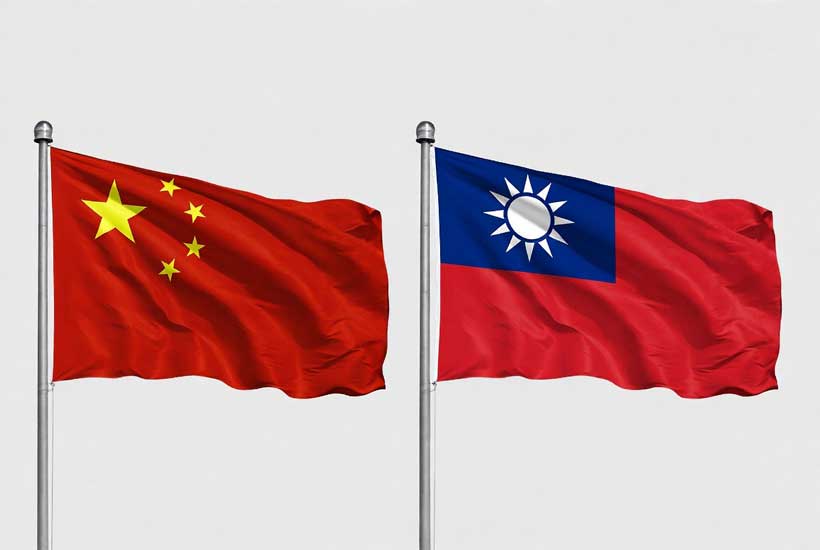
Taiwan says it must strengthen its independent maritime surveillance and conduct its own ocean surveys as Chinese Coast Guard patrols and research vessels increase pressure around the island, raising concerns about maritime security and control over surrounding waters.
Speaking at a sea drone forum in the southern city of Tainan on Monday, Kuan Bi-ling, head of Taiwan’s Ocean Affairs Council, which oversees the Coast Guard, said the island’s security and economic stability depended heavily on protecting its maritime environment.
“Taiwan’s ocean must be surveyed by ourselves, and we must master our own information,” Kuan said, stressing the need for Taiwan to develop more comprehensive maritime intelligence and improve its ability to identify potential threats.
She said Taiwan’s resources, energy supplies and transportation networks depended on the surrounding waters. The island also sits along major international shipping routes that are essential to global supply chains.
Stay ahead of the geopolitical week.
MD Briefing delivers expert analysis across five global fronts — the Indo-Pacific, energy, geoeconomics, European security, and the Middle East — every Monday morning. Free.
“Therefore, protecting these waters concerns not only the daily lives of Taiwan’s people but also global economic development,” she added.
Kuan identified China’s growing maritime activities as a major challenge, particularly what Taiwan describes as grey-zone harassment. The term refers to activities that apply pressure without crossing the threshold of open military conflict, including frequent patrols, surveillance and operations designed to test the capabilities of Taiwan’s security forces.
She said the Coast Guard needed additional equipment and more comprehensive intelligence capabilities to detect potential threats earlier and respond more effectively.
China’s maritime activity increases pressure on Taiwan
Taiwan has repeatedly accused China of expanding its maritime presence around the island through Coast Guard patrols and scientific research vessels.
On Saturday, Beijing announced that another Chinese Coast Guard patrol had operated in waters off Taiwan’s eastern coast. Taiwanese authorities have also reported several incidents this year involving Chinese research vessels sailing near the island.
Beyond maritime operations, China’s military maintains an almost daily presence around Taiwan, with aircraft and naval vessels operating in the surrounding region.
Taipei argues that these activities are intended to reinforce Beijing’s sovereignty and jurisdiction claims over waters that Taiwan considers its own. Taiwan’s democratically elected government maintains that China has no jurisdiction over its surrounding waters and accuses Beijing of attempting to establish control through repeated patrols and maritime operations.
Taiwan has also accused Chinese authorities of harassing commercial vessels through radio communications in waters where, according to Taipei, Beijing has no jurisdiction.
China rejects Taiwan’s claims to separate sovereignty and considers the island part of its territory. Beijing has repeatedly stated that it seeks peaceful reunification but has never renounced the use of force to bring Taiwan under its control.
Why maritime information matters for Taiwan’s security
Taiwan’s emphasis on independent ocean surveys reflects the strategic importance of maritime information in protecting the island’s surrounding waters.
Accurate knowledge of shipping movements, underwater geography and maritime activity can help authorities distinguish routine commercial operations from potentially threatening activities. It can also improve the Coast Guard’s ability to monitor unusual vessel movements and coordinate responses to security incidents.
The growing importance of unmanned maritime systems also creates opportunities for Taiwan to strengthen surveillance capabilities without relying exclusively on conventional patrol vessels.
For Taiwan, controlling its own maritime information is therefore connected to both operational security and its ability to maintain an independent understanding of activity around the island.
Implications for regional shipping and security
The situation carries implications beyond the immediate relationship between Beijing and Taipei. Taiwan occupies a strategically important position along major maritime routes connecting East Asia with international markets.
Any escalation involving Coast Guard vessels, research ships or military forces could increase uncertainty for commercial shipping and regional supply chains.
China’s continued maritime operations and Taiwan’s efforts to strengthen surveillance also reflect a wider pattern of competition over maritime jurisdiction and strategic influence in the Indo-Pacific.
For now, Taiwan is seeking to improve its ability to monitor surrounding waters, strengthen its Coast Guard and reduce its dependence on external maritime information. However, as Chinese patrols and military activities continue, the challenge will be maintaining maritime security without allowing recurring confrontations to escalate into a wider conflict.
With information from Reuters.
