


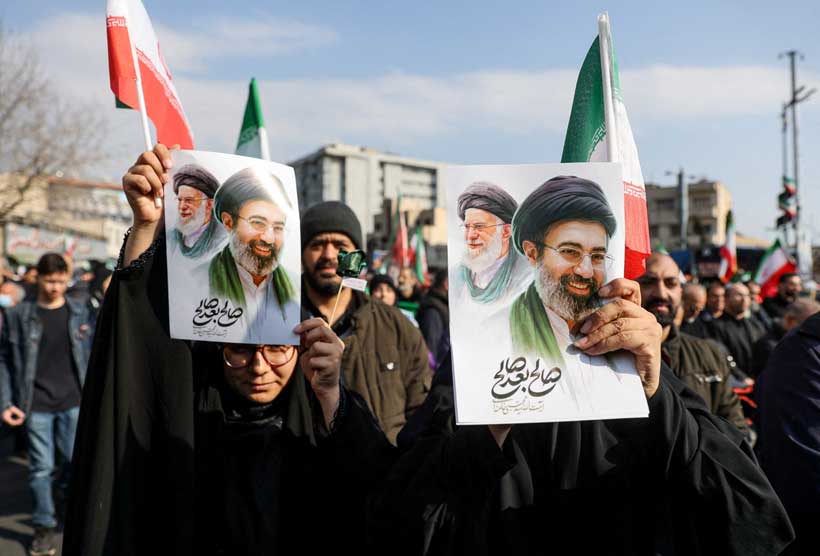
Mojtaba Khamenei Remains Out of Public View
Six months into the war with the United States and Israel, Iran’s Supreme Leader Mojtaba Khamenei has remained completely absent from public view, raising growing questions about his health, authority and ability to lead the country during its most serious crisis in decades.
Iranian officials insist that Khamenei remains in control and continues to make major decisions from a secure location. However, the absence of any recent photograph, video or audio message has fueled speculation among both opponents and supporters of the Islamic Republic.
Growing Questions Over His Leadership
Khamenei’s only communications with the public have come through written statements read by state media. He was also absent from the elaborate funeral ceremonies held for his father, further intensifying doubts about his condition.
Iranian officials attribute his invisibility to fears that the United States or Israel could locate and target him. They say he continues to meet senior officials and receive major intelligence and policy reports.
Stay ahead of the geopolitical week.
MD Briefing delivers expert analysis across five global fronts — the Indo-Pacific, energy, geoeconomics, European security, and the Middle East — every Monday morning. Free.
President Masoud Pezeshkian said he held a seven hour meeting with Khamenei on August 10, while officials close to the Supreme Leader say his health is improving.
Nevertheless, the prolonged absence is beginning to affect public confidence.
Revolutionary Guards Strengthen Their Role
While Khamenei remains out of sight, the Islamic Revolutionary Guard Corps has become increasingly important to Iran’s wartime power structure.
The political system has reorganised around preserving state authority, maintaining military deterrence and preventing economic collapse. Senior Guards commanders now play a central role alongside political figures including President Pezeshkian and parliament speaker Mohammed Baqer Qalibaf.
Iran’s political institutions have so far survived the loss of senior leaders and commanders, suggesting that the regime has retained a functioning chain of command.
Economic Crisis Raises the Stakes
The leadership crisis is unfolding alongside severe economic pressure.
The war and blockade of Iranian oil exports have weakened the economy, damaged the rial and increased the risk of renewed domestic unrest. Authorities remain particularly concerned about protests following the violent suppression of demonstrations earlier this year.
For Iran’s leadership, maintaining political stability is therefore becoming as important as confronting external enemies.
Why Khamenei’s Absence Matters
The Supreme Leader occupies an unusually powerful position within Iran’s political system. Major decisions concerning war, diplomacy and relations with the United States ultimately require his authority.
His absence therefore creates uncertainty even if officials continue to insist that he is making decisions.
As Iran considers whether to continue the war or pursue negotiations with Washington, uncertainty over who is ultimately making strategic decisions could create tensions among competing factions.
Analysis
Khamenei’s disappearance is more than a question about his health. It has become a question about the functioning of Iran’s political system.
The regime has demonstrated considerable institutional resilience, with the Revolutionary Guards and senior political figures keeping the state operational despite the war. However, Iran’s system is heavily centred around the Supreme Leader, making prolonged public absence particularly problematic.
The biggest risk is the emergence of competing interpretations of the leader’s intentions. Hardliners could claim that Khamenei supports continued resistance, while pragmatists could argue that he favours negotiations. Without a visible Supreme Leader communicating directly with the public and political establishment, such disagreements could become increasingly difficult to manage.
At the same time, his absence could strengthen the Revolutionary Guards. As the institution responsible for much of Iran’s military and security response, the Guards could gain greater influence over strategic decisions if uncertainty surrounding Khamenei persists.
Ultimately, Iran’s ability to maintain a unified strategy will depend on whether Khamenei can eventually demonstrate clear and visible authority. In an existential war, an invisible leader may preserve operational security, but prolonged invisibility can also undermine political legitimacy, public confidence and cohesion within the ruling establishment.
With information from Reuters.
