


The US and China are about to meet this September to talk about AI. As the world’s two leading AI superpowers, the US and China’s engagement with AI have strategic implications for not only the AI and chip industries but also how they are governed globally. What do we need to know about this meeting? How could the US and China make the best out of their talks?
Planning for this September meeting did not just happen overnight—it builds on years of US-China AI safety talks spanning two U.S. administrations, as well as decades of exchanges among scientists behind the scenes.
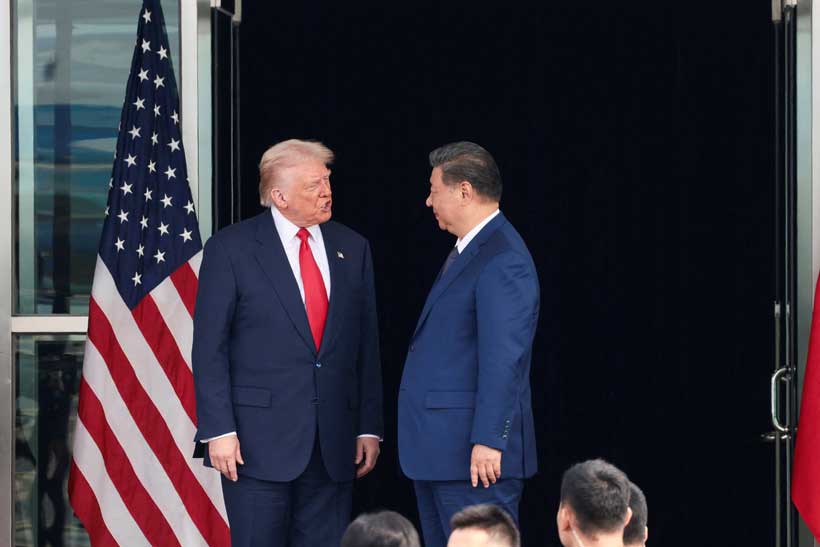
Following the Trump-Xi 2026 Summit taking place in May, the US and China agreed to establish official communication channels for AI, paving the way for the September AI meeting. Back in May 2024, the two countries had their first official AI safety talks in Geneva, after leaders from both sides reached consensus over the need to address risks raised by frontier AI. Meanwhile, scientists from both sides have been meeting for years in different avenues, where they identified redlines on AI risks (FT Report, 18 March 2024), published the Singapore Consensus on AI safety, and engaged in Tsinghua-Brookings dialogues on AI and national security, for instance.
Despite the ongoing formal and informal engagements on AI safety and risks, no concrete actions have been taken at the bilateral level to tackle AI risks collaboratively. This September meeting will offer a window of opportunity for both sides to implement high-level ideas into concrete actions. Three topics that will allow the US and China to work together on governing AI should be discussed at the table.
Stay ahead of the geopolitical week.
MD Briefing delivers expert analysis across five global fronts — the Indo-Pacific, energy, geoeconomics, European security, and the Middle East — every Monday morning. Free.
First, the governance of frontier AI systems. Currently, the US and China are the two countries who are most capable of developing highly advanced AI systems in the world. Despite their arms race around and different approaches to frontier AI systems, the US and China face shared risks and common challenges when it comes to frontier AI systems; none of them could be addressed alone. Take frontier AI-enabled cybercrimes and warfare as an example. Both the US and China are top targeted states, while attributions have become increasingly difficult with the use of frontier AI. Meanwhile, however, both countries possess extensive expertise and capabilities at the intersection of frontier AI and cybersecurity. Working together thus could synergize efforts and bring greater benefits for both and the world than competition alone.
Second, the role of scientists in AI. Looking at history and the world today, scientists are the ones who can truly understand and stop the ‘monsters’ they created. In post-WWII, scientists, including Oppenheimer himself, who worked on the Manhattan Project, later dedicated themselves to the disarmament movement for nuclear weapons, which eventually contributed to the nuclear test ban. Nowadays, scientists working with leading AI companies have not only warned the world about the risks of frontier AI they built but also actively engaged in scientific exchanges on frontier AI safety. Both American and Chinese scientists have argued that AI safety is where the US and China can work together. Scientists who are at the forefront of developing and researching frontier AI models should be consulted continuously during such high-level talks. Their technical expertise, understanding, and the ability to see the bigger picture will help to move things forward.
Third, mechanisms for ongoing US-China engagement. Discussing practical engagement arrangements will allow the US and China to have continued, meaningful conversations on AI safety and security matters by establishing ways of engagement moving forward. Both sides must take existing informal, semi-formal, and formal engagements on AI safety and security into consideration, which have been going on for decades. This meeting can not only build on but also advance the efforts that have been made across policy, sciences, and industry when it comes to frontier AI. Both should also discuss areas of focus moving forward, place, time, and forms of continued engagements, as well as what information on AI is shareable between the two. For instance, two parties can start from topics where there is more shared consensus than disagreement, such as frontier AI in cybersecurity and nuclear weapons, while prioritizing long-term planning instead of temporary engagement.
This September meeting will not only reopen official AI safety engagement between the US and China but also offer a valuable opportunity to strengthen and shape ongoing informal AI safety efforts behind the scenes moving forward. If the opportunity is seized right, the US and China will not be the only ones benefiting from such development.
