


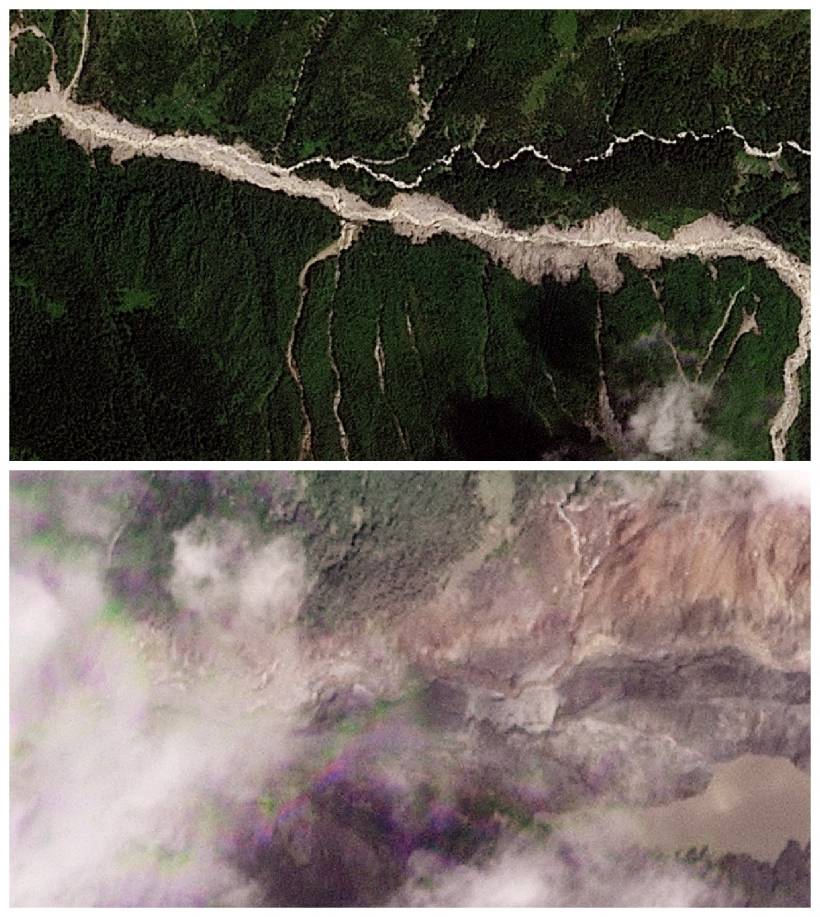
Overflowing Lake Threatens Flood Hit Areas
A landslide formed a lake along the Nepal China border that began overflowing on Friday, raising fears of another surge of water through communities already devastated by a deadly flash flood two days earlier.
Authorities in Nepal’s Rasuwa district temporarily suspended rescue operations, while Chinese rescue teams withdrew to safer areas as the risk of the lake bursting increased.
Death Toll and Missing Persons Rise
The confirmed death toll in Nepal rose to 469, while nearly 1,000 people remain missing across Nepal and Tibet. At least 540 of those missing are foreigners.
The original disaster sent huge quantities of rock, ice, mud and debris through Himalayan river systems, destroying villages, roads, bridges and power infrastructure along the important route connecting Kathmandu with Lhasa.
Stay ahead of the geopolitical week.
MD Briefing delivers expert analysis across five global fronts — the Indo-Pacific, energy, geoeconomics, European security, and the Middle East — every Monday morning. Free.
Barrier Lake Creates a New Emergency
The debris from the initial disaster created a natural barrier that trapped water and formed a lake upstream.
Chinese engineers have been monitoring the lake using aerial surveys and 3D modelling. Its volume increased from an estimated 1.5 to 2 million cubic metres to more than 2.5 million cubic metres within a day.
The growing water level has raised fears that the barrier could fail and send another powerful flood downstream.
Rescue Operations Temporarily Halted
Residents in Rasuwa were seen moving towards higher ground as river levels began rising.
Nepal temporarily suspended rescue operations, while Chinese personnel and vehicles were moved to safe locations. The developing threat is particularly serious because rescuers are already operating in areas where roads, bridges and communications infrastructure have been destroyed.
International Assistance Offered
Several countries have offered assistance, including South Korea, whose rapid response team is already in Kathmandu. Nepal has so far said it does not require foreign search and rescue teams, relying instead on its own military and security agencies.
China has also deployed engineering specialists to assess the growing lake and the potential risks to downstream communities.
Disaster Has Regional Implications
The disaster has affected a strategically important cross border corridor between Nepal and Tibet. The route connects Kathmandu with Lhasa and is used by traders, trekkers and pilgrims travelling towards Mount Kailash.
The scale of destruction has also created a wider humanitarian challenge, with foreign nationals among those missing and families across several countries awaiting information.
Analysis
The overflowing lake demonstrates that the disaster is no longer a single flash flood but an evolving chain of hazards.
The initial landslide and flash flood destroyed infrastructure, but the debris left behind has created a secondary threat. If the barrier lake continues to expand or suddenly collapses, downstream communities could face another destructive flood precisely when rescue operations and evacuation routes are already severely disrupted.
The episode also highlights the vulnerability of Himalayan communities to cascading climate and geological risks. Glacier instability, landslides, sudden lake formation and extreme flooding can interact to produce disasters that are difficult to predict and even harder to manage in remote mountainous terrain.
For Nepal and China, the immediate priority is therefore not only recovering victims from the first disaster but also preventing a second catastrophe. The growing lake has effectively turned rescue operations into a race against another potential flood.
With information from Reuters.
