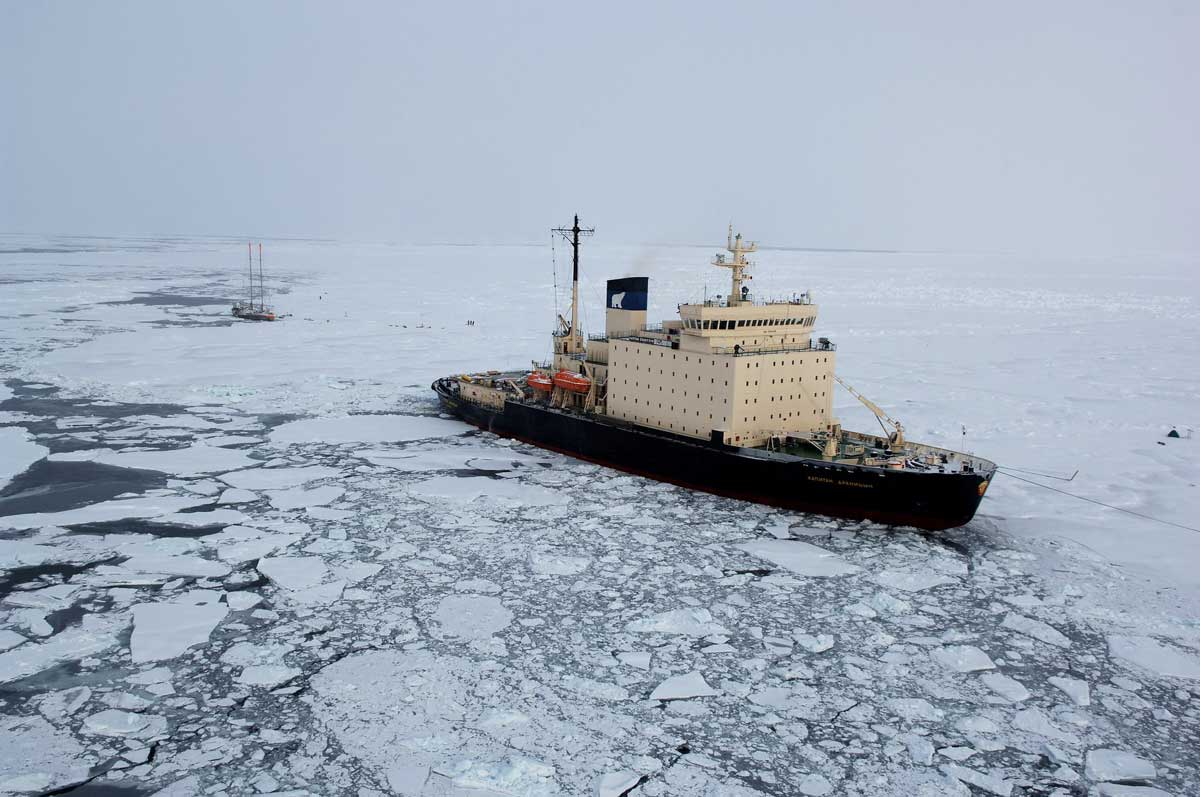
On 6 June 2026, the NATO research vessel Alliance slipped out of La Spezia, Italy, bound for the High North. Its mission, Task Force X-Arctic, sounds almost bureaucratic: testing networked uncrewed systems for what NATO calls “multi-domain situational awareness.” What makes it notable is who is running it. The ship answers to NATO’s Centre for Maritime Research and Experimentation, an outfit with a six-decade pedigree in oceanographic and acoustic science, now folded into the alliance’s Rapid Adoption Action Plan — a pipeline built to move technology from laboratory to operational deployment as fast as possible. The vessel that might once have mapped Arctic currents for a research paper is now, by design, mapping them for a targeting picture. Nobody had to seize a scientific asset for the military. It was simply reclassified.
The Arctic Council, which turns 30 this year, was built on one deliberate omission: its 1996 founding declaration explicitly excludes “matters related to military security” from its mandate. That exclusion is why the Council survived the Cold War’s Arctic militarization intact — science, environmental monitoring and Indigenous cooperation ran on one track, hard security on another, and the two never had to touch. Warming ice has since made the region matter commercially as well as strategically, opening shipping lanes and mineral access that draw in not just the eight Arctic states but observers such as China, admitted in 2013. Political-level cooperation within the Council has been frozen since Russia’s 2022 invasion of Ukraine, though its six working groups still meet, mostly virtually, and Denmark, chair until 2027, maintains the body remains “resilient.” That claim assumes the old separation between scientific and security infrastructure still holds. It no longer does.
To read the full analysis, please subscribe to our premium MD Briefing