


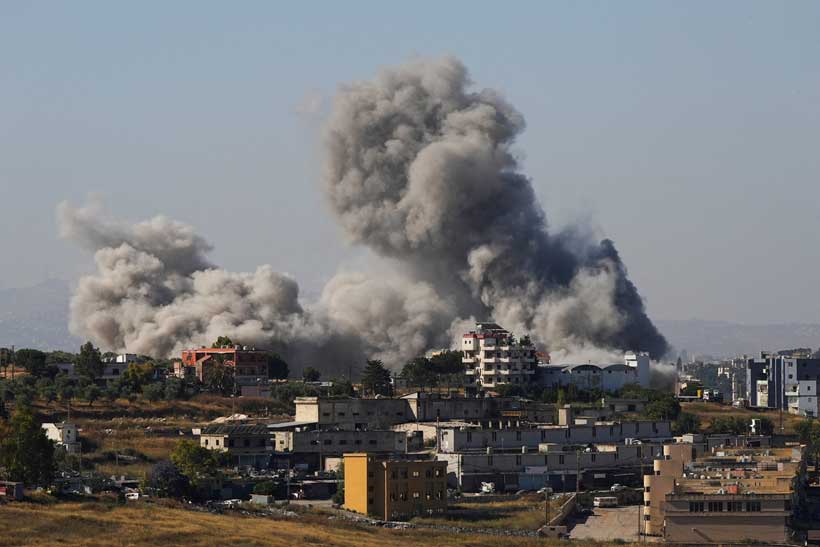
Israel Launches Strikes After Deadly Blast as Diplomatic Talks Continue
Israel carried out retaliatory strikes in southern Lebanon after two Israeli soldiers were killed during a security operation, even as Israeli and Lebanese officials continued U.S. mediated negotiations in Rome aimed at preventing further escalation along the border.
The renewed violence highlights the fragile nature of the June ceasefire agreement, with both sides attempting to sustain diplomatic engagement despite persistent security incidents on the ground.
Two Israeli Soldiers Killed in Southern Lebanon
The Israeli military said two soldiers were killed and four others wounded after an explosion inside a building during a security sweep in southern Lebanon.
According to Israel’s Army Radio, investigators are still determining whether the explosive device had been planted before or after the June ceasefire took effect.
Stay ahead of the geopolitical week.
MD Briefing delivers expert analysis across five global fronts — the Indo-Pacific, energy, geoeconomics, European security, and the Middle East — every Monday morning. Free.
The incident marked the deadliest loss for Israeli forces in southern Lebanon since late June.
Israel Responds With Airstrikes
Following the explosion, Israel launched a series of retaliatory strikes targeting areas in southern Lebanon.
The Israeli military initially described the blast as a “blatant ceasefire violation” attributed to Hezbollah. However, Defence Minister Israel Katz later issued a statement mourning the soldiers without accusing Hezbollah or referring to a ceasefire breach, suggesting Israel may be seeking to avoid a broader military escalation.
Lebanese authorities said an Israeli strike on the town of Tibnin killed one person and injured twelve others. Israel had earlier issued an evacuation warning for the area, marking its first public warning for southern Lebanon in more than a month.
Rome Talks Continue Despite Border Clashes
The military flare up coincided with ongoing negotiations in Rome, where Israeli and Lebanese representatives are meeting under U.S. mediation.
The talks follow the June security arrangement designed to reduce cross border hostilities after months of fighting linked to the wider regional conflict.
Negotiators are expected to continue discussions through Thursday despite the latest violence.
Buffer Zone Remains a Major Source of Tension
Although a ceasefire remains formally in place, Israel continues military operations inside a self declared buffer zone in southern Lebanon.
Israeli officials argue the operations are necessary to eliminate remaining security threats posed by Hezbollah near the border.
Lebanon, however, views Israel’s continued military presence as a violation of its sovereignty, leaving one of the ceasefire’s central disputes unresolved.
The latest violence illustrates the gap between diplomatic progress and realities on the ground. While negotiations in Rome demonstrate that both sides remain committed to maintaining channels of communication, isolated security incidents continue to threaten the fragile ceasefire. Israel’s measured political response, particularly the absence of direct accusations against Hezbollah following the attack, suggests an effort to prevent a localized incident from escalating into a wider conflict. However, as long as Israeli forces remain active inside southern Lebanon and key security disagreements remain unresolved, the risk of renewed confrontation will continue to overshadow diplomatic efforts.
With information from Reuters.
