


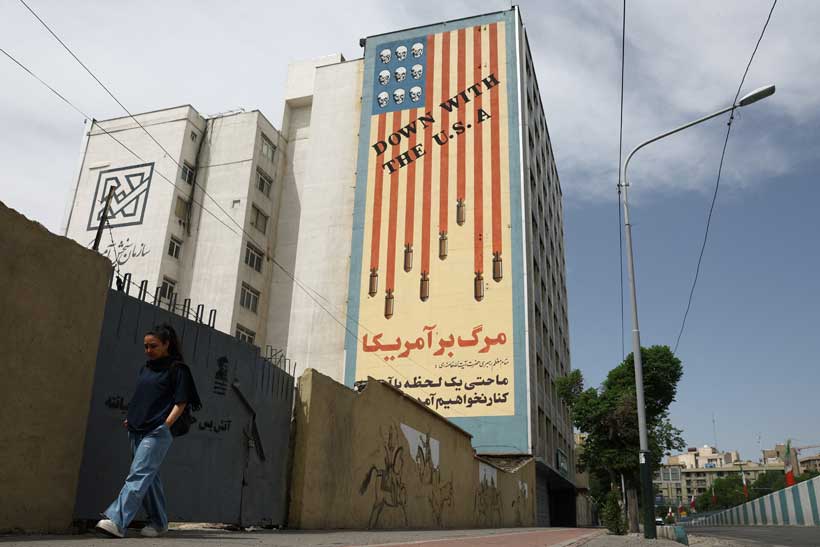
As renewed tensions between Iran and the United States unsettle the Middle East, Pakistan’s quiet diplomacy offers a reminder that sustainable regional security depends not on coercion, but on dialogue, strategic restraint and political compromise.
The Middle East has become accustomed to cycles of escalation followed by temporary de escalation. Every crisis generates urgent diplomatic activity, fragile understandings and declarations of restraint, only for tensions to re emerge months later. The latest deterioration in relations between Iran and the United States illustrates this recurring pattern. The collapse of recent diplomatic understandings has once again exposed the fragility of security arrangements in the Gulf and revived fears of renewed confrontation.
The implications extend far beyond the immediate parties involved.
Every escalation in the Gulf reverberates across the global economy. The region remains the world’s most critical energy corridor, with the Strait of Hormuz facilitating roughly one fifth of global oil consumption and nearly one third of seaborne crude oil trade. Political uncertainty in these waters raises shipping insurance costs, disrupts supply chains, unsettles energy markets and slows investment decisions across Asia, Europe and beyond. In an era of interconnected economies, instability in the Gulf is no longer a regional problem but a global economic challenge.
Stay ahead of the geopolitical week.
MD Briefing delivers expert analysis across five global fronts — the Indo-Pacific, energy, geoeconomics, European security, and the Middle East — every Monday morning. Free.
Recent developments also reinforce an increasingly evident strategic reality. Military signalling, sanctions and deterrence can influence tactical behaviour, but they rarely produce durable political settlements. Neither Iran nor the United States can secure their long term interests through coercion alone. Tactical victories often prove temporary, while unresolved political disputes continue to generate new crises.
History offers ample evidence that sustainable peace emerges not from absolute victory but from negotiated accommodation.
Against this backdrop, Pakistan’s diplomatic engagement deserves greater international attention.
While global headlines often focus on military deployments and geopolitical rivalry, Islamabad quietly pursued a strategy centred on restraint, communication and political engagement. Pakistani leaders maintained regular contact with Iranian officials, encouraged diplomatic dialogue and consistently advocated de escalation through bilateral engagements, regional forums and high level consultations. Iran, for its part, reciprocated through ministerial visits and sustained diplomatic exchanges with Islamabad.
Pakistan’s approach reflected a long standing foreign policy tradition that prioritises bridge building over bloc politics.
Rather than seeking geopolitical advantage or diplomatic spectacle, Islamabad positioned itself as a credible interlocutor capable of maintaining constructive relations with all stakeholders. This balancing strategy has long characterised Pakistan’s engagement across the Muslim world, allowing it to retain channels of communication even between actors whose own relations remain deeply strained.
Such diplomacy often receives less attention precisely because it seeks to prevent crises rather than dramatise them.
Diplomatic success cannot always be measured by whether every agreement survives. No mediator possesses the authority to compel sovereign states to honour political commitments or abandon deeply entrenched strategic calculations. The responsibility of diplomacy is to create opportunities for dialogue, reduce misunderstandings and keep political channels open during periods of heightened tension.
Measured against these objectives, Pakistan fulfilled its diplomatic role.
The subsequent deterioration in relations between Tehran and Washington reflects decisions made by the principal actors rather than any failure of facilitation. This distinction is important. Successful mediation creates space for political compromise, but only the negotiating parties themselves can transform that opportunity into lasting peace.
Pakistan’s credibility as a facilitator also stems from its broader foreign policy philosophy.
From Afghanistan to the Gulf, Islamabad has consistently favoured dialogue over confrontation and strategic balance over ideological alignment. Unlike powers that rely primarily on military leverage or economic coercion, Pakistan’s comparative advantage lies in trust, access and the ability to engage multiple stakeholders simultaneously. This diplomatic capital has become increasingly valuable in an international system characterised by growing geopolitical fragmentation.
Ultimately, however, the future of Gulf stability depends not on mediators but on the willingness of the principal actors to move beyond confrontation.
For Iran, the present moment offers an opportunity to translate resilience into prosperity.
Despite decades of sanctions and sustained external pressure, Tehran has demonstrated remarkable political endurance. That resilience has strengthened Iran’s position as an indispensable regional actor rather than diminishing its strategic relevance. The question now is how that influence should be employed.
Iran possesses extraordinary economic potential. It holds the world’s fourth largest proven oil reserves, the second largest natural gas reserves and occupies one of the most strategically significant geographic locations linking the Gulf with South Asia, Central Asia and the Caucasus. Combined with sanctions relief, expanded regional connectivity and increased foreign investment, these advantages could transform Iran into one of Eurasia’s most important commercial hubs.
Economic integration offers far greater long term dividends than another cycle of confrontation.
Regional stability could unlock billions of dollars in trade, infrastructure investment, energy cooperation and transport corridors connecting the Gulf with emerging Asian markets. By contrast, continued instability increases insurance premiums, discourages investment, delays infrastructure projects and undermines economic diversification across the region.
The United States also faces important strategic choices.
For more than a decade, successive American administrations have identified the Indo Pacific as the principal arena of long term geopolitical competition. Yet every renewed crisis in the Middle East inevitably redirects military resources, diplomatic attention and financial commitments back to the Gulf. The result is a strategic paradox in which Washington’s declared global priorities are repeatedly disrupted by recurring regional instability.
A stable Gulf therefore serves American interests as much as regional ones.
Diplomacy offers Washington a more sustainable means of protecting energy security, preserving regional partnerships and maintaining strategic influence than repeated military deployments. Greater stability would also allow the United States to devote increased attention to its broader Indo Pacific strategy without being continually drawn back into costly Middle Eastern crises.
The broader human cost of perpetual instability should not be overlooked.
More than two decades of conflict across the wider Middle East have claimed hundreds of thousands of lives, displaced millions of people and imposed trillions of dollars in economic losses. Every new confrontation diverts scarce resources away from education, healthcare, infrastructure and economic development while reinforcing cycles of insecurity that extend across generations.
The region cannot afford another decade defined by recurring crises.
What is required instead is a security architecture built upon strategic equilibrium rather than perpetual deterrence. Sustainable regional order cannot emerge from military escalation alone. It requires reciprocal confidence building, institutional dialogue, economic interdependence and recognition that security is ultimately indivisible.
The latest crisis offers an important lesson.
Temporary understandings may reduce immediate tensions, but they cannot substitute for comprehensive political settlements. Durable peace demands flexibility, compromise and sustained diplomatic engagement from all parties involved.
Pakistan’s recent diplomacy demonstrates that even in periods of profound geopolitical uncertainty, dialogue remains possible. It also illustrates that middle powers can make meaningful contributions to regional stability by facilitating communication rather than exacerbating confrontation.
The responsibility now rests with Tehran and Washington.
Iran has the opportunity to transform decades of resilience into lasting economic prosperity through regional integration, connectivity and constructive engagement with the international community. The United States has an opportunity to align its Gulf policy more closely with its broader strategic priorities by investing in diplomacy rather than recurring military responses.
The choice confronting both sides is ultimately straightforward.
They can continue managing one crisis after another, or they can begin constructing a regional order based on cooperation, economic interdependence and negotiated equilibrium. For the Gulf, and indeed for the global economy, the stakes could scarcely be higher.
