


Oil prices edged lower on Tuesday as investors balanced cautious optimism over renewed diplomatic efforts between the United States and Iran against the reality of intensifying military exchanges that continue to threaten global energy supplies.
While reports that international mediators have proposed a temporary 10-day ceasefire eased immediate fears of a wider regional conflict, attacks on shipping in the Strait of Hormuz and fresh threats from Yemen’s Houthi movement underscored how fragile any de-escalation remains.
Oil Prices Retreat on Diplomatic Hopes
Brent crude futures fell 1.1% to $88.26 per barrel, while U.S. West Texas Intermediate (WTI) crude declined nearly 1% to $82.50 per barrel.
The decline followed reports that mediators have presented Tehran with a proposal for a 10-day ceasefire designed to revive the June Memorandum of Understanding (MoU), which had aimed to establish a pathway toward ending the conflict that erupted after U.S.-Israeli strikes on Iran in February.
Stay ahead of the geopolitical week.
MD Briefing delivers expert analysis across five global fronts — the Indo-Pacific, energy, geoeconomics, European security, and the Middle East — every Monday morning. Free.
Analysts said the market is cautiously pricing in the possibility that diplomacy could prevent further disruption to global oil flows.
However, major political disagreements between Washington and Tehran continue to cast doubt on whether a ceasefire can be achieved.
Fighting Continues Despite Diplomatic Push
Despite reports of mediation, military operations intensified overnight.
The United States carried out another round of strikes against Iranian targets, while Iran’s Revolutionary Guards launched attacks on U.S. military assets across the Middle East.
President Donald Trump has also vowed retaliation following the deaths of American service members in recent Iranian attacks, complicating diplomatic efforts and increasing the risk that both sides could escalate further before returning to negotiations.
The conflicting signals have left energy markets struggling to determine whether the current violence represents a temporary setback or the beginning of a broader regional confrontation.
Strait of Hormuz Remains the Biggest Risk
The world’s attention remains fixed on the Strait of Hormuz, through which roughly one-fifth of global oil consumption passes every day.
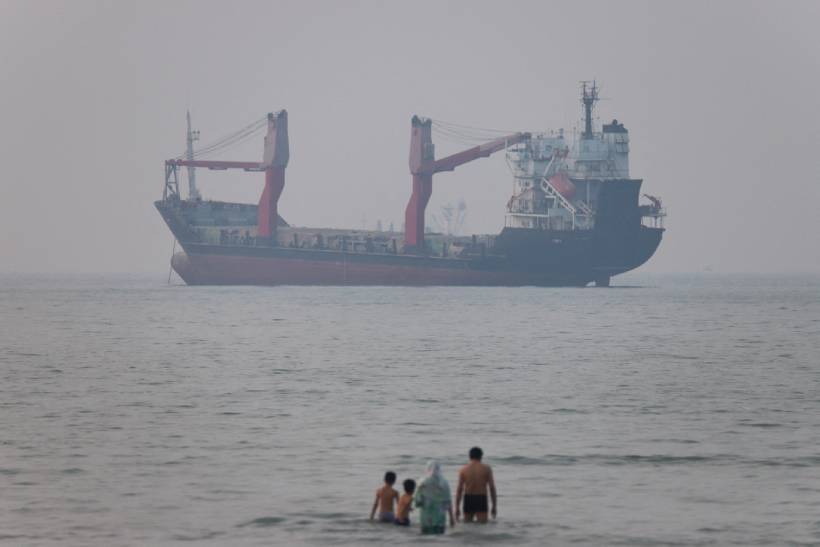
A commercial tanker reported being struck by an unidentified projectile on Tuesday, forcing its crew to abandon the vessel after boarding lifeboats.
At the same time, shipping traffic through the strategic waterway has continued to decline as insurers, shipping companies and vessel operators grow increasingly cautious about operating in the region.
Although no complete closure has occurred, reduced traffic alone has raised concerns about future supply disruptions and higher transportation costs.
Houthis Open Another Front
Adding to market anxiety, Yemen’s Iran-backed Houthi movement announced plans to impose a naval blockade on Saudi Arabia.
Such a move would significantly broaden the conflict beyond the Persian Gulf, threatening exports from one of the world’s largest oil producers and placing additional pressure on global energy supply chains.
Analysts warn that any sustained disruption involving Saudi exports could have a much greater impact on oil markets than isolated attacks inside the Strait of Hormuz.
Supply Fundamentals Still Support Prices
Beyond geopolitics, underlying market fundamentals remain relatively supportive for crude prices.
Preliminary industry estimates suggest U.S. crude inventories declined again last week, indicating steady demand despite elevated prices. Gasoline inventories are also expected to have fallen, while distillate stocks likely increased modestly.
Lower inventories generally provide upward support for oil prices by signaling tighter market conditions.
Analysis: Diplomacy Is Cooling Prices, But Risk Premium Remains
The modest decline in oil prices reflects cautious optimism rather than confidence that the crisis is ending.
Markets are effectively assigning a diplomatic discount while continuing to price in a significant geopolitical risk premium. Any indication that ceasefire negotiations are progressing could push Brent back below $85 per barrel. Conversely, further attacks on shipping, Saudi infrastructure or U.S. military assets could quickly send prices back above $90.
For now, energy traders appear to believe that neither Washington nor Tehran wants a full-scale regional war. However, as long as military operations continue alongside fragile diplomatic efforts, oil markets are likely to remain highly volatile, with every new attack or negotiation capable of shifting prices sharply in either direction.
With information from Reuters.
