


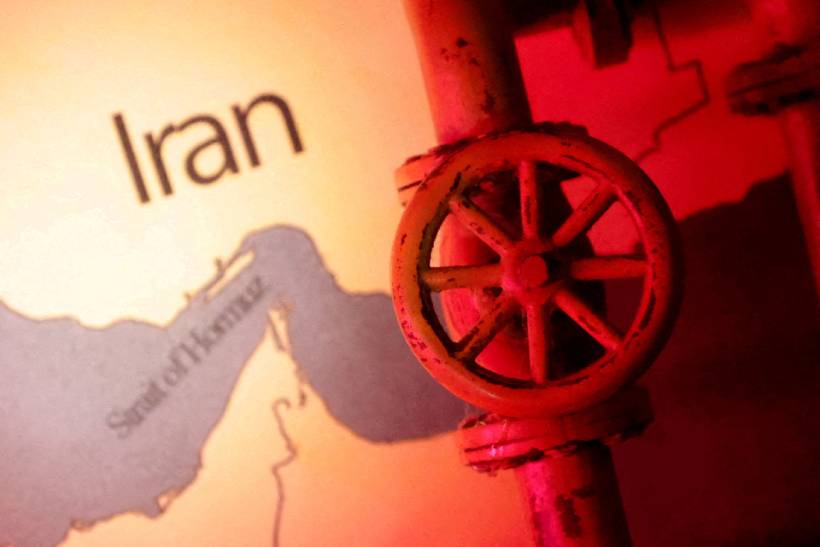
Iran declared on Thursday that the Strait of Hormuz is an inviolable “red line,” warning that any further U.S. attacks on its infrastructure would trigger retaliatory strikes against infrastructure across the Gulf region. The warning comes as the United States launched a fifth consecutive night of military operations and intensified efforts to reopen the strategic waterway following Iran’s closure of the strait.
The latest escalation has heightened fears of a broader regional conflict that could threaten global energy supplies and disrupt two of the world’s most important maritime trade routes.
Iran Says It Will Defend the Strait of Hormuz
Iranian military officials said the country retains full control over the Strait of Hormuz and would resist any attempt to force it open.
Stay ahead of the geopolitical week.
MD Briefing delivers expert analysis across five global fronts — the Indo-Pacific, energy, geoeconomics, European security, and the Middle East — every Monday morning. Free.
Army spokesman Brigadier General Mohammad Akraminia described the strait as a strategic “red line” and rejected suggestions that recent U.S. strikes had weakened Iran’s ability to control the waterway.
According to Akraminia, Iran’s military capabilities extend well beyond its southern coastline, allowing it to maintain operational control over the strait from multiple locations across the country.
Iran also reiterated that reopening the waterway would require the United States to comply with the 14-point memorandum of understanding signed by both sides in June, along with Iranian regulations governing maritime traffic.
US Intensifies Military Campaign
The latest warning follows another round of U.S. military strikes against Iranian targets.
Washington has reimposed a naval blockade on Iranian ports while continuing air and missile operations aimed at degrading Iran’s military capabilities.
According to U.S. officials, the strikes are designed not only to pressure Tehran into reopening the Strait of Hormuz but also to weaken military assets that could threaten future operations in the Gulf.
The renewed campaign began after a fragile ceasefire collapsed last week, reigniting hostilities between the two countries.
Iran Threatens Wider Regional Retaliation
Iran warned that any future attacks on its critical infrastructure would provoke a broader response.
Akraminia said that if President Donald Trump follows through on threats to strike Iranian power plants and bridges, Tehran would target “all remaining infrastructure” across the Gulf region.
Iran also warned neighbouring Gulf states against allowing U.S. forces to launch attacks from their territory, saying countries providing military support to Washington should expect retaliation.
The warning signals that the conflict could expand beyond direct U.S.-Iran confrontation to involve additional regional states.
Iran Claims Attacks on US Bases
Iranian officials said they carried out attacks against U.S. military facilities in both Jordan and Kuwait.
According to Iran:
- Ballistic missiles targeted Al Azraq Air Base in Jordan.
- Revolutionary Guard forces struck the Ali Al Salem Air Base and a U.S. military logistics facility in Kuwait.
Meanwhile, Bahrain said its air defence systems intercepted several Iranian aerial threats aimed at the kingdom.
Kuwaiti authorities also confirmed they were responding to hostile drone activity, although independent verification of the full extent of the attacks remains limited.
Risk of a Second Maritime Front
Analysts warn that the conflict could spread beyond the Strait of Hormuz.
Iran has repeatedly signalled that its Houthi allies in Yemen could move to disrupt shipping through the Bab el Mandeb Strait, which connects the Red Sea with the Gulf of Aden.
The Houthis have previously demonstrated their ability to target commercial vessels in the Red Sea, raising concerns that simultaneous disruptions at Hormuz and Bab el Mandeb could severely affect global energy and trade flows.
Such a scenario would place two of the world’s most critical maritime chokepoints under threat at the same time.
Why It Matters
The Strait of Hormuz normally carries roughly one-fifth of global oil and liquefied natural gas shipments, making it one of the world’s most strategically important waterways.
Iran’s warning significantly raises the risk of prolonged disruption to global energy supplies. Combined with the possibility of attacks on additional Gulf infrastructure or the Bab el Mandeb corridor, the conflict threatens to increase shipping costs, fuel inflation and create fresh uncertainty across global financial markets.
Future Outlook and Analysis
The confrontation is entering a more dangerous phase as both Washington and Tehran harden their positions. The United States appears determined to maintain military pressure until maritime traffic resumes through the Strait of Hormuz, while Iran is signalling that it is prepared to widen the conflict rather than concede under force.
A major concern is the growing possibility of regional spillover. Iranian threats against Gulf infrastructure, combined with the potential involvement of Houthi forces in the Red Sea, could transform the conflict from a bilateral military confrontation into a broader regional security crisis affecting multiple countries.
For global markets, energy security will remain the primary focus. Any sustained disruption to the Strait of Hormuz or Bab el Mandeb would tighten global oil supplies, increase transportation costs and complicate inflation outlooks for major economies. Diplomatic efforts are therefore likely to intensify, but unless negotiations resume soon, the risk of further military escalation and wider regional instability remains high.
With information from Reuters.
