


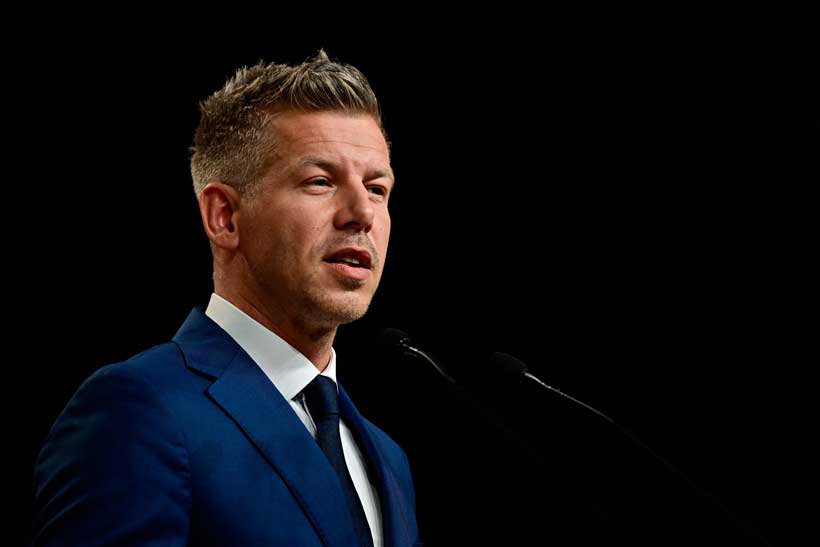
Hungary’s parliament is expected to approve a constitutional amendment on Monday that would remove President Tamas Sulyok from office, marking the latest step in Prime Minister Peter Magyar’s campaign to dismantle the political legacy of former leader Viktor Orban.
The vote comes just months after Magyar’s Tisza party won a landslide election victory in April, ending Orban’s 16 years in power and securing the parliamentary supermajority needed to amend the constitution.
Government moves to reshape state institutions
Magyar has argued that many of Hungary’s key institutions remained under the influence of Orban-era appointees and pledged to overhaul what he describes as entrenched power structures.
President Sulyok has become a central target of that effort.
Stay ahead of the geopolitical week.
MD Briefing delivers expert analysis across five global fronts — the Indo-Pacific, energy, geoeconomics, European security, and the Middle East — every Monday morning. Free.
Although Hungary’s president holds largely ceremonial powers, including the ability to delay legislation or request constitutional review, the office carries significant symbolic importance.
In a Facebook post on Saturday, Magyar described Sulyok as a “puppet” of Orban and said parliament would approve the amendment on Monday.
He added that if Sulyok refuses to sign the legislation within five days, the government would initiate impeachment proceedings.
Sulyok opposes the amendment
Sulyok, who served as a judge on Hungary’s Constitutional Court for a decade before becoming president in 2024, has rejected accusations that he acts on behalf of any political force.
He has challenged the proposed amendment by requesting an opinion from the Venice Commission, the constitutional advisory body of the Council of Europe, on whether the changes comply with democratic standards.
The Venice Commission has not commented publicly on the request.
Wider constitutional reforms planned
The amendment forms part of a broader package of institutional reforms promised by Magyar’s government.
Last week, authorities suspended news broadcasts on Hungary’s public television and radio networks as part of plans to restructure state media and strengthen editorial independence.
Magyar has also announced a wider constitutional reform process that is expected to begin later this year.
Monday’s legislation would not only remove Sulyok from office but also introduce a 12 year limit on parliamentary terms.
According to the bill, the objective is to restore constitutional democracy after years of institutional changes under Orban’s government.
If approved, Sulyok’s presidential term would end immediately on the grounds of a “serious loss of confidence” by society.
Parliament would then elect a new president to serve until a new constitution takes effect or for a maximum term of five years.
Opposition protests
Former Prime Minister Viktor Orban’s Fidesz party staged a demonstration in support of Sulyok last Thursday, although Orban himself did not attend.
The vote is expected to deepen political divisions as Hungary enters a period of significant constitutional change under its new government.
Analysis
The move against President Sulyok is about far more than replacing a ceremonial head of state. It signals Prime Minister Peter Magyar’s determination to dismantle institutions that his government believes helped entrench Viktor Orban’s long rule.
Supporters argue the reforms are necessary to restore democratic checks and balances after years of constitutional changes that concentrated power. Critics, however, warn that removing officials appointed by a previous government through constitutional amendments could establish a precedent that future administrations may also exploit.
With a supermajority in parliament, Magyar has the legal authority to pursue sweeping institutional reforms. The challenge now will be convincing domestic critics and European partners that these changes strengthen democratic governance rather than simply replacing one dominant political system with another.
With information from Reuters.
