


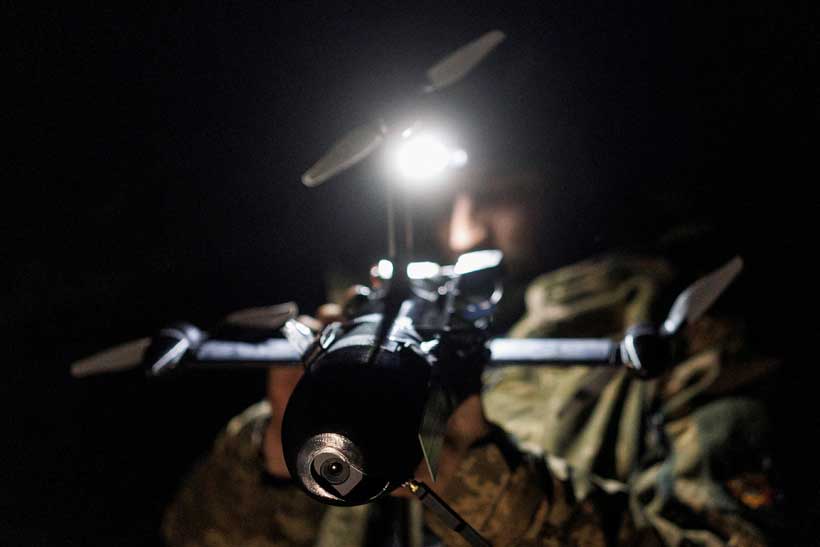
The rapid proliferation of inexpensive, mass-produced drones is reshaping modern warfare and exposing one of the world’s greatest economic vulnerabilities: energy infrastructure.
Conflicts in Ukraine, Russia and the Middle East have demonstrated that unmanned aerial vehicles costing only hundreds or thousands of dollars can now threaten oil refineries, power plants, export terminals, pipelines and ports worth billions. The result is a dramatic shift in the balance between attackers and defenders, forcing governments and energy companies to rethink how critical infrastructure is protected.
As drone technology becomes cheaper, more accurate and easier to mass produce, safeguarding global energy supplies is emerging as one of the defining security challenges of the decade.
Energy infrastructure becomes a prime target
Traditionally, strategic energy facilities were protected by geography, military forces and conventional air defence systems. Modern drones have significantly weakened those advantages.
Stay ahead of the geopolitical week.
MD Briefing delivers expert analysis across five global fronts — the Indo-Pacific, energy, geoeconomics, European security, and the Middle East — every Monday morning. Free.
Small, low-flying aircraft can evade radar, overwhelm expensive missile defence systems and strike targets with remarkable precision. Even unsuccessful attacks can disrupt operations, increase insurance costs and force temporary shutdowns.
The recent conflict involving Iran illustrates this new reality.
Since fighting with the United States and Israel began in late February, Tehran has repeatedly used drones and other asymmetric tactics to disrupt shipping around the Strait of Hormuz, one of the world’s most important maritime chokepoints. Before the conflict, the waterway handled roughly one fifth of global oil and natural gas supplies.
The attacks have challenged a long-held assumption that closing Hormuz would require overwhelming naval superiority. Instead, relatively inexpensive drones have become an effective tool for disrupting one of the world’s busiest energy corridors.
Building new infrastructure creates new risks
In response to repeated disruptions around Hormuz, Gulf producers are accelerating plans to reduce dependence on the narrow waterway.
Saudi Arabia, the United Arab Emirates, Iraq and Kuwait are investing in pipelines and export routes that bypass the strait, improving long-term resilience against maritime disruption.
However, these projects also expand the number of potential targets.
Every new pipeline, compressor station, pumping facility, electrical substation or export terminal adds another asset that must be defended against drone attacks.
Rather than concentrating risk at one chokepoint, countries may be spreading it across thousands of kilometres of infrastructure that is far more difficult and expensive to secure.
Ukraine has transformed drone warfare
Ukraine has provided perhaps the clearest example of how drones are changing modern conflict.
Over the past year, Ukrainian forces have repeatedly launched long-range drone swarms against Russian oil refineries, fuel depots, logistics hubs and industrial facilities hundreds of kilometres from the front line.
These attacks have demonstrated that strategic economic targets can now be reached without expensive aircraft or cruise missiles.
Equally significant is Ukraine’s manufacturing capacity.
The country is now producing hundreds of thousands of relatively low-cost drones every month, highlighting how quickly the technology has become industrialised and accessible. What was once a specialised military capability is rapidly becoming a mass-produced commodity.
This trend raises concerns that similar technologies could spread well beyond current battlefields.
Defence spending enters a new era
The growing drone threat is forcing governments to rethink military planning.
Recognising the changing battlefield, NATO recently announced plans to invest $40 billion over the next five years in counter-drone technologies while dramatically expanding drone operator training.
Future air defence will increasingly rely on layered systems that combine:
- Advanced radar and surveillance
- Electronic warfare and signal jamming
- Interceptor drones
- Laser based directed energy weapons
- Short range missile systems designed specifically to destroy drones
These technologies aim to reduce the enormous cost imbalance between inexpensive drones and the sophisticated missile systems currently used to stop them.
Lessons from history
The drone revolution resembles previous moments when technological innovation fundamentally changed warfare.
During the First World War, relatively simple technologies including machine guns, barbed wire and artillery rendered traditional battlefield tactics obsolete. Armies that failed to adapt suffered devastating losses until new technologies such as tanks and combat aircraft restored battlefield mobility.
Today’s drones may represent a similar turning point.
Current air defence systems were largely designed to intercept fighter aircraft, cruise missiles and ballistic missiles not thousands of inexpensive, expendable drones flying at low altitude.
Until counter-drone technologies mature, attackers retain a significant economic advantage.
What it means for the global economy
The implications extend well beyond military planning.
Energy infrastructure underpins global manufacturing, transportation, electricity generation and international trade. Disruptions to major oil or gas facilities can rapidly affect fuel prices, inflation, shipping costs and economic growth worldwide.
For energy companies, security is becoming a central investment consideration alongside geology, market access and regulation.
Future projects are increasingly likely to incorporate dedicated drone defence systems, hardened facilities and redundant infrastructure designed to withstand sustained attacks.
Analysis
The greatest significance of the drone revolution lies not in the technology itself but in the economics of warfare. For decades, defending critical infrastructure generally cost less than destroying it. Cheap drones have reversed that equation.
A drone costing a few thousand dollars can force defenders to deploy interceptor missiles worth hundreds of thousands or even millions of dollars. That imbalance is unsustainable over long periods and encourages adversaries to wage wars of economic attrition rather than conventional military confrontation.
The energy sector is particularly exposed because its infrastructure is geographically dispersed, highly valuable and difficult to relocate. Pipelines, refineries, LNG terminals and power stations cannot simply be hidden or rapidly rebuilt after an attack.
Over time, advances in artificial intelligence, autonomous interception systems and directed energy weapons are likely to restore the balance in favour of defenders. Until then, governments and energy companies will face a persistent challenge: protecting trillion-dollar energy systems against weapons that are becoming cheaper, smarter and more widely available every year.
With information from Reuters.
