


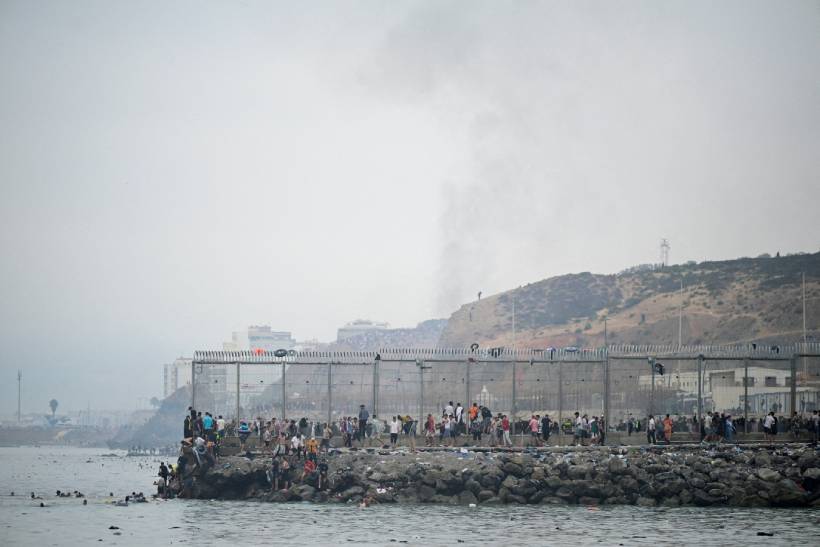
Spain and Morocco have reinforced security around the Spanish enclave of Ceuta after an unprecedented surge saw around 49,000 migrants cross by land and sea in a single day, making it one of the largest border breaches ever recorded at the European Union’s external frontier. The crisis has already claimed at least 19 lives, intensified political tensions across Europe and reignited debate over migration policy, border security and humanitarian obligations.
Ceuta, together with Melilla, represents the EU’s only land border with Africa and has long been a focal point for irregular migration. However, the scale of the latest crossings far exceeds previous incidents and has prompted emergency responses from both Madrid and Rabat.
Key Developments
Spanish and Moroccan authorities reinforced the border fence and deployed additional security forces, including water cannon units on the Moroccan side, to halt further crossings. Clashes between migrants and security forces left burned vehicles near the border while thousands of migrants remained gathered around the Moroccan town of Fnideq seeking alternative routes into Ceuta.
Spain announced it would expedite the return of migrants who entered illegally while complying with recent court rulings that restrict the immediate expulsion of certain migrants intercepted near Ceuta and Melilla. Prime Minister Pedro Sanchez travelled to Ceuta alongside Interior Minister Fernando Grande Marlaska to oversee the government’s response.
Stay ahead of the geopolitical week.
MD Briefing delivers expert analysis across five global fronts — the Indo-Pacific, energy, geoeconomics, European security, and the Middle East — every Monday morning. Free.
The migration crisis has also triggered diplomatic tensions within Europe. Italian Prime Minister Giorgia Meloni threatened to suspend Spain from the Schengen free movement area, arguing that Madrid’s migration policies risk encouraging further irregular migration. Spanish Foreign Minister Jose Manuel Albares rejected the criticism, calling for European solidarity rather than political confrontation.
Why It Matters
The Ceuta crisis represents one of the most significant migration challenges Europe has faced since the 2015 refugee crisis and highlights the continuing vulnerability of the EU’s southern border. Beyond the humanitarian tragedy reflected in the reported deaths, the incident exposes growing legal and political disagreements over how Europe should manage irregular migration.
The crisis is also likely to test relations between Spain, Morocco and other EU member states. While cooperation between Madrid and Rabat appears to have slowed the immediate influx, the broader drivers of migration remain unresolved. Rising political pressure across Europe could further strengthen calls for stricter border controls, reshape debates over asylum policy and deepen divisions between governments favouring humanitarian protections and those prioritising tougher enforcement.
With information from Reuters.
