


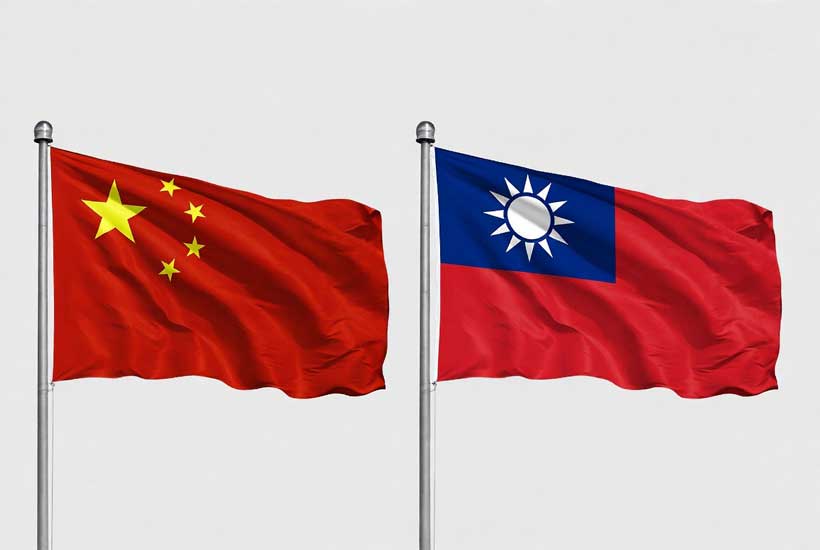
Taiwan said on Monday it is monitoring an increase in Chinese naval movements as Beijing enters its annual peak military exercise season, with officials also watching closely for new operational tactics and expanded joint exercises with Russia.
Taiwan National Security Bureau Director General Tsai Ming yen told reporters that military activity from July to September typically reaches its highest level, prompting authorities to compare current deployments with previous years to identify any changes in strategy or force deployment.
Tsai said there are currently four Chinese naval formations operating in the Western Pacific, describing the overall mobilisation of Chinese naval and maritime forces as showing an “upward trend” during the seasonal exercise period.
China’s Defence Ministry did not immediately respond to a request for comment.
Stay ahead of the geopolitical week.
MD Briefing delivers expert analysis across five global fronts — the Indo-Pacific, energy, geoeconomics, European security, and the Middle East — every Monday morning. Free.
Taiwan Closely Monitoring New Military Patterns
Taiwan’s security agencies are examining whether the latest Chinese deployments reflect changes in military tactics that could alter the regional security environment.
Officials say the government routinely analyses Chinese military operations to identify emerging patterns, particularly as Beijing continues to increase pressure on the self governed island through air and naval activities.
Taiwan has repeatedly warned that the time available to respond to a potential Chinese military action is becoming shorter because of the growing frequency and complexity of Chinese operations around the island.
China and Russia Expand Joint Naval Cooperation
Taiwan is also closely monitoring joint military exercises between China and Russia.
China’s Defence Ministry and Russian state media announced on Sunday that Chinese and Russian naval forces will conduct joint exercises this week in waters and airspace near the Chinese city of Qingdao.
Tsai said Taiwanese authorities had been aware of the planned drills since last week and had already held internal security briefings before the announcement.
According to Tsai, the expanding military cooperation between China and Russia is intended to counter the defence strategy developed by the United States and its regional allies across the First Island Chain.
What Is the First Island Chain?
The First Island Chain is a strategic line of islands stretching from Japan through Taiwan and the Philippines to Borneo.
Military analysts consider the area one of the most important strategic barriers in the western Pacific because it forms a natural line separating China’s coastal waters from the wider Pacific Ocean.
The United States and its allies have strengthened military cooperation across the region to maintain freedom of navigation and deter potential military aggression, while China has steadily expanded its naval presence beyond the island chain.
Record Number of Chinese Vessels Being Tracked
Taiwan says Chinese military activity has reached unusually high levels.
Joseph Wu, Secretary General of Taiwan’s National Security Council, said on social media that, as of Friday, Taiwan was tracking more than 110 Chinese military and Coast Guard vessels operating throughout the First Island Chain, marking a record level of maritime activity.
The growing naval presence reflects China’s broader effort to increase military pressure around Taiwan while expanding its operational reach into the western Pacific.
Background
China claims Taiwan as part of its territory and has never ruled out using force to bring the island under its control.
Taiwan rejects Beijing’s sovereignty claims, maintaining that only the people of Taiwan can determine the island’s future.
In recent years, China has significantly increased military exercises around Taiwan, regularly sending warships and military aircraft into nearby waters and airspace. In 2023, Taiwan also detected two Russian warships operating off its eastern coast, highlighting growing military coordination between Beijing and Moscow.
Why It Matters
The increase in Chinese naval deployments highlights rising military pressure in the Indo Pacific and raises concerns about regional stability. Greater Chinese and Russian military cooperation could complicate security planning for Taiwan, the United States and allied countries.
The growing scale of naval operations also increases the risk of military incidents or miscalculations in one of the world’s most strategically important maritime regions.
Stakeholders
Taiwan: Monitoring Chinese military activity while strengthening its defence preparedness.
China: Expanding naval operations and asserting its territorial claims over Taiwan.
Russia: Increasing military cooperation with China through joint naval exercises.
United States and Regional Allies: Maintaining deterrence and defence strategies across the First Island Chain while monitoring Chinese military expansion.
What Happens Next
Taiwan is expected to continue closely tracking Chinese naval deployments throughout the July to September exercise season for signs of new military tactics or larger scale operations.
Analysts will also watch the outcome of the China Russia joint exercises for indications of deeper military coordination and how those operations may influence future Chinese activities around Taiwan and the wider western Pacific.
With information from Reuters.
