


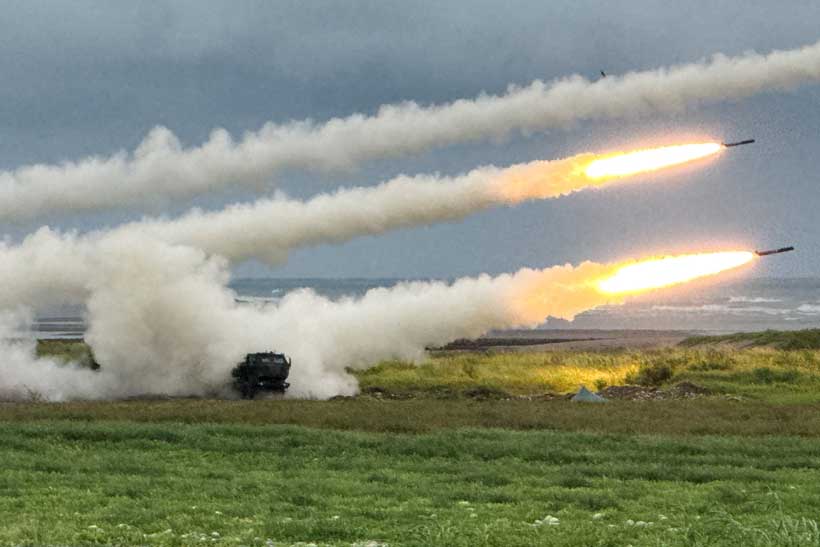
Taiwan is set to increase defence spending by 16% next year, taking its proposed military budget above T$1 trillion ($31.40 billion) for the first time as the island faces growing military and political pressure from China.
President Lai Ching-te said on Monday that the increase was an “investment in peace” aimed at strengthening Taiwan’s ability to defend itself and maintain stability across the Taiwan Strait.
Defence Budget to Exceed 3% of GDP
Taiwan’s proposed 2027 defence budget will reach T$1.1225 trillion, exceeding 3% of GDP, Lai said. The cabinet is expected to formally present the budget on Thursday, including details on how the additional funding will be allocated.
The increase reflects Taiwan’s continued push to modernise its armed forces and strengthen its ability to respond to potential Chinese military action.
Stay ahead of the geopolitical week.
MD Briefing delivers expert analysis across five global fronts — the Indo-Pacific, energy, geoeconomics, European security, and the Middle East — every Monday morning. Free.
“Investing in defence is investing in peace,” Lai said, adding that Taiwan would continue building a stronger defence force to maintain peace and stability in the Taiwan Strait and the wider region.
China Pressure Drives Military Expansion
China considers Taiwan part of its territory and has increased military and political pressure on the island in recent years. Chinese military forces operate almost daily around Taiwan and have conducted periodic large-scale exercises.
Taiwan has responded by making military modernisation a central policy priority, including plans to develop its own submarines and strengthen its broader defensive capabilities.
The increased spending also comes as Washington urges allies and partners to take greater responsibility for their own defence. Lai has strongly supported calls for Taiwan to increase its military spending.
Opposition Challenges Spending Plans
The proposed increase could face political resistance in Taiwan’s opposition-dominated parliament.
The legislature only approved this year’s budget on Friday following months of delays. Taiwan’s two main opposition parties have argued that they will not provide the government with a blank cheque and must scrutinise spending plans and prevent waste.
Lai has urged lawmakers to examine the budget according to the principles of “professionalism, reasonableness, and proportionality.”
Analysis
Taiwan’s record defence spending reflects a broader shift in its security strategy: deterrence through stronger self-defence. By pushing military spending above 3% of GDP, Lai is signalling both to Beijing and Washington that Taipei is prepared to invest more heavily in its own security.
For Taiwan, the challenge is maintaining sufficient military readiness without allowing rising defence costs to become a political burden. The opposition’s resistance shows that increased spending will require domestic political support, particularly as the government decides how to allocate the additional funds.
The increase also carries a wider regional message. Taiwan is attempting to demonstrate that strengthening its military is intended not to provoke conflict but to make any potential attack more costly and therefore help preserve the status quo.
With information from Reuters.
