


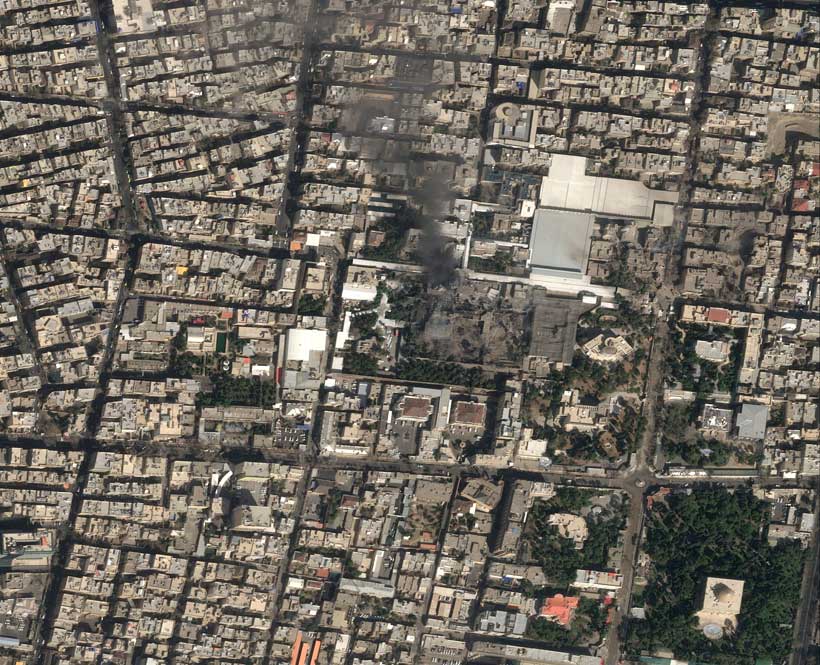
Iran has begun a week of state funeral ceremonies for its late Supreme Leader, Ali Khamenei, who led the country for 37 years and was killed during the recent conflict involving Iran, the United States and Israel. His death marks one of the most consequential moments in the history of the Islamic Republic of Iran since the 1979 Islamic Revolution.
Khamenei succeeded Ruhollah Khomeini as Supreme Leader in 1989 and became the country’s highest political, military and religious authority. During his tenure, he oversaw Iran’s nuclear programme, expanded Tehran’s regional influence through allied groups across the Middle East, and steered the country through decades of Western sanctions, domestic unrest and repeated confrontations with the United States and Israel.
His funeral is being presented by Iranian authorities as both a religious commemoration and a demonstration of national unity following months of war.
Why it matters
Khamenei’s funeral comes at a defining moment for Iran. Beyond mourning the country’s longest-serving leader, the ceremonies represent the first major public event following the conflict that reshaped Iran’s political and security landscape.
Stay ahead of the geopolitical week.
MD Briefing delivers expert analysis across five global fronts — the Indo-Pacific, energy, geoeconomics, European security, and the Middle East — every Monday morning. Free.
The leadership transition also raises questions about the future direction of the Islamic Republic. While officials have sought to project continuity and stability, analysts note that Iran continues to face deep economic difficulties, public dissatisfaction, and regional security challenges.
The funeral is also expected to reinforce Iran’s ideological narrative of resistance against external adversaries, drawing on Shi’ite traditions of martyrdom that have long shaped the country’s revolutionary identity.
Key developments
Body lies in state in Tehran
Khamenei’s body was placed in state at a large prayer hall in Tehran dedicated to Ayatollah Khomeini, where senior clerics, government officials, military commanders, foreign dignitaries and thousands of mourners gathered to pay their respects.
His coffin was displayed alongside those of family members who also died during the conflict.
Week-long funeral processions
Iran has planned several days of funeral events across major religious centres.
The itinerary includes:
- State ceremonies in Tehran.
- Funeral processions in Qom.
- Religious commemorations in Najaf and Karbala.
- Final burial in Mashhad near the shrine of Imam Reza, one of Shi’ite Islam’s holiest sites.
Authorities delayed the burial until after fighting ended because of security concerns during the conflict.
Heavy security across Iran
Security has been significantly tightened throughout Tehran.
Military vehicles, police forces and members of the Basij paramilitary organisation have been deployed across the capital, while officials warned against any attacks during the funeral period.
Hotels, schools, mosques and sports facilities have been prepared to accommodate the large numbers of mourners expected to attend.
Foreign delegations attend
Delegations from several regional partners have travelled to Tehran.
Among those attending are officials from Iraq, Pakistan and Armenia, while representatives linked to Iran’s regional allies—including Lebanon and Yemen also joined the ceremonies.
Representatives from Russia and China are also expected to participate.
Religious symbolism
The funeral carries profound significance within Shi’ite Islam.
Black mourning flags have been displayed across Iran, while funeral rituals draw heavily on remembrance of the martyrdom of Imam Husayn at Karbala in the seventh century—a defining event in Shi’ite religious identity.
Iranian officials have sought to portray Khamenei’s death within this broader tradition of sacrifice and resistance, reinforcing themes central to the Islamic Republic’s political ideology.
Key stakeholders
Iranian leadership
The government is using the funeral to demonstrate continuity, legitimacy and institutional stability following the loss of the country’s highest authority.
Islamic Revolutionary Guard Corps (IRGC)
The IRGC remains central to maintaining domestic security and preserving Iran’s regional influence during the leadership transition.
Regional allies
Groups and governments aligned with Iran across the Middle East are closely watching the transition for indications of future policy under the new leadership.
United States and Israel
Both countries remain central to Iran’s security calculations following the conflict that fundamentally altered regional dynamics.
Iranian public
The funeral provides an opportunity for supporters of the Islamic Republic to express loyalty, while also unfolding against a backdrop of years of economic hardship and political discontent.
Future outlook
The funeral concludes one chapter of Iran’s modern history but opens another.
The immediate priority for Iran’s leadership will be ensuring a smooth political transition while preserving internal stability and avoiding renewed conflict with the United States or Israel.
Domestically, the government must also confront longstanding economic challenges driven by sanctions, inflation and unemployment. Public confidence in state institutions has been weakened by repeated nationwide protests over recent years, suggesting that symbolic displays of unity may not fully resolve deeper structural grievances.
Internationally, Iran’s future relations with Western powers, Gulf states and regional allies will largely depend on whether the post-war diplomatic process succeeds or tensions re-escalate.
Khamenei’s funeral is as much a political event as it is a religious one. Throughout the history of the Islamic Republic, state funerals have served to reinforce regime legitimacy, project institutional continuity and mobilise public support during periods of uncertainty.
The scale of the ceremonies reflects the importance Iranian authorities attach to demonstrating that the country’s political system remains intact despite the death of its most influential leader. By invoking Shi’ite traditions of martyrdom and resistance, the government is reinforcing the ideological foundations upon which the Islamic Republic has built its legitimacy since 1979.
At the same time, the funeral cannot obscure the broader challenges confronting Iran. The country enters a new political era facing economic strain, public frustration, sanctions and an uncertain regional security environment. Whether the leadership transition strengthens or weakens the Islamic Republic will depend less on the symbolism of the funeral and more on the new leadership’s ability to navigate domestic pressures, rebuild international relationships and maintain cohesion within Iran’s powerful political and military institutions.
With information from Reuters.
