


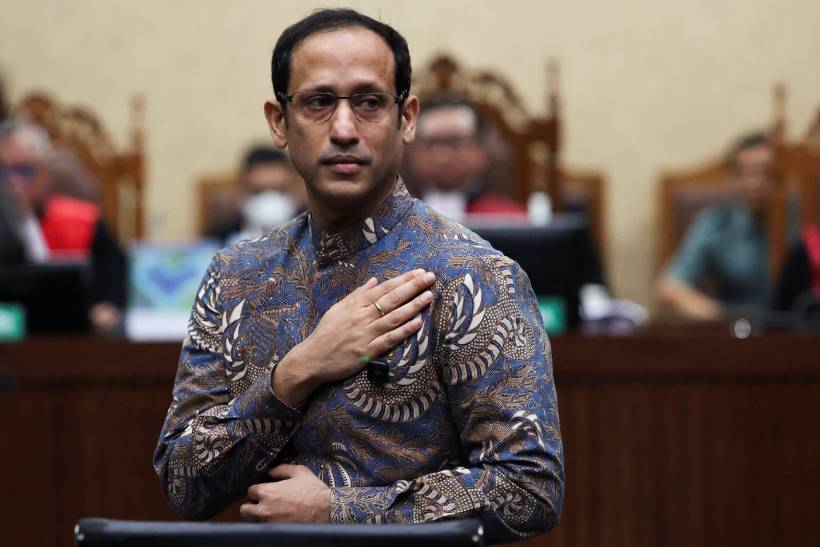
An Indonesian court has sentenced Gojek co-founder and former education minister Nadiem Makarim to 10 years in prison after finding him guilty of abuse of authority in a high-profile corruption case linked to the government’s Chromebook procurement programme. While the court cleared him of directly enriching himself, it ruled that his actions caused significant state losses and ordered him to repay funds allegedly gained from the deal.
Makarim has denied all wrongdoing, describing the prosecution as politically motivated and vowing to appeal. The verdict comes amid growing concerns over governance, judicial independence and investor confidence in Southeast Asia’s largest economy.
Court finds former minister guilty of abuse of authority
The Corruption Court ruled that Makarim abused his official position in overseeing the government’s Chromebook procurement programme, concluding that the process caused substantial financial losses to the state. Although judges found insufficient evidence that he intentionally enriched himself, they held him responsible for decisions that benefited the procurement scheme and imposed a lengthy prison sentence alongside heavy financial penalties.
Chromebook procurement remains at the centre of the case
Prosecutors argued that procurement rules were designed in a way that effectively favoured Google’s Chrome operating system, limiting competition during the bidding process. They further alleged that Google’s investment in Gojek’s parent company created a conflict of interest that influenced procurement decisions, claims that Makarim has consistently rejected.
Stay ahead of the geopolitical week.
MD Briefing delivers expert analysis across five global fronts — the Indo-Pacific, energy, geoeconomics, European security, and the Middle East — every Monday morning. Free.
Makarim rejects verdict and prepares legal appeal
Following the ruling, Makarim maintained his innocence, arguing that the judgment was not supported by evidence and insisting that he never personally benefited from the procurement programme. His decision to appeal ensures that one of Indonesia’s most closely watched corruption cases will continue through the country’s judicial system.
Verdict raises fresh concerns over governance
The conviction comes at a sensitive time for Indonesia’s economy, where investor sentiment has already weakened amid concerns over policy consistency, institutional governance and regulatory transparency. The case is likely to intensify scrutiny of the country’s legal and political environment, particularly as international investors assess broader governance risks.
Political motivations continue to fuel debate
Makarim and his supporters argue the prosecution is linked to reforms introduced during his tenure as education minister, which sought to eliminate entrenched corruption practices within the education system. Academics and civil society groups have echoed concerns that the case could reflect broader political tensions rather than purely legal considerations, adding to public debate over the independence of Indonesia’s anti-corruption institutions.
Future Outlook
Makarim’s appeal is expected to keep the case in the national spotlight, with the outcome likely to influence perceptions of Indonesia’s judicial independence and anti-corruption efforts. Investors will also closely monitor whether the verdict affects broader confidence in the country’s governance at a time when financial markets remain under pressure and international institutions continue to assess Indonesia’s regulatory and institutional environment.
With information from Reuters.
