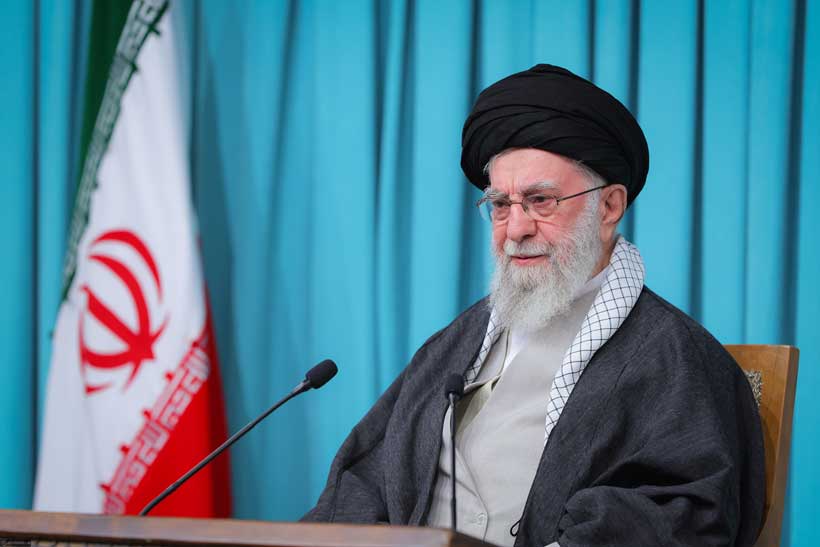
When U.S. and Israeli forces launched Operation Epic Fury against Iran on February 28, 2026, killing Supreme Leader Ali Khamenei within hours, the operating assumption in Washington and Jerusalem was that a decapitated, economically exhausted, and recently rebellious Iran would fall. Nearly four months and one ceasefire later, the Islamic Republic is still standing, battered, isolated, and arguably more nationalist than before. The data emerging from two wars and a domestic uprising suggest that foreign military pressure, rather than clearing a path for regime change, may have made it harder.
Did the Iran War Save the Regime
The sequence of shocks Iran absorbed in under a year was unprecedented even by its own turbulent standards. The Twelve-Day War from 13th to 24th June, 2025, saw Israel kill senior military leaders, nuclear scientists, and politicians while damaging or destroying Iranian air defenses, with U.S. strikes joining on the 21st against 3 fortified nuclear sites. Then, starting December 28, 2025, economic-grievance protests spread to more than 200 towns and cities across all 31 of Iran’s provinces, the largest wave of unrest since 1979. The regime’s response was the deadliest crackdown in its history as approximately 12,000 to 20,000 people were killed by mid-January 2026. Another assessment reported 42,324 arrests, including 261 cases of forced confessions being broadcast, and 11,026 people to have been summoned to security institutions as of January 2026.
By any conventional measure of regime fragility such as military defeat, economic collapse, mass civilian casualties at the state’s own hands, Iran in February 2026 looked finished. Yet when the second war began and Khamenei himself was killed, succession was near-instantaneous, an interim leadership council was activated within hours, and Mojtaba Khamenei was appointed supreme leader in early March, his father’s chosen heir. Three weeks into the war, analysts found little evidence of significant defections in the Iranian military, a condition most scholars of authoritarian breakdown consider necessary for regime collapse. Brookings analysts likewise noted that while crowds celebrated Khamenei’s death, the regime organized nationalist counterprotests of its own, suggesting its networks remained resilient with no major defections.
Stay ahead of the geopolitical week.
MD Briefing delivers expert analysis across five global fronts — the Indo-Pacific, energy, geoeconomics, European security, and the Middle East — every Monday morning. Free.
Why External Pressure Often Backfires
The mechanism behind this resilience is not new to political science. An external attack frequently triggers a “rally-round-the-flag” effect, in which populations who despise their government nonetheless close ranks against a foreign aggressor. Iran’s case offers an unusually data-rich illustration. A survey conducted in Iran on nuclear issues, regional security, economics and domestic politics noted a persistent dissatisfaction among Iranians regarding economic conditions but at the same time the support for Iran’s missile program among common people reached a record high. The survey also revealed that many respondents expressed resistance to external pressure while many advocated for the negotiations with the U.S. Similarly, Foreign Affairs reported that the war caused devastation of factories, schools, hospitals, and entire neighborhoods reduced to ruins, alongside Trump’s threats to arm separatists and redraw Iran’s borders, provoked a nationalist reaction that cut across political divisions, even as anger at the regime itself did not disappear.
Iranian officials moved deliberately to convert this dynamic into political capital. An analysis of the succession period found the leadership pivoting from religious legitimacy toward a “survivalist nationalism,” reframing the war as a defense of territorial integrity rather than clerical rule. With senior official Ali Larijani warning that Israel’s true goal was partitioned into ethnic statelets, a message designed to rally secular Iranians and even opposition figures around resistance to the external enemy. A think-tank study reached a similar conclusion, describing how the conflict produced increased repression, a nationalist pivot, and institutional restructuring rather than moderation, including a reconstituted National Defense Council to centralize crisis response.
The Unexpected Political Impact of War
Perhaps the most striking finding is generational rather than ideological. A postwar assessment argued that the new leadership emerging from the IRGC is less defined by extremism than by confidence. Unlike the revolution’s founders, who constantly had to prove the revolution was real against rival nationalists and leftists, the new generation came of age inside the institutions of power and took its legitimacy as given. That confidence showed up in Iran’s wartime conduct from closing the Strait of Hormuz, striking Gulf Arab states to sustaining missile fire for months, none of which fit the script of a regime on the verge of collapse.
The costs of the campaign have also rebounded onto its instigators. International legal scholars argued the strikes violated the UN Charter’s prohibition on the use of force, lacking both Security Council authorization and a valid self-defense justification, with UN’s special rapporteur on counter-terrorism and human rights, Ben Saul noting Iran had not in fact built a nuclear weapon. He also noted that these strikes by the U.S and Israel are one of the clearest violations of the most fundamental rule of the post-World War II order since 1945, which is not to aggressively attack other countries. Domestically, the U.S. The Senate passed its first war-powers resolution rebuking a president over an Iran conflict on June 23, 2026, a sign that future administrations may find less domestic latitude for similar campaigns.
None of this means the regime is secure. Some other postwar assessments still described Iranian leadership as more brittle than at any point since the 1980s, weighing whether economic ruin or a future crisis could yet break it. But the empirical record of 2025–2026 wherein Iranian regime survived decapitation, no major defections, a nationalist consolidation, and a harder international legal and political road for the next external attempt, suggests that bombing campaigns and assassinations are, at best, a blunt and unreliable tool for unseating a government. They may be more likely to give it a new flag to rally around than a reason to fall.