


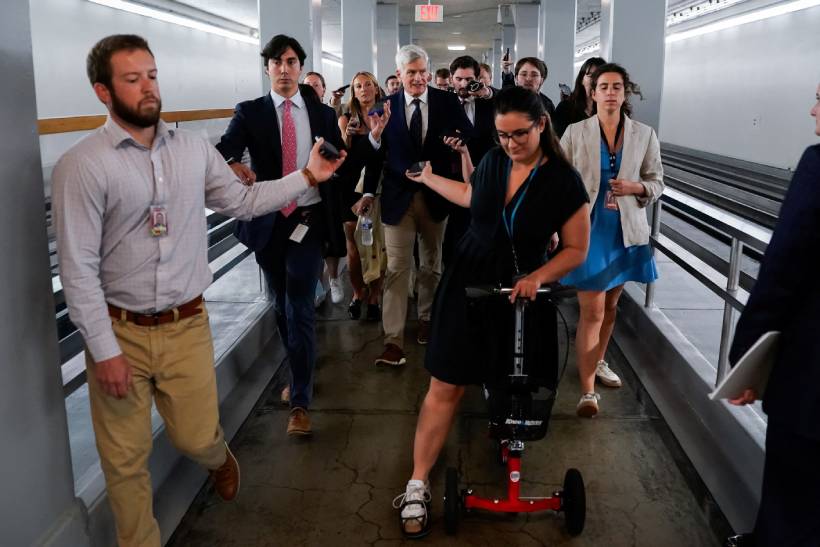
President Donald Trump faced criticism from within his own party during a closed door meeting with congressional Republicans, engaging in a heated exchange with Senator Bill Cassidy over the administration’s handling of the Iran war and the framework peace deal reached last week.
The confrontation came as the administration requested an additional $70 billion from Congress to cover war related expenses and just one day after the Senate voted to direct Trump to end the conflict in a largely symbolic rebuke.
Why It Matters
The dispute highlights growing Republican unease over the Iran war, its costs, and the terms of the emerging peace agreement. With public support for the conflict weakening and midterm elections approaching, divisions within Trump’s own party could complicate efforts to secure funding and maintain political backing for his foreign policy.
The episode also underscores broader questions about whether the agreement with Iran delivers the objectives the administration originally promised.
Stay ahead of the geopolitical week.
MD Briefing delivers expert analysis across five global fronts — the Indo-Pacific, energy, geoeconomics, European security, and the Middle East — every Monday morning. Free.
Republican Frustration Over Iran Deal Comes Into the Open
The sharp exchange between Trump and Cassidy reflected concerns among some Republicans that the administration has not fully explained the terms of the Iran agreement.
Cassidy questioned whether the framework deal achieves the goals outlined when the conflict began and argued that lawmakers and the public deserve greater transparency about the negotiations. His criticism is particularly notable because it comes from a member of Trump’s own party at a time when Republican lawmakers have generally rallied behind the president on foreign policy issues.
The disagreement suggests growing skepticism within parts of the Republican Party regarding both the war’s costs and its strategic outcomes.
Congress Faces Growing Debate Over War Funding
Hours after the White House meeting, the administration formally requested $70 billion in additional funding to cover war related costs. The request would come on top of the already substantial U.S. defense budget and is likely to intensify debate in Congress.
The funding push arrives as lawmakers question whether the conflict has delivered sufficient benefits to justify its financial and political costs. Some Republicans have already broken ranks with the administration, while Democrats continue to criticize the war and its consequences.
Future funding votes could become an important test of Trump’s influence over Congress ahead of the November elections.
Polls Show Weak Public Support for Conflict
Public opinion remains a major challenge for the administration. Recent polling suggests only a minority of Americans believe the war was worth its costs, while Trump’s approval ratings have weakened amid concerns about the conflict.
The declining support creates political risks for Republicans seeking reelection and may explain why some lawmakers are becoming more willing to publicly question the administration’s strategy.
The combination of voter skepticism and congressional unease could place increasing pressure on the White House to demonstrate tangible diplomatic or security gains from the agreement with Iran.
Regional Questions Continue to Cloud Peace Agreement
The framework deal remains controversial both in Washington and across the Middle East. Questions persist over nuclear inspections, sanctions relief, the future of the Strait of Hormuz, and regional security arrangements involving Iran and its allies.
Gulf states remain concerned that financial incentives provided under the agreement could help Iran rebuild military capabilities. Meanwhile, negotiations continue over Lebanon, where Israel and Lebanon are discussing U.S. backed proposals aimed at stabilizing the border region.
These unresolved issues highlight the fragile nature of the accord and the challenges facing negotiators during the next phase of talks.
Stakeholders
- Donald Trump
- Bill Cassidy
- JD Vance
- Steve Witkoff
- U.S. Congress
- Republican Party
- Democratic Party
- Iranian government
- Gulf Arab states
- Israeli government
- American voters
- U.S. military
Future Outlook
The administration now faces two parallel challenges: defending the terms of the Iran agreement and securing congressional approval for additional war funding. As lawmakers seek more information about the deal, scrutiny is likely to intensify over whether the agreement advances U.S. strategic objectives.
If public support continues to decline and divisions within the Republican Party deepen, Trump could face increasing political pressure to demonstrate progress in negotiations with Iran and stability across the wider region.
Analysis
The significance of this story lies less in the shouting match itself and more in what it reveals about shifting political dynamics around the Iran conflict. Trump has generally maintained strong loyalty among congressional Republicans, making public criticism from members of his own party noteworthy.
Cassidy’s concerns reflect a broader debate over whether the peace framework represents a strategic success or a compromise that falls short of the administration’s original goals. The fact that questions are emerging from within Republican ranks suggests that concerns about transparency, costs, and long term outcomes are no longer confined to the opposition.
The timing is also important. With Congress being asked to approve billions of dollars in additional funding and with midterm elections approaching, lawmakers may become increasingly sensitive to voter concerns about the war. If skepticism continues to grow, the Iran agreement could become both a foreign policy challenge and a domestic political liability for the White House.
With information from Reuters.
