


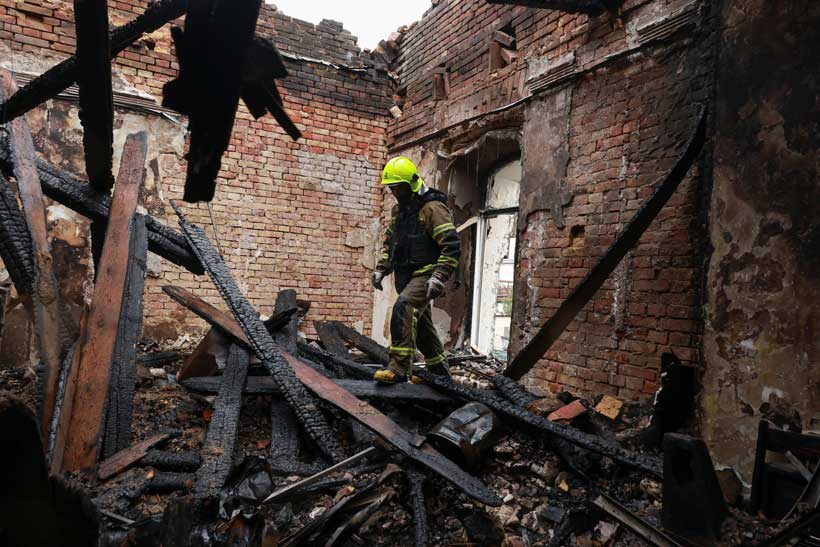
Russian air strikes injured six people across Ukraine overnight, local authorities said, as the war entered its fifth year with no sign of easing. At the same time, a growing fuel shortage in Russia has spread deeper into Siberia, highlighting the impact of Ukraine’s expanding attacks on Russian energy and transport infrastructure.
The latest developments come amid continued cross border attacks and ongoing diplomatic efforts by Ukrainian President Volodymyr Zelenskiy to secure Western support for a peace settlement and closer integration with Europe.
Russian Strikes Hit Multiple Ukrainian Regions
Two people required medical assistance after Russian attacks in the southeastern Zaporizhzhia region, according to regional officials. Three others were injured in the northern Sumy region, while a woman was wounded in a drone strike on Kharkiv, Ukraine’s second largest city.
Kyiv also briefly issued an air raid alert early Tuesday before casiberncelling it. The attacks followed a Ukrainian strike on an electronics plant in Russia’s Voronezh region that reportedly killed five people and injured dozens.
Stay ahead of the geopolitical week.
MD Briefing delivers expert analysis across five global fronts — the Indo-Pacific, energy, geoeconomics, European security, and the Middle East — every Monday morning. Free.
Ukraine Expands Pressure on Russian Infrastructure
Ukraine has increasingly targeted Russian logistics networks, fuel supplies and energy facilities far from the battlefield. Recent attacks have reached locations more than 2,000 kilometres from the front line, including parts of Siberia.
The strategy aims to disrupt Russia’s ability to supply military operations while increasing economic pressure on Moscow.
Fuel Shortages Reach Siberian Regions
The fuel crisis, which initially affected Crimea and parts of southern Russia, has now spread to major Siberian regions including Omsk and Novosibirsk.
Regional authorities have begun imposing restrictions on fuel purchases to prevent panic buying and hoarding. In Omsk, officials have limited gasoline and diesel sales and banned fuel purchases for storage containers.
Authorities in neighbouring Novosibirsk have indicated that similar measures will soon take effect.
Oil Companies Introduce Sales Restrictions
Russian energy companies are also responding to supply pressures. Lukoil, Russia’s second largest oil producer, announced limits on gasoline and diesel sales in the Voronezh region.
The restrictions reflect growing concerns about fuel availability as attacks on infrastructure continue to disrupt transportation and refining networks.
War Continues to Reshape European Security
The conflict has accelerated defence cooperation between Ukraine and its Western partners and contributed to higher military spending across Europe.
It has also transformed the region’s security landscape, helping drive Finland and Sweden to join the NATO alliance after decades of military nonalignment.
Russia Conducts Long Range Bomber Flight
Russia’s defence ministry said strategic missile carrying bombers completed a 16 hour patrol flight over the Barents and Norwegian seas. The aircraft were reportedly escorted by foreign fighter jets during parts of the mission.
The flight highlighted continued military activity near NATO territory, particularly along Russia’s borders with Norway and Finland.
Future Outlook
Both Russia and Ukraine appear committed to maintaining pressure beyond the front lines through long range strikes on infrastructure and strategic assets. Ukraine’s attacks on fuel and logistics networks are increasingly affecting regions deep inside Russia, while Moscow continues large scale aerial attacks across Ukrainian territory.
As the conflict enters another year, the combination of battlefield operations, infrastructure attacks and economic disruption is likely to intensify, complicating peace efforts and increasing pressure on both sides.
With information from Reuters.
