Artificial intelligence is often presented as the next great technological revolution. Governments promote it as a pathway to innovation, businesses celebrate its economic potential, and technology companies market it as a tool capable of solving some of the world’s most pressing challenges. Yet behind the rapid expansion of AI lies a physical infrastructure that depends heavily on land, water, and electricity; resources that are becoming increasingly scarce in many parts of Latin America.
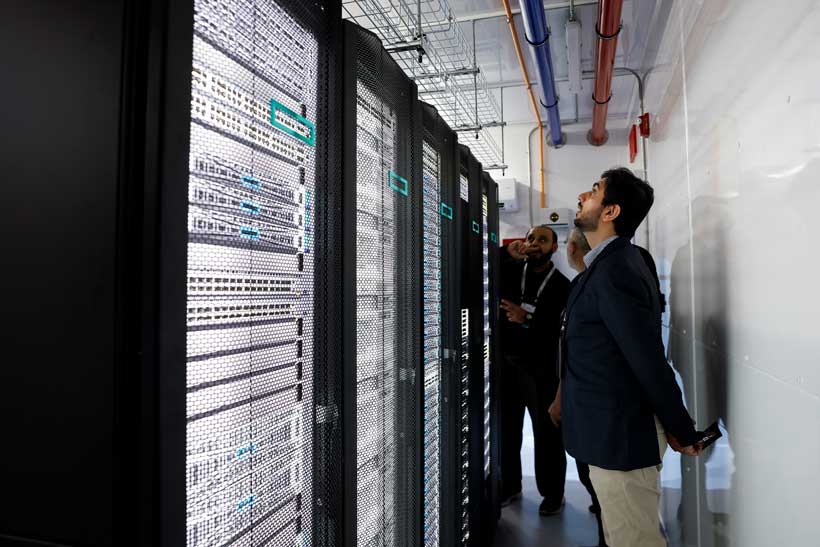
As global demand for AI services accelerates, technology companies are racing to build larger and more powerful data centers. These facilities house thousands of servers that process and store enormous volumes of information. Unlike earlier generations of digital infrastructure, AI-optimized data centers require significantly more computing power, generating large amounts of heat that must be continuously managed through extensive cooling systems. The result is a growing demand for water and energy at a scale many communities are only beginning to understand.
This transformation is reshaping Latin America’s role in the global digital economy. Once viewed primarily as a market for technology products and services, the region is increasingly becoming a strategic location for the infrastructure that powers AI itself. Industry forecasts indicate that Latin America’s data center market will continue expanding rapidly over the coming years, supported by government incentives, foreign investment, and growing demand for cloud computing.
For technology firms, the region offers several advantages. Land is often less expensive than the rest of North America or Europe, energy markets can be favorable, and governments are eager to attract investment associated with digital modernization. However, the same conditions that make Latin America attractive to investors also expose local communities to significant environmental pressures. In many cases, new facilities are being constructed in areas already facing water scarcity, prolonged droughts, or fragile electricity systems. As AI infrastructure expands, residents increasingly find themselves competing with industrial computing operations for access to basic resources.
Stay ahead of the geopolitical week.
MD Briefing delivers expert analysis across five global fronts — the Indo-Pacific, energy, geoeconomics, European security, and the Middle East — every Monday morning. Free.
Mexico illustrates these tensions particularly clearly. The state of Querétaro has emerged as the country’s leading data center hub, attracting billions of dollars in investment. At the same time, the region has experienced severe water shortages, with residents in some communities reporting prolonged interruptions to water service. Despite these challenges, authorities continue approving major projects, including hyperscale facilities designed to support future AI growth. Likewise, the strain extends beyond water supplies. Mexico is also confronting growing concerns about electricity capacity, especially in central regions where demand already places significant pressure on the grid. Critics argue that expanding resource-intensive AI infrastructure under these conditions risks deepening existing vulnerabilities rather than resolving them.
Similar concerns are emerging elsewhere in the region. In Brazil, several planned data-center developments are located in areas affected by recurring drought conditions. Although the country benefits from a relatively clean electricity mix, its dependence on hydropower creates its own challenges. Lower water levels can reduce electricity generation precisely when demand from digital infrastructure continues to increase. In Chile, the challenge is even more closely linked to water scarcity. Many of the country’s technology investments are concentrated in central regions that have endured years of severe drought and are considered among the most water-stressed areas in South America. Data centers require substantial volumes of water for cooling, raising concerns about competition with residential consumption, agriculture, and other economic activities. And Argentina, also positioning itself as an attractive destination for digital infrastructure, particularly due to its growing renewable energy sector, faces periodic energy shortages, aging transmission infrastructure, and recurring drought conditions.
Another source of concern is transparency. Technology companies frequently highlight sustainability commitments, but detailed information regarding water consumption, electricity use, and environmental impacts is often difficult to obtain. Complex ownership structures, subcontracting arrangements, and limited disclosure requirements can make it challenging for local communities to understand the full footprint of projects operating in their regions.
Environmental organizations and local advocacy groups across the region warn that, without stronger regulatory safeguards and greater transparency, the expansion of AI infrastructure risks exacerbating existing ecological stresses rather than contributing to sustainable development. Governments across Latin America face a difficult balancing act. On one hand, AI infrastructure promises investment, tax revenue, and integration into a rapidly growing sector of the global economy. On the other hand, policymakers must confront questions about resource allocation, environmental oversight, and long-term sustainability.
The debate ultimately raises a broader question about the future of technological development. While artificial intelligence is frequently promoted as a solution to global challenges, the infrastructure supporting it carries environmental costs that are unevenly distributed. Communities that receive few direct benefits from AI expansion may nevertheless bear many of its ecological burdens. Nonetheless, as Latin America becomes increasingly central to the world’s digital infrastructure, decisions made today will shape whether AI development contributes to sustainable growth or reinforces existing inequalities. The challenge is no longer simply attracting investment, but determining who benefits from that investment, and who absorbs its costs.