


ASEAN’s REE Potential
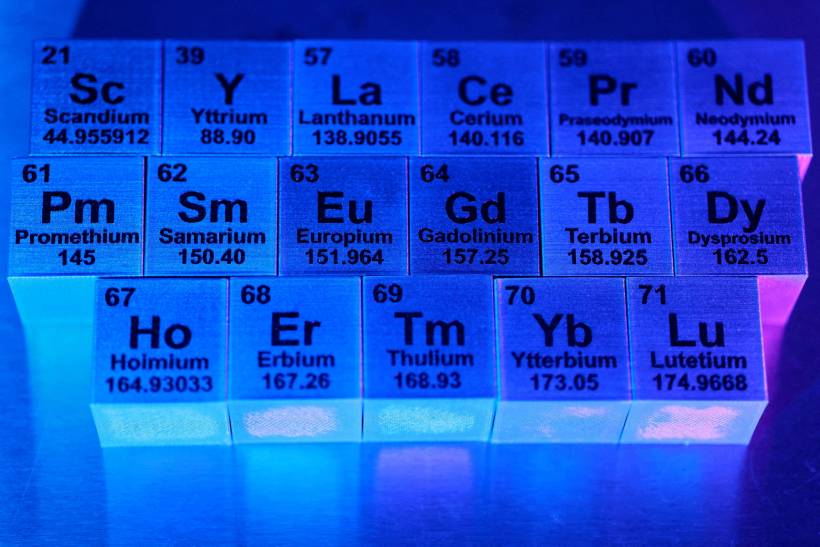
Amid today’s war-induced energy shocks and the perennial urgency of decarbonisation, rare earth elements (REEs), the 17 metallic elements essential for electronics and electric vehicle (EV) production, have been increasingly pushed into the geopolitical spotlight. China’s dominance over these materials, with 60% of global REE production and nearly 90% of processing capacity, has not only attracted attention through these sheer figures, but also through its willingness to weaponise this critical position, with suffocating export bans announced against both Japan and America in the past year alone.
This geopolitical backdrop has enabled ASEAN to emerge as a formidable alternative in the REE sector. The bloc’s potential promises wealth that even Croesus could only dream of; Malaysia hosts the only operational heavy REE processing facility outside China through Lynas, while countries such as Vietnam, Thailand, and Indonesia possess millions of tonnes of mineral reserves.
The Natural Resource Curse
Stay ahead of the geopolitical week.
MD Briefing delivers expert analysis across five global fronts — the Indo-Pacific, energy, geoeconomics, European security, and the Middle East — every Monday morning. Free.
However, as seen in Croesus’ story, riches can lead to tragedy if mishandled. Resource-rich countries frequently become trapped into low-value extraction roles, where foreign corporations repatriate the minerals while making limited investments in the host country. Instead, nations profit most from REEs through developing high-value ‘downstream’ industries such as magnet production and battery chemistry.
The recent Memorandums of Understanding (MOUs) signed between America and Malaysia, Cambodia, and Thailand risk hindering these profitable sectors from fully materialising. Although these MOUs are not binding, they point towards a worrying predilection for bilateral dealmaking among ASEAN members. Instead of negotiating from a more coordinated position, these countries risk undercutting each other for foreign investment, potentially weakening their bargaining power over tax, ESG, and technology transfer conditions.
Despite Indonesia’s stellar reputation for successfully moving from a low-value extraction role through its nickel downstreaming strategy, having developed vast capabilities in refining and smelting, its heavy dependence on Chinese investment points to the risks from possessing limited leverage in resource negotiations. Chinese-owned facilities have become associated with lax labour safety standards, with 101 deaths reported throughout the past decade, in addition to alarming levels of toxic waste and environmental degradation. Meanwhile, Indonesia’s continued reliance on Chinese expertise and financing has complicated efforts to establish indigenous high-value REE-related industries, including their battery chemistry capabilities.
To its credit, ASEAN has made commendable strides towards resource-based collaboration through initiatives including the ASEAN-IGF Minerals Cooperation Programme and its Minerals Cooperation Action Plan. However, these multilateral agreements remain remarkably vague in their commitments, and more focused on attracting investors through legal predictability rather than advancing coherent downstream processing sectors.
ASEAN should therefore prioritise moving beyond such broad aspirations to secure its position within the global REE economy. The current salience around such resources may not last forever, as advances in recycling technologies and deeper partnerships with other mineral-rich countries such as Australia could reduce global dependence on ASEAN’s REEs, and with it, the bloc’s bargaining power over external actors.
The Synergies of Joint Development
Given ASEAN’s aversion towards legally binding obligations, it would be unrealistic to suggest an OPEC-style framework where a supranational body directs production quotas or other heavy-handed collective measures. However, ASEAN countries can still introduce more flexible arrangements to strengthen their negotiating power with foreign investors and maximise the long-term benefits from their REE deposits.
The bloc should first set quantifiable benchmarks for foreign-investment projects, even if they must be made voluntary to mitigate institutional backlash. These may focus on establishing guarantees for university partnerships and licensing agreements for technological transfer, substantially improving ASEAN’s capability to develop future high-end industries.
More importantly, accelerating collaboration on REEs would reduce dependence on external actors for industrial upgrading, thereby decreasing the incentive for undercutting between ASEAN countries. Given that not all ASEAN countries have major stakes in the group’s resource future, co-operation may begin with an ‘ASEAN-X’ approach involving important REE contributors, with other members joining later when appropriate.
Knowledge-sharing should form the linchpin of these efforts, along with the development of complementary REE-related industries across the region, allowing ASEAN economies to collectively benefit from different stages of the mineral supply chain. For instance, Malaysia’s Lynas-linked ecosystem could offer technical assistance in mineral refining and magnet production through exchange programs for engineers and metallurgical specialists, mirroring Singapore’s Cooperation Programme in digital and judicial development. Additionally, Indonesia’s emerging EV battery industry gives it ample scope to work with Thailand’s automotive manufacturing base to supercharge local vehicle production, while Vietnam may simultaneously incorporate processed REEs into its electronics sectors.
Despite lacking its own mineral reserves, Singapore could also play a crucial role by attracting private financing for interstate operations and research and development, whilst assisting in negotiations to coordinate collaboration efforts. Finally, these countries could simultaneously help less developed members, such as Cambodia, advance their extraction capacities, while providing governance support to ensure that mineral profits contribute to national development.
Today’s global energy headwinds offer ASEAN countries yet another invaluable opportunity to further buttress their impressive economic trajectories. However, as with a bundle of chopsticks being harder to break than their individual counterparts, they must work together to ensure that they, rather than external actors, can maximise the long-term value of their REE reserves.
