


The war between Russia and Ukraine has entered its fifth year, with military operations continuing alongside intermittent diplomatic efforts to reach a settlement. The United States and European allies remain Ukraine’s principal supporters, providing military, financial, and political backing.
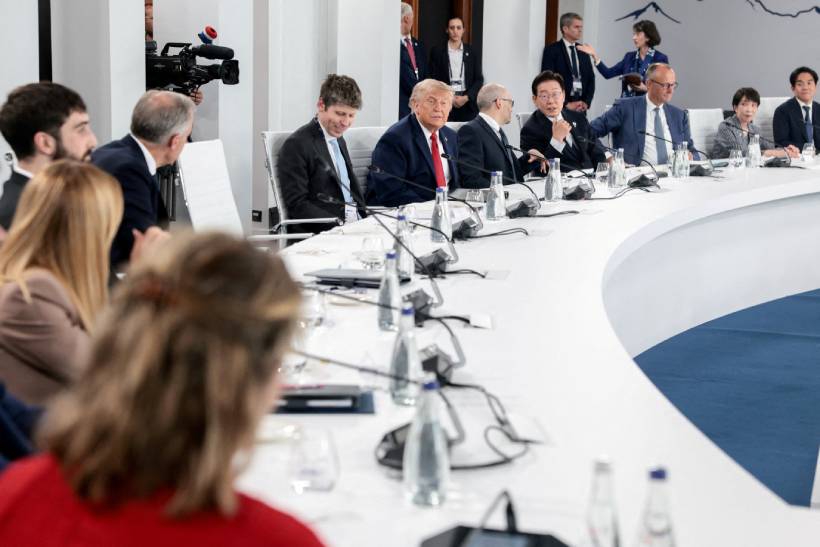
At the recent G7 summit, Ukrainian President Volodymyr Zelenskiy met U.S. President Donald Trump and other Western leaders to discuss the war and prospects for peace negotiations. Following those discussions, Trump expressed optimism that a peace deal could eventually be reached.
What Happened?
Senior Kremlin aide Yuri Ushakov said European leaders likely influenced Trump’s views on the Ukraine war during the G7 summit.
Ushakov suggested Trump had been given misleading information about developments on the battlefield and rejected claims that Ukraine’s recent drone operations had significantly improved Kyiv’s military position.
Stay ahead of the geopolitical week.
MD Briefing delivers expert analysis across five global fronts — the Indo-Pacific, energy, geoeconomics, European security, and the Middle East — every Monday morning. Free.
The Kremlin official also said Moscow still expects visits from Trump’s envoys, including Steve Witkoff and Jared Kushner, although no timetable has been announced.
Key Statements
Kremlin Position
- European leaders are exerting an “unhelpful influence” on Trump regarding Ukraine.
- Russia believes Trump may have received inaccurate assessments of the battlefield situation.
- Moscow maintains that Ukraine’s military position has not improved as claimed by Kyiv and its allies.
Trump’s Position
- Trump said after meeting Zelenskiy that Russia should make peace with Ukraine.
- He described discussions at the G7 as constructive.
- Trump has continued to signal interest in facilitating a negotiated settlement.
Why It Matters
The comments offer insight into how Moscow views Trump’s evolving position on the war and the role of European leaders in shaping Western policy.
Russia appears keen to preserve direct communication channels with Trump while simultaneously pushing back against narratives advanced by Ukraine and its European supporters. The remarks also suggest the Kremlin remains attentive to potential diplomatic openings involving the United States despite ongoing military operations.
The episode highlights the growing importance of diplomacy and messaging as all sides attempt to influence future peace discussions.
Stakeholders
- Donald Trump
- Volodymyr Zelenskiy
- Vladimir Putin
- Yuri Ushakov
- European G7 leaders
- U.S. diplomatic envoys Steve Witkoff and Jared Kushner
- Russian and Ukrainian armed forces
What’s Next?
- Potential visits by Trump’s envoys to Moscow for further discussions.
- Continued efforts by Ukraine and European allies to secure stronger U.S. backing.
- Russian attempts to influence Washington’s understanding of battlefield developments.
- Further diplomatic contacts aimed at exploring conditions for a possible peace framework.
- Monitoring whether Trump’s public optimism translates into concrete negotiations.
Analysis
The Kremlin’s comments reveal an important strategic calculation: Moscow wants to criticize European influence on Trump without alienating Trump himself.
By describing Trump as a strong leader who ultimately forms his own views, the Kremlin is attempting to preserve a working relationship with the U.S. president while casting doubt on information coming from Kyiv and European capitals. This messaging suggests Russia still sees value in engaging directly with Trump and may believe he could play a decisive role in future negotiations.
The remarks also reflect a broader battle over perceptions of the war. Ukraine and its allies have highlighted successful long range drone strikes and attacks on Russian infrastructure as evidence that Kyiv retains leverage. Russia, meanwhile, seeks to project confidence and reject suggestions that its strategic position has weakened.
Looking ahead, the key question is whether the apparent diplomatic momentum emerging from recent meetings can produce substantive negotiations. Both Moscow and Kyiv continue to believe they have leverage, making compromises difficult. As a result, public statements from leaders and advisers are increasingly becoming part of a larger effort to shape the diplomatic environment before any formal peace talks begin.
With information from Reuters.
