


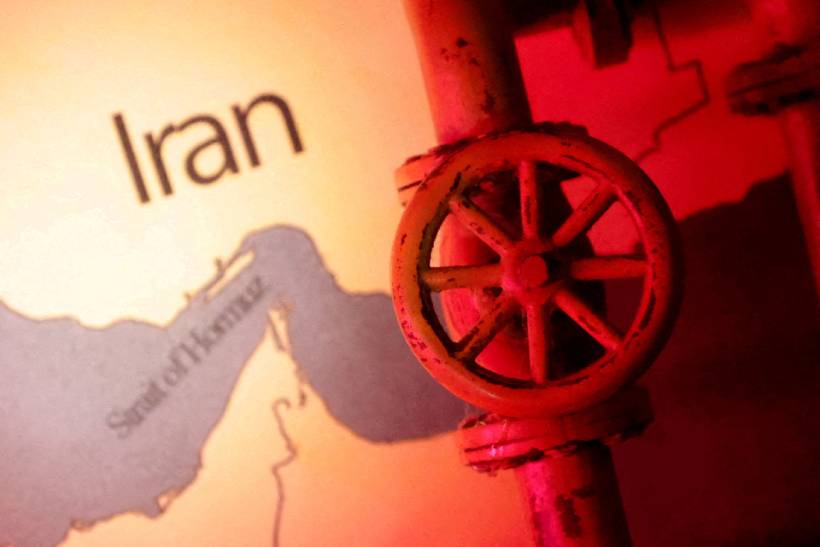
Oil Markets Prepare for a Longer Crisis
The global oil market is increasingly adjusting to the possibility that disruption around the Strait of Hormuz may persist for months rather than end with a short lived geopolitical shock. Nearly six months into the U.S. Iran war, hopes for a diplomatic breakthrough have weakened, while the interim ceasefire has effectively collapsed.
For oil traders, the central question is no longer simply whether supplies will be disrupted. It is how long the disruption will last and how much of the lost supply can be replaced.
Crude prices have settled around $90 a barrel after surrendering some of the sharp risk premium seen at the beginning of the conflict. Yet prices remain roughly 50% higher than at the start of the year, suggesting that markets have moved beyond immediate panic without returning to normal conditions.
The result is a market increasingly pricing in prolonged uncertainty.
Stay ahead of the geopolitical week.
MD Briefing delivers expert analysis across five global fronts — the Indo-Pacific, energy, geoeconomics, European security, and the Middle East — every Monday morning. Free.
Hormuz Disruption Is Reshaping Global Supply
The Strait of Hormuz remains the central vulnerability. Before the war, roughly 18 million barrels per day of crude and refined products moved through the waterway.
According to Kpler data cited by Reuters, flows fell to 4.8 million barrels per day in July and averaged only around 2 million barrels per day during the first part of August amid Iranian attacks and the U.S. blockade.
Alternative routes have provided some relief. Higher exports have moved through the UAE’s Fujairah terminal and Saudi Arabia’s Red Sea coast.
But those alternatives are themselves vulnerable.
The Iran backed Houthis have imposed restrictions on Saudi exports through the Bab el Mandeb Strait, creating another pressure point for Middle Eastern energy shipments.
Consequently, Middle Eastern exports have fallen dramatically. Kpler estimates that regional exports averaged 9.5 million barrels per day this month, less than half their 2025 average of 21 million barrels per day.
The Oil Market Is Struggling to See the Real Supply Picture
One of the most important developments is the growing opacity surrounding oil flows.
Some Gulf producers appear increasingly reliant on tankers that disable their tracking systems while moving through Hormuz and Bab el Mandeb. The UAE has reportedly developed a network of vessels that can transport crude through Hormuz before transferring cargoes elsewhere.
That creates a major problem for traders.
The market knows that significant volumes have been disrupted, but it cannot accurately determine how much oil is actually moving.
UAE crude exports, for example, have averaged around 3.38 million barrels per day so far in August, slightly above their 2025 average. Yet tankers associated with Abu Dhabi’s national oil company have reportedly come under attack.
This uncertainty itself carries a price.
Markets generally respond not only to actual shortages but also to the risk that available supplies may suddenly become inaccessible.
Iran and the United States Are Both Feeling the Pressure
The prolonged confrontation is imposing economic costs on both sides.
Iran is facing severe pressure from the conflict and U.S. blockade. According to data cited in the Reuters report, Iranian crude exports have fallen sharply from their 2025 levels, while inflation exceeded 80% in July according to an ISNA report.
Washington is facing a different political problem.
Higher oil prices are feeding directly into gasoline costs. The average U.S. gasoline price reached $4.06 per gallon on Monday, according to AAA, representing a 29% increase from a year earlier.
That is particularly uncomfortable for President Donald Trump, who campaigned on reducing energy costs and now faces congressional elections in November.
The longer the crisis continues, the harder it becomes for the administration to separate its geopolitical strategy from its domestic economic consequences.
Refining Capacity Creates Another Supply Problem
The threat to oil markets extends beyond crude production and transportation.
Global refinery throughput in July was almost 5 million barrels per day below the previous year’s level, according to the International Energy Agency. Middle Eastern refining capacity has been disrupted, while Ukrainian attacks have damaged Russian facilities.
The United States has compensated for part of the shortfall by increasing fuel exports and operating refineries at extremely high utilization rates.
But that support may not last.
Seasonal refinery maintenance and hurricane risks along the U.S. Gulf Coast could reduce American refining capacity just as global fuel inventories remain under pressure.
That creates a second vulnerability: even if crude supply stabilizes, the market may continue experiencing shortages of refined products.
Inventories Are Sending an Alarm
The inventory situation makes the outlook more concerning.
Global observed oil inventories declined by 2.4 million barrels per day in the second quarter, the largest quarterly draw in at least a decade, according to the IEA.
U.S. diesel inventories are at their lowest seasonal level in three decades, while gasoline stocks are at their weakest for this period since 2012.
These depleted inventories leave the market with less of a buffer against further disruptions.
Under normal circumstances, large inventories provide an insurance mechanism. If supply is interrupted, stored crude and refined products can temporarily compensate.
But when inventories are already low, even a relatively small additional disruption can have a disproportionately large effect on prices.
Tanker Costs Are Adding to the Shock
Shipping markets are also reflecting expectations of prolonged risk.
Benchmark rates for very large crude carriers transporting Middle Eastern oil to China have risen from approximately $300,000 per day in early July to $490,000, according to LSEG data.
That is equivalent to roughly $5 per barrel and almost ten times the rate at the beginning of the year.
The increase reflects both the danger faced by vessels entering conflict zones and stronger demand for tankers transporting oil from alternative suppliers such as the United States and Brazil.
Higher freight costs ultimately feed into the price paid for delivered crude and fuel.
Analysis: The Crisis Is Becoming Structural
The most important development is that the oil market is gradually moving from pricing a war to pricing a new trading environment.
Initially, markets reacted to the possibility of an immediate supply shock. As alternative supplies and routes emerged, some of that risk premium disappeared.
But the underlying problem has not been resolved.
Instead, the market is now confronting four interconnected vulnerabilities: restricted Hormuz flows, opaque shipping activity, depleted inventories and constrained refining capacity.
This combination makes the market particularly sensitive to further escalation.
Even if no major new attack occurs, oil prices may remain elevated because traders have to price the possibility of another disruption.
Why Hormuz Matters Beyond Oil Prices
The consequences extend far beyond crude markets.
Higher oil prices increase transportation and manufacturing costs, raise inflationary pressure and complicate monetary policy for central banks. Governments may face pressure to subsidise fuel or protect consumers, increasing fiscal burdens.
For emerging economies that rely heavily on imported energy, the impact can be even more severe. Higher import bills can weaken currencies, widen current-account deficits and increase pressure on government finances.
The crisis therefore has the potential to become a broader global inflationary shock if it persists.
At the same time, higher prices encourage producers outside the Middle East to increase output and make previously expensive sources of energy more commercially attractive. But those responses take time.
That is why the immediate problem cannot easily be solved by market incentives alone.
Could the Crisis Last Into Next Year?
The longer the diplomatic deadlock continues, the more difficult it becomes to treat the current disruption as temporary.
The oil market is already adapting through alternative shipping routes, shadow tanker networks, higher freight costs and increased reliance on producers outside the Gulf.
But adaptation has limits.
Alternative routes cannot fully replace Hormuz. Spare refining capacity is limited. Inventories are declining. Shipping costs are rising. And there is no clear diplomatic mechanism capable of restoring normal energy flows.
This creates a potentially persistent risk premium.
The central danger is therefore not necessarily an immediate oil supply collapse, but the gradual normalization of disruption.
If traders begin to assume that Hormuz restrictions, opaque supply flows and elevated transportation costs are likely to remain in place for months, oil prices could remain substantially above prewar levels even without another major escalation.
Conclusion
The oil market is no longer behaving as though the Hormuz crisis will simply disappear when the fighting stops. It is adapting to the possibility that the disruption itself may become part of the new normal.
With crude around $90 a barrel, inventories depleted, refining capacity strained and tanker costs surging, the market has fewer buffers against another shock.
The decisive factor will ultimately be diplomacy. If Washington and Tehran restore a credible path toward reopening Hormuz, much of the risk premium could unwind quickly.
But if the stalemate continues, the global oil market may increasingly resemble a system built around permanent disruption rather than temporary crisis.
The question for markets is no longer simply how much oil the war has taken off the market. It is how long the world can operate without the Strait of Hormuz functioning normally.
With information from Reuters.
