


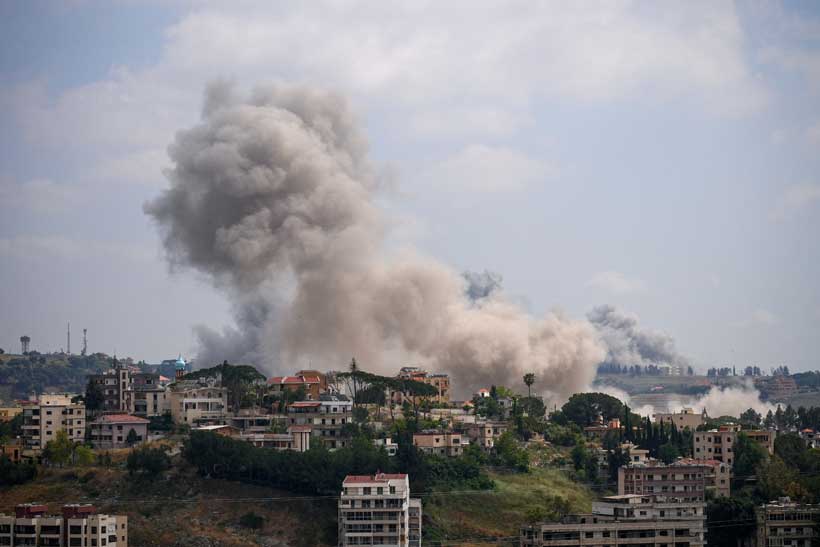
U.S. President Donald Trump said the recently announced ceasefire agreement between the United States and Iran is not yet a final deal and warned that Washington could resume military action if Tehran fails to comply with its commitments. His comments came as Israel launched fresh airstrikes in southern Lebanon, where tensions remain high despite efforts to de escalate the broader regional conflict. The remarks coincided with the G7 summit in France, where leaders welcomed the U.S. Iran agreement and called for an immediate ceasefire in Lebanon. The deal is expected to create a 60 day window for negotiations aimed at reaching a more permanent settlement between Washington and Tehran.
Why It Matters
The developments highlight how fragile the current ceasefire remains. While the agreement has eased immediate fears of a wider Middle East war and helped calm global energy markets, continued fighting in Lebanon threatens to undermine diplomatic progress. Any collapse of the ceasefire could reignite regional tensions, disrupt critical energy shipping routes, and create fresh uncertainty for global markets. The success or failure of the agreement will also shape future negotiations over Iran’s nuclear programme and broader regional security arrangements.
Stakeholding
The main stakeholders include the United States and Iran, which are leading negotiations over the ceasefire framework and future diplomatic arrangements. Israel and Hezbollah are key actors because ongoing clashes in Lebanon could directly affect the survival of the broader truce. G7 countries have expressed support for the agreement and are expected to play a role in its implementation, particularly regarding maritime security and diplomatic coordination. Gulf states, global energy producers, shipping companies, and international investors also have a strong interest in the outcome because stability in the region affects oil supplies, trade routes, and economic confidence.
Future outlook
The ceasefire framework is expected to be formally signed and followed by intensive negotiations on a permanent agreement. Discussions are likely to focus on Iran’s nuclear activities, sanctions relief, regional security concerns, and mechanisms to ensure compliance. At the same time, developments in Lebanon will be closely monitored, as continued Israeli and Hezbollah exchanges could become the biggest threat to the diplomatic process. While the agreement has created an opportunity for de escalation, its long term success will depend on whether negotiators can address the deeper political and security disputes that continue to fuel instability across the Middle East.
Stay ahead of the geopolitical week.
MD Briefing delivers expert analysis across five global fronts — the Indo-Pacific, energy, geoeconomics, European security, and the Middle East — every Monday morning. Free.
With information from Reuters.
