


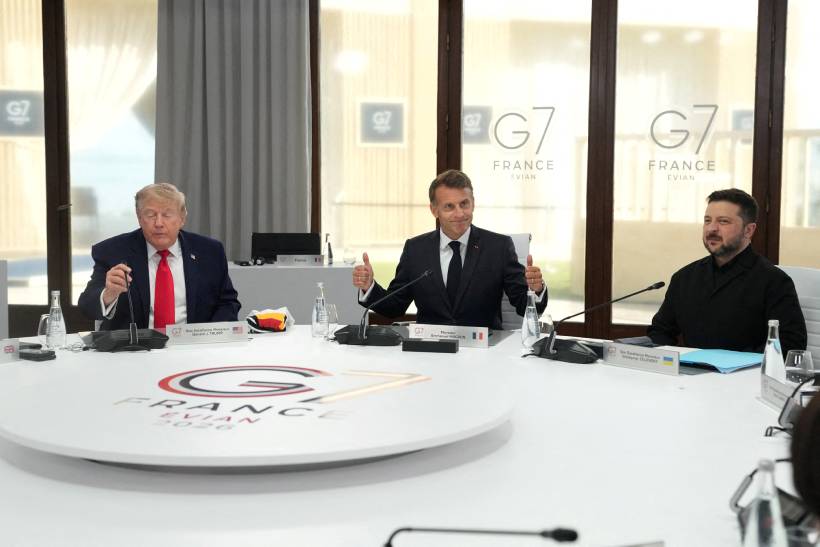
At the G7 summit in Evian les Bains, France, leaders reaffirmed their united support for Ukraine, emphasizing its territorial integrity and agreeing to increase economic pressure on Russia through expanded sanctions.
The joint statement came amid ongoing conflict between Ukraine and Russia and reflects renewed coordination among major Western economies despite occasional differences in approach, particularly from the United States.
The summit also followed recent diplomatic developments, including discussions between U.S. President Donald Trump and Ukrainian President Volodymyr Zelenskiy, which raised cautious hopes for potential future peace negotiations.
Key Decisions on Ukraine
G7 leaders agreed to:
Stay ahead of the geopolitical week.
MD Briefing delivers expert analysis across five global fronts — the Indo-Pacific, energy, geoeconomics, European security, and the Middle East — every Monday morning. Free.
- Maintain strong political and military support for Ukraine
- Reinforce sanctions targeting Russia
- Support Ukraine’s position in potential peace talks
- Condemn continued Russian military aggression
The statement signals that Western allies remain aligned on sustaining pressure on Moscow while keeping diplomatic channels open.
Energy Security and Hormuz Lessons
Leaders also addressed energy security concerns following recent global disruptions linked to instability around the Strait of Hormuz.
Plans were discussed to:
- Diversify global energy supply routes
- Reduce dependence on vulnerable shipping corridors
- Increase strategic energy reserves across G7 economies
These measures reflect broader concerns about energy market stability after recent geopolitical shocks.
Critical Minerals and Economic Security
A major focus of the summit was reducing dependency on China for critical minerals used in energy, defense, and technology sectors.
Discussions included:
- Expanding domestic mining and processing capacity
- Building alternative supply chains outside China
- Introducing subsidies and price support mechanisms
- Encouraging private investment in strategic materials
The push comes amid rising concern over China’s control of rare earth exports and its influence over global supply chains.
Trade Tensions With China
G7 leaders also discussed global trade imbalances, particularly with China.
Key concerns include:
- Large trade surpluses in China’s favor
- Overcapacity in Chinese manufacturing
- Pressure on Western industries from low cost exports
- Calls for stronger trade defense tools in Europe and the United States
France has led calls for “economic sovereignty” measures aimed at reducing dependence on Chinese imports in sensitive sectors.
AI Governance and Technology Risks
The summit also included discussions on artificial intelligence, focusing on:
- Regulation of AI systems and agents
- Accountability for AI generated content
- Risks of misinformation and system errors
- The role of major AI companies in global governance
Leaders were joined by senior figures from the AI industry, highlighting the growing geopolitical importance of artificial intelligence.
Why It Matters
The G7 summit highlights a broader shift toward coordinated economic and security strategies among leading democracies.
Key implications include:
- Continued Western alignment on Ukraine policy
- Increased long term pressure on Russia’s economy
- Intensifying competition with China in trade and technology
- Greater focus on supply chain security and energy independence
- Rising role of AI governance in global policymaking
Analysis: G7 Is Moving From Crisis Response to Strategic Economic Bloc Formation
The latest G7 summit shows a shift beyond immediate crisis management toward longer term structural competition with global rivals.
On Ukraine, the unity of the statement suggests that despite political differences, especially within the United States, G7 members still see sustained pressure on Russia as essential for shaping the outcome of the war and any future peace process. The coordination also strengthens Ukraine’s negotiating position, even as battlefield dynamics continue to evolve.
At the same time, the focus on energy security and critical minerals reveals a deeper strategic concern: vulnerability in global supply chains. Recent disruptions in energy markets and China’s dominance in rare earth processing have reinforced the perception that economic security is now inseparable from national security.
The discussions on China reflect this shift clearly. Rather than isolated trade disputes, G7 leaders are increasingly framing economic relations with Beijing in systemic terms, focusing on overcapacity, supply chain dependence, and industrial policy competition. However, implementing coordinated countermeasures will remain difficult given differing national priorities among G7 members.
The inclusion of artificial intelligence in the summit agenda further signals that technology governance is becoming a central pillar of geopolitical strategy. As AI capabilities expand, control over standards, regulation, and infrastructure is likely to become as important as traditional military or trade power.
Overall, the G7 is evolving from a reactive forum into a more coordinated economic and geopolitical bloc, but its effectiveness will depend on how consistently members can align their domestic interests with collective strategic goals.
Stakeholders
- G7 member countries
- Ukraine and Russia
- United States under President Donald Trump
- European Union economies
- China and global supply chain partners
- Energy exporters and importers
- Technology and AI companies
- Global financial and security institutions
What Is Next
Attention will now turn to how quickly G7 countries translate commitments into concrete sanctions and policy measures against Russia. Ukraine is expected to continue pushing for stronger security guarantees as discussions around potential peace talks develop.
In parallel, follow up negotiations on critical minerals, energy diversification, and AI governance are likely to continue beyond the summit, with early proposals expected to shape future trade and industrial policy across G7 economies.
With information from Reuters.
