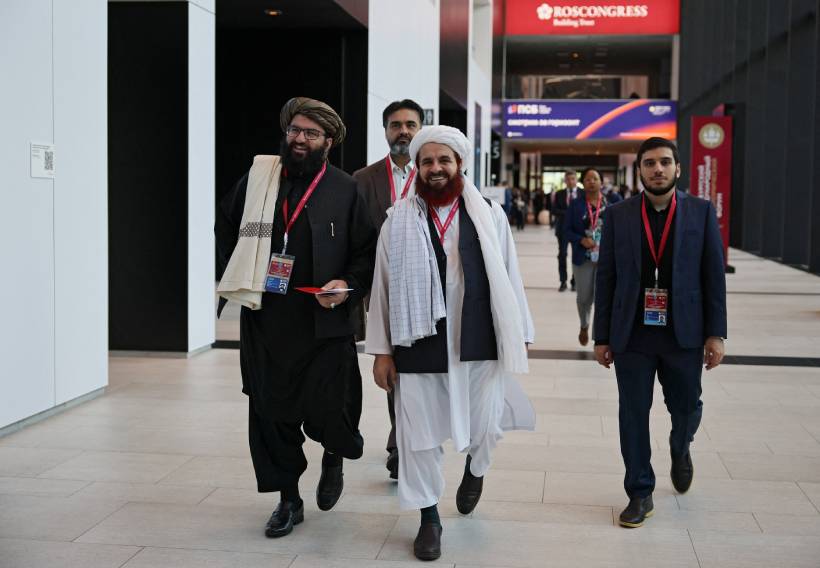
Russia’s May 2026 military-technical cooperation agreement with Afghanistan’s Taliban government represents a calculated geopolitical calculation rather than ideological alignment. Russia became the first country to sign a military cooperation agreement with the Taliban-led government in Afghanistan, marking a major shift in regional diplomacy and security dynamics, and Russia is the only country that has formally recognized the Taliban as Afghanistan’s legitimate government, doing so in 2025. This extraordinary diplomatic move recognizing a regime widely documented as authoritarian and repressive reflects Moscow’s assessment that Taliban cooperation offers strategic benefits offsetting significant risks. Understanding this engagement requires examining the security logic driving Russian decisions rather than dismissing the partnership as irrational.
The ISIS-K Imperative: Real Threat Driving Policy
Russia’s Taliban engagement fundamentally derives from a documented security threat that cannot be dismissed as speculative. Moscow is particularly concerned about the threat posed to Russia and Central Asia by militant groups such as Islamic State Khorasan (IS-K). The Afghanistan-based extremist group claimed responsibility for a March 2024 assault on a packed concert venue outside Moscow that killed nearly 150 people, the deadliest attack in Russia in two decades.
This attack represents the most consequential terrorist strike in Russia since the Beslan school siege. The Crocus City Hall bombing demonstrated that ISIS-K possesses operational capability to strike Russian territory and that Afghanistan-based extremist networks pose direct threats to Russian security. An important motive behind Moscow’s recognition of the Taliban, in fact, was explicitly the Kremlin’s hope for cooperation with the group in countering ISKP, which has been attempting to expand into the post-Soviet space.
From this perspective, Taliban engagement reflects rational threat assessment. Regardless of Taliban governance characteristics, if the organization possesses capacity to suppress ISIS-K and limit its operational freedom, the security calculus favors cooperation. The Russian security establishment’s explicit linking of Taliban engagement to ISIS-K containment suggests this is not peripheral motivation but central strategic rationale.
Stay ahead of the geopolitical week.
MD Briefing delivers expert analysis across five global fronts — the Indo-Pacific, energy, geoeconomics, European security, and the Middle East — every Monday morning. Free.
The Delisting Strategy: Legal Infrastructure for Cooperation
A critical procedural step underscores Russia’s deliberate strategic shift. The delisting of the Taliban as a terrorist organisation in April 2025 was, in part, a precondition for this cooperation, removing the legal and institutional obstacles to formalised intelligence sharing and joint security operations. On April 17, 2025, the Supreme Court officially removed the Taliban from the list of terrorist organizations.
This delisting represents institutional recalibration Russia modified its own legal framework to enable Taliban cooperation. The procedural specificity suggests deliberation rather than impulsive policy. Removing Taliban from terrorism lists eliminated legal barriers to intelligence sharing, military coordination, and formal diplomatic recognition. The legal transformation preceded military cooperation, indicating Moscow anticipated formal engagement.
The Strategic Logic: Afghanistan as Buffer and Containment Zone
Russia’s Taliban engagement can be understood as buffer-state strategy combined with containment logic. Following the U.S. withdrawal from Afghanistan in August 2021 and the Taliban’s return to power, Russia was among the few countries that kept its embassy in Kabul operational, indicating sustained commitment despite Taliban’s international pariah status.
From Russia’s geopolitical perspective, Taliban control of Afghanistan offers several strategic advantages: First, Taliban governance prevents state collapse that could create ungoverned space enabling extremist proliferation. Second, Taliban—notwithstanding human rights violations—has capacity to exercise territorial control that Western-backed governments could not sustain. Third, a Taliban government aligned with Russian interests serves as buffer against Western military influence expanding into Russia’s strategic backyard (Central Asia).
The logic parallels Russia’s engagement with other controversial partners: maintaining diplomatic relationships with actors offering strategic utility despite moral or political objections. The calculation prioritizes security and geopolitical positioning over governance standards.
Inherent Contradictions: Security Warnings Alongside Cooperation
Critically, Russia’s engagement strategy contains significant contradictions that analysts cannot fully resolve. Russian security officials have repeatedly warned of terrorist threats emanating from Afghanistan even as Moscow deepens Taliban cooperation. Shoigu stated that between 18.000 and 23.000 fighters linked to more than 20 armed groups are operating in Afghanistan a formulation acknowledging that Taliban governance encompasses territory hosting substantial terrorist infrastructure.
This contradiction warning of terrorist dangers while cooperating with the regime hosting them is not inconsistency but rather reflects a fundamental dilemma Russia faces: Taliban control over Afghanistan is preferable to alternatives (state collapse, Western influence, unconstrained extremism), even though Taliban governance of territory containing significant terrorist presence creates inherent risks. Russia appears to be betting that Taliban cooperation reduces these risks more than cooperation absence would.
Scope Ambiguity: What the Agreement Actually Encompasses
A critical analytical gap constrains understanding the engagement’s ultimate significance. Neither side has released the text of the military cooperation agreement or offered details about its scope, making it difficult to gauge whether the deal represents a substantive shift in military cooperation or a symbolic political gesture. Some analysts downplayed the immediate impact of the agreement, describing it as a symbolic effort by Moscow to formalize its relationship with Kabul on paper rather than the start of a deep partnership.
Without agreement details, assessment of actual military cooperation remains speculative. The agreement could represent substantive weapons transfers, intelligence cooperation, and joint operations, or it could constitute diplomatic formalization lacking operational substance. Experts said the level of military cooperation agreed by the two countries remains to be seen, and does not necessarily mean the Taliban will send troops in the same way North Korea has. “Russia cannot expect any significant help from the Taliban – in terms of weapons or troops. In the absence of any detail on the agreement terms, it is actually hard to say what Russia can get from Afghanistan”.
Regional Implications and Taliban Leverage
Russia’s Taliban engagement carries significant implications for Central Asia and neighboring states. In 2024, President Vladimir Putin called the Taliban “allies in the fight against terrorism”, signaling that Moscow views the partnership through anti-terrorism framing rather than legitimacy validation.
However, Taliban engagement potentially strengthens the organization’s international position providing diplomatic recognition and material support that enhance Taliban leverage regionally. For Central Asian states (Kazakhstan, Uzbekistan, Tajikistan, Kyrgyzstan) concerned about Taliban-harbored extremist groups, Russian-Taliban cooperation creates ambiguity about whether Russia prioritizes counterterrorism or great power positioning.
China and Central Asian states maintain diplomatic ties with Taliban without formal recognition, suggesting they may view Russia’s deeper engagement with concern. The engagement could either enhance regional stability through coordinated counter-terrorism or deepen Taliban’s international legitimacy in ways that strengthen the organization’s regional position.
Conclusion: Calculated Risk in Unstable Environment
Russia’s Taliban engagement reflects rational strategic calculation acknowledging documented ISIS-K threats while pursuing engagement with the only organization capable of governing Afghanistan. The decision to formally recognize Taliban and sign military cooperation agreements represents deliberate policy choice, not accident or misunderstanding.
However, the strategy carries substantial risks: Taliban governance of territory hosting 18,000-23,000 terrorists means cooperation does not eliminate extremist threats but rather bets that Taliban shares Russian counter-terrorism interests. The scope ambiguity lack of public details about actual cooperation terms prevents definitive assessment of whether the partnership represents substantive defense coordination or political formalization.
Russia’s gamble appears to be: Taliban cooperation reduces ISIS-K threats and prevents Western military return to Afghanistan at acceptable cost of legitimizing an authoritarian regime. Whether this calculation proves strategically sound will depend on Taliban’s actual willingness and capacity to suppress Afghan-based extremism, variables that will likely not become clear for years. The engagement represents geopolitical pragmatism confronting inherent contradictions and risks.