


The 2026 G7 summit in France opens at a pivotal moment for the international system. Leaders arrive facing a series of interconnected crises, including the aftermath of the Iran conflict, the continuing war in Ukraine, growing trade disputes, and intensifying competition with China.
Unlike previous summits focused on building consensus among Western allies, this gathering is overshadowed by questions about the cohesion of the group itself.
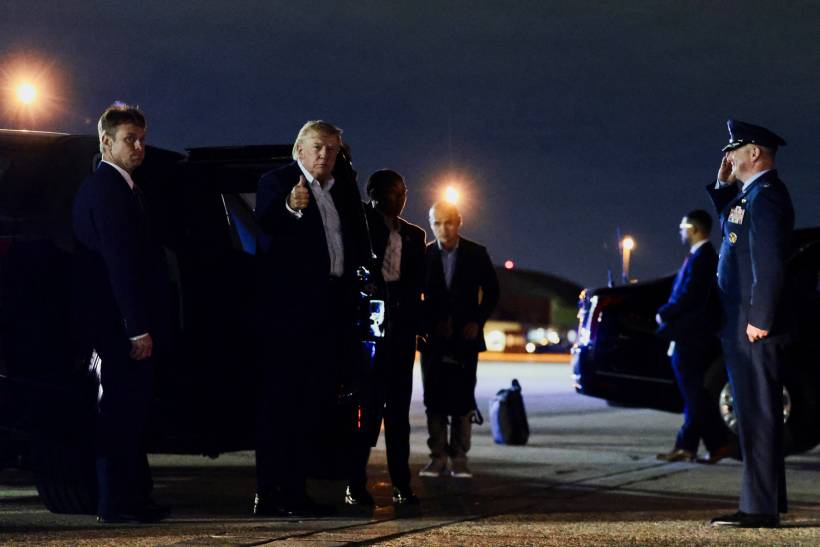
Much of that uncertainty stems from President Donald Trump’s increasingly confrontational approach to trade and diplomacy, which has repeatedly placed Washington at odds with its traditional partners.
Trump’s Tariff Threat Reignites Trade Tensions
Even before arriving in France, Trump escalated tensions by threatening 100% tariffs on French wine unless Paris abandons its digital tax on major American technology companies.
Stay ahead of the geopolitical week.
MD Briefing delivers expert analysis across five global fronts — the Indo-Pacific, energy, geoeconomics, European security, and the Middle East — every Monday morning. Free.
The warning underscores how trade disputes remain a major source of friction within the G7 despite shared concerns about broader geopolitical challenges.
For European leaders, the threat reinforces concerns that Washington continues to view economic relationships through a transactional lens, even with close allies.
For the Trump administration, however, digital taxes are seen as discriminatory measures targeting American firms, making the issue part of a broader push to reshape global trade rules.
The dispute risks diverting attention from areas where cooperation is urgently needed.
Iran Agreement Changes the Diplomatic Landscape
The recently announced U.S.-Iran framework agreement has transformed the summit’s agenda.
Before the deal, concerns about regional escalation and energy security dominated international discussions. Now, leaders are likely to focus on implementation, verification and the next phase of negotiations.
The reopening of the Strait of Hormuz could reduce pressure on global energy markets and ease inflation concerns, offering economic relief to many G7 economies.
However, major questions remain unresolved, including Iran’s nuclear program, sanctions relief and regional security arrangements.
Leaders will seek clarity on whether the agreement represents a durable diplomatic breakthrough or merely a temporary pause in hostilities.
Ukraine Risks Losing Diplomatic Attention
While Ukraine remains a priority issue, the diplomatic spotlight has increasingly shifted toward the Middle East.
President Volodymyr Zelenskiy is expected to push for continued military and financial support during meetings with G7 leaders.
However, the emergence of the Iran agreement and broader geopolitical concerns could complicate efforts to keep Ukraine at the center of international attention.
For Kyiv, maintaining Western unity remains critical as the conflict enters another prolonged phase.
Although Russian advances have slowed, Ukraine continues to depend heavily on allied assistance.
The summit will reveal whether support for Ukraine remains as strong as it was in previous years.
Critical Minerals and China Challenge Western Coordination
Beyond immediate security concerns, G7 leaders are expected to address a longer-term strategic challenge: reducing dependence on China for critical minerals.
These materials are essential for advanced technologies, defense industries, renewable energy systems and semiconductor production.
Western governments increasingly view supply-chain resilience as a national security issue.
However, disagreements remain over how aggressively governments should intervene in markets, subsidize production, or coordinate industrial policies.
The debate reflects a broader struggle to balance economic competitiveness with strategic autonomy.
Macron’s Final Global Stage
For French President Emmanuel Macron, the summit carries particular significance.
With his presidency entering its final phase, the gathering serves as an opportunity to shape discussions on global economic governance, European strategic autonomy and multilateral cooperation.
Macron has attempted to position France as a bridge between competing interests within the Western alliance.
The summit offers one of his final opportunities to influence the international agenda before leaving office.
His ability to manage tensions between Washington and European partners may become one of the defining measures of the summit’s success.
Why This Matters
The G7 summit comes at a moment when the international order is undergoing significant stress.
Several key questions will shape discussions:
- Can Western allies maintain unity despite growing trade disputes?
- Will the U.S.-Iran agreement produce lasting regional stability?
- How can support for Ukraine be sustained amid competing global crises?
- Can the West reduce strategic dependence on China without damaging economic growth?
- Is the G7 still capable of coordinating responses to major global challenges?
The answers will influence not only relations among advanced economies but also broader global stability.
Key Stakeholders
- United States
- France
- United Kingdom
- Germany
- Italy
- Canada
- Japan
- European Union
- Ukraine
- Iran
- China
- Gulf states
- Global energy markets
- International investors
- Technology and manufacturing industries
What to Watch Next
- Outcomes of Trump’s meetings with European leaders.
- Discussions surrounding implementation of the U.S.-Iran agreement.
- Commitments on military and financial support for Ukraine.
- Progress on critical minerals cooperation.
- Any escalation of trade disputes involving tariffs and digital taxes.
- Joint statements revealing the level of consensus among G7 members.
The summit will provide an important test of Western cohesion at a time when geopolitical pressures are mounting on multiple fronts.
A successful gathering could reinforce coordination on security, trade and economic resilience while providing momentum for diplomacy in both Ukraine and the Middle East.
However, persistent disagreements over tariffs, industrial policy and global governance could expose deeper fractures within the alliance.
As global power competition intensifies and crises become increasingly interconnected, the ability of G7 nations to act collectively may prove just as important as the specific policies they adopt.
Analysis
This G7 summit is less about producing major breakthroughs and more about assessing the health of Western unity.
The Iran agreement has temporarily reduced one source of international instability, but it has not eliminated broader strategic disagreements among allies. Trade tensions, differing approaches toward China and varying priorities on security issues continue to test the cohesion of the group.
Trump’s tariff threat against France is particularly revealing because it demonstrates how bilateral economic disputes can quickly complicate multilateral diplomacy. While leaders broadly agree on the need to address challenges posed by China, support Ukraine and stabilize the Middle East, they remain divided on how costs and responsibilities should be shared.
The summit therefore highlights a broader transformation in global politics. The G7 is no longer a forum where consensus can be assumed. Instead, it has become a venue where allies negotiate increasingly divergent interests while attempting to preserve a common strategic framework.
The success of the summit will ultimately be measured not by ambitious declarations but by whether leaders can prevent those differences from undermining collective action on the issues that matter most.
With information from Reuters.
