


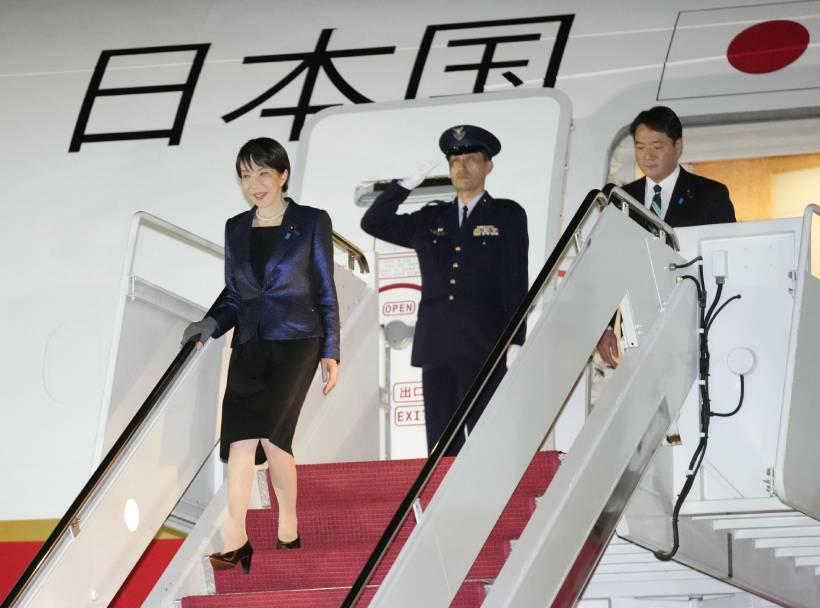
On August 4, 2026, the administration of Japanese Prime Minister Sanae Takaichi released the Defense White Paper. The event represents not merely a routine policy step but also reflects a consistent series of measures aimed at preparing for a confrontation scenario amid fundamental changes in which conflict is becoming a “new normal” in international relations, as China intensifies confrontational activities that further complicate the situation in the Indo-Pacific region.
Paving the Way for the Defense White Paper
Since Xi Jinping became China’s paramount leader, China has rapidly consolidated its influence across approximately 150 countries and territories through the Belt and Road Initiative (BRI). Meanwhile, the United States, including during the two periods in which Donald Trump held the presidency, has been significantly weakened by its geographically dispersed engagements. The “hub-and-spokes” model, which traditionally revolved around the United States, has now evolved into a model in which the spokes themselves have become interconnected nodes that help reinforce Washington’s position.
For Japan, the weakening of the United States has compelled the country, including the administration of Prime Minister Sanae Takaichi, to seek greater influence and strengthen its position in response to China’s expanding influence and increasingly negative actions. After taking office, Prime Minister Sanae Takaichi affirmed that Taiwan’s security has a direct bearing on Japan’s survival. Invoking such circumstances could potentially trigger Japan’s right of collective self-defense, which the country has sought to adjust since the administration of the late Prime Minister Shinzo Abe. This statement strengthened the possibility of Japanese involvement in defending Taiwan against Chinese actions. To enhance the operational capabilities of the Japan Self-Defense Forces, Tokyo and Washington adjusted their respective roles and enhanced the synchronization of U.S.-Japan operational forces through the newly established JJOC in November 2025.
According to Secretary Pete Hegseth, the establishment of the joint operational force would “enhance the ability to respond to any contingency, support U.S. operations, and help Japanese and American forces defend [Japan’s] territory.” This can be seen as a move that provides Japan with greater legitimacy to implement direct and concrete measures. At the same time, it reflects changes in the traditional “hub-and-spokes” model employed by U.S. policymakers. The adoption of the Defense White Paper on August 4, 2026, represents a move to strengthen the legitimacy of the Japanese government under Prime Minister Sanae Takaichi at a time when China is seeking to reduce the incentives for the United States and its allies to become involved in the Taiwan Strait through forces under the Ministry of Transport, employing approaches/doctrines of “administrativization” and “localization”.
Stay ahead of the geopolitical week.
MD Briefing delivers expert analysis across five global fronts — the Indo-Pacific, energy, geoeconomics, European security, and the Middle East — every Monday morning. Free.
The Defense White Paper and Four Key Priorities
The Defense White Paper released by the government of Prime Minister Sanae Takaichi on August 4, 2026, identifies four key issues: (1) the increasingly close relationship among China, Russia, and North Korea; (2) Japan’s three approaches to responding to the security environment; (3) the mutually reinforcing relationship among the economy, security, and technology; and (4) the issue of securing human resources. Although these four issues may initially appear unrelated, they are in fact closely interconnected.
When the regional and international environment changes (as identified in the first point), Japan has three approaches through which it can respond in order to safeguard its national interests and security. However, to ensure a sustained response, Japan must secure its domestic economic and technological foundations so as to avoid being placed in a passive position. In order to intervene effectively in emerging situations, priority must also be given to the living conditions and welfare of service members and their families so that personnel remain motivated to perform their duties. It can therefore be seen that the Japanese government under Prime Minister Sanae Takaichi has adopted a broader approach. In the past, defense capability was often understood primarily in terms of operational capacity and military power. Under the current Defense White Paper, however, defense constitutes an integrated component of overall national power. This demonstrates that Japan’s ability to ensure its security no longer depends entirely on military power but also on logistical capabilities, including economic strength, the level of scientific and technological development, the industrial base, and the ability to sustain human resources.
These fundamental changes stem from the increasingly complex security environment in Northeast Asia and the Indo-Pacific. China continues to serve as a major driver behind Japan’s efforts to undertake necessary reforms. Meanwhile, Russia continues to maintain substantial military capabilities in the Far East, placing Japan in a state of heightened security readiness. North Korea, meanwhile, continues to conduct weapons tests in the waters of the East China Sea as a form of deterrence against Japan and the United States. Most importantly, the Japanese government under Prime Minister Sanae Takaichi has recognized the close interconnections within the Russia-China-North Korea strategic triangle. These three actors create pressure for Japan to pursue a flexible, multidirectional balancing strategy as Tokyo simultaneously considers responses in the East China Sea and the Taiwan Strait (in relation to China), as well as on the Korean Peninsula and in Japan’s northern approaches (in relation to Russia).
Against this backdrop, Japan’s three approaches to achieving its defense objectives can be viewed as three mutually reinforcing layers of response. The first is to strengthen Japan’s own defense architecture, thereby enhancing its capacity for self-defense in crisis situations. The second is to continue strengthening the deterrence and response capabilities of the Japan-U.S. alliance. The third is to expand cooperation with like-minded countries in order to establish a broader security network. These three approaches demonstrate that Tokyo simultaneously emphasizes its indigenous capabilities, continues to rely on its alliance with the United States, and seeks to expand its strategic space through a network of partners. This three-pronged structure was also established in Japan’s National Defense Strategy.
However, Japan’s ability to sustain these three approaches depends significantly on its domestic capabilities. This is precisely where the relationship between defense, the economy, and technology becomes important. A sufficiently strong economy enables Japan to maintain the resources required for defense; conversely, defense investment can generate additional demand for manufacturing, scientific research, and high-technology industries. Notably, the 2026 Defense White Paper emphasizes the potential for defense investment to serve as a driver of technological innovation, support start-ups, and strengthen Japan’s domestic manufacturing base. The Japanese government has simultaneously sought to make greater use of civilian technologies and commercial components in the production of defense equipment.
Accordingly, the relationship among the economy, technology, and defense is no longer simply a one-way relationship in which the economy provides financial resources for the military. Instead, the three elements are developing a mutually reinforcing relationship: the economy provides resources for defense; defense requirements stimulate technological research and application; and the development of technology and the defense industry can, in turn, generate spillover effects for the broader economy. This partly explains why the Takaichi administration places economic, technological, defense, information, and human-resource capabilities within the same framework of “comprehensive national power.”
Human resources constitute the final link in this chain but are simultaneously among the greatest challenges facing the overall structure. Amid population decline and intensifying competition for labor, maintaining sufficient personnel for the Self-Defense Forces has become a long-term challenge. Consequently, improving salaries, working conditions, living conditions, and benefits for service members carries significance beyond welfare considerations and is directly related to Japan’s ability to sustain its defense capabilities. Prime Minister Takaichi has identified Self-Defense Forces personnel as the foundation of Japan’s defense capabilities and has incorporated improvements in personnel treatment and working conditions into the broader process of strengthening national defense.
Notably, the human-resource issue is also directly connected to technology. The development of artificial intelligence, autonomous systems, and unmanned platforms is intended not only to adapt to modern forms of warfare but also to compensate for human-resource constraints arising from demographic change. The 2026 Defense White Paper places particular emphasis on unmanned systems as Japan simultaneously adapts to changes in warfare and a declining population. Human-resource constraints therefore create additional incentives for technological innovation; technological advancement subsequently stimulates industrial development; while the economic and industrial foundations determine Japan’s ability to sustain that innovation.
From this perspective, the four seemingly separate issues contained in the 2026 Defense White Paper can in fact be understood as a unified chain of interconnected factors: (1) changes in the security environment create the need to adjust response mechanisms; (2) those response mechanisms require a sufficiently strong economic and technological foundation; while (3) both military capabilities and economic-technological capabilities ultimately depend on the ability to maintain and effectively utilize (4) human resources.
Preparing for a Protracted Conflict Scenario
The interconnections among the four priorities outlined above reveal a noteworthy development in Japan’s defense thinking. Tokyo is preparing not only for the capability to respond to the outbreak of conflict but also for the ability to sustain its response should a conflict become prolonged. This distinction is important because the capability to gain an advantage during the initial phase of a conflict and the capability to sustain national power over an extended period entail different requirements. In the latter case, the quantity and quality of military equipment constitute only one component of national capability; production capacity, the ability to replenish equipment, supply-chain resilience, the availability of human resources, and the endurance of the economy also become decisive factors.
The experience of the Russia-Ukraine conflict has highlighted this issue. A conflict between states possessing substantial military capabilities may not end as quickly as initially anticipated but can instead evolve into a prolonged process of attrition involving weapons, economic resources, production capacity, and human resources. At the same time, the large-scale deployment of UAVs and relatively low-cost weapons demonstrates that technological superiority does not depend solely on possessing a limited number of advanced military platforms, but also on the ability to continuously produce, replenish, and improve them throughout the course of a conflict.
These lessons are particularly important for Japan. As an island nation that depends significantly on maritime transportation routes and international supply chains, a prolonged crisis in East Asia could simultaneously affect both military operations and the economy. If transportation routes are disrupted or supply chains for strategic products are affected, Japan’s defense capabilities could likewise be adversely impacted. Ensuring economic security and supply-chain resilience therefore becomes part of defense preparedness rather than remaining exclusively an issue of economic policy.
This explains why strengthening the defense industrial base has become increasingly important. In a short-term conflict, existing stockpiles may be sufficient to meet part of the operational demand. However, as a conflict becomes prolonged, the ability to repair, manufacture, and replenish equipment will directly affect the capacity to sustain broader operations. U.S. policy documents have recognized the role of domestic industrial development, particularly the defense industry. Therefore, Tokyo’s efforts to promote its defense industry, expand the application of civilian technologies, support corporate participation in defense supply chains, and strengthen production cooperation with partner countries serve not only to modernize its forces during peacetime but also to develop the capacity to sustain warfare in the event of a prolonged crisis or conflict.
Unmanned technologies can be understood according to the same logic. The large-scale deployment of UAVs, unmanned surface vessels, and unmanned underwater vehicles allows Japan both to supplement its operational capabilities and to reduce its dependence on high-value manned platforms. Given that the human resources available to the Self-Defense Forces are constrained by demographic decline, automation and artificial intelligence also enable Tokyo to maintain or expand its operational capabilities without necessarily increasing the number of military personnel proportionately.
Technology, however, cannot entirely replace the human factor. A prolonged conflict would impose significant pressure on service members and their families, particularly as deployment periods become longer and the operational tempo increases. Improving salaries, living conditions, the working environment, and support policies for military families therefore serves purposes beyond enhancing welfare. Such policies also contribute to maintaining recruitment, personnel retention, and long-term force readiness. From this perspective, human-resource policy becomes an integral component of the capacity to sustain national defense.
The Japan-U.S. alliance and Japan’s network of partner countries should also be considered from a similar perspective. In a prolonged crisis, Japan would find it difficult to sustain all necessary capabilities solely through its own resources. Access to logistics, intelligence, technology, equipment, and the production capabilities of the United States and other partner countries therefore matters not only for deterrence before a conflict occurs but also for Japan’s ability to sustain its response after a crisis has begun.
Three layers of preparation can therefore be identified as gradually taking shape. The first layer is military capability, including defense, counterstrike capabilities, operational command, and new means of warfare. The second layer is sustainment capability, encompassing the economy, industry, technology, logistics, and human resources. The third layer is external support capability, based on the Japan-U.S. alliance and Japan’s network of partner countries. These three layers enable Japan to move beyond the basic requirement of “responding to conflict” toward preparing for the ability to “sustain its response during conflict.”
Accordingly, the significance of the 2026 Defense White Paper does not necessarily lie in the emergence of individual policies, as many of these measures had already begun to take shape in previous years. More importantly, military, economic, technological, industrial, and human-resource factors are increasingly being incorporated into an interconnected structure. This reflects an understanding that, in the new security environment, deterrence is determined not only by the ability to impose costs on an adversary but also by the ability to demonstrate that Japan possesses sufficient resources and political will to sustain its response should a confrontation become prolonged.
If this approach continues to be institutionalized through the revision of Japan’s three strategic documents, 2026 could become an important milestone in Tokyo’s transition from preparing primarily for the possibility of conflict toward developing national capabilities capable of enduring and sustaining a response throughout a prolonged crisis. In this sense, the 2026 Defense White Paper not only reflects Japan’s assessment of present challenges but also reveals how Tokyo is preparing for the characteristics of conflicts that may emerge in the future.
Conclusion
Japan’s 2026 Defense White Paper was released against the backdrop of an increasingly complex security environment in Northeast Asia and the Indo-Pacific. Growing cooperation among China, Russia, and North Korea, changes in the conduct of warfare, the rapid development of military technologies, and demographic constraints are compelling Japan to continue adjusting its approach to national security. Against this backdrop, the Defense White Paper not only reflects Tokyo’s perception of the security environment but also demonstrates how Japan is preparing the resources required to respond to uncertain future contingencies.
The four priorities discussed in this article are closely interconnected. Changes in the security environment create a need to strengthen defense capabilities, reinforce the Japan-U.S. alliance, and expand Japan’s network of partner countries. To sustain these measures, Japan must simultaneously strengthen its economic, industrial, scientific, and technological foundations. Human resources, meanwhile, are both a prerequisite for sustaining the operations of the Self-Defense Forces and a factor driving Japan toward greater application of artificial intelligence, automation, and unmanned systems.
What is noteworthy, therefore, is not merely Japan’s strengthening of military power, but also the expansion of the concept of defense capability toward the capacity to mobilize and sustain national power. The economy, technology, industry, logistics, and human resources are increasingly becoming direct components of Japan’s capacity to ensure national security. This approach allows Japan not only to prepare for the moment when a crisis may occur but also to consider how it can sustain its response should a crisis or conflict become prolonged.
Accordingly, the 2026 Defense White Paper can be viewed as one link in Japan’s adaptation to an international environment in which conflict and strategic competition are increasingly at risk of becoming persistent conditions. Preparing for a protracted conflict scenario therefore involves more than acquiring additional weapons or increasing defense expenditure; it entails building the resilience of the entire nation, ranging from military capabilities, the economic-technological foundation, the defense industry, and supply chains to human resources and networks of partners.
In the coming period, the revision of Japan’s security and defense strategic documents will demonstrate the extent to which these orientations are institutionalized as long-term policies. Nevertheless, the contents of the 2026 Defense White Paper already point to a relatively clear trend: faced with an increasingly unpredictable security environment, Japan is seeking to shift from the capability to respond to conflict toward the capability to sustain national power during conflict. This may become one of the defining characteristics of Japan’s defense policy under Prime Minister Sanae Takaichi and in the years ahead.
