


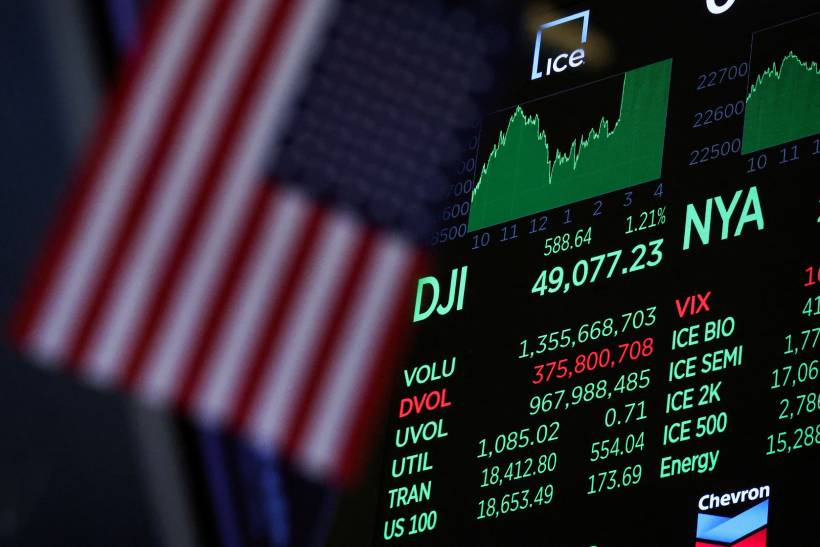
Global financial markets rallied on Friday after U.S. President Donald Trump said a peace agreement with Iran could be signed within days, raising hopes that a three month conflict in the Gulf may be nearing an end. The prospect of a diplomatic breakthrough boosted investor confidence across Asia, Europe, and the United States.
Asian equities recorded strong gains, with South Korea, Japan, Hong Kong, and mainland China leading the advance. Oil prices fell to their lowest levels in two months as traders anticipated reduced risks to energy supplies through the Strait of Hormuz, a critical route for global oil exports.
Meanwhile, investors are closely watching the historic market debut of SpaceX after the company raised a record $75 billion in the largest initial public offering on record.
Why It Matters
The market rally highlights how closely global investors are tracking developments in the Middle East. The Iran conflict has been one of the main drivers of energy price volatility, inflation concerns, and uncertainty surrounding interest rate decisions.
Stay ahead of the geopolitical week.
MD Briefing delivers expert analysis across five global fronts — the Indo-Pacific, energy, geoeconomics, European security, and the Middle East — every Monday morning. Free.
Lower oil prices could ease inflationary pressures that have challenged central banks worldwide. Expectations of a reduced risk of supply disruptions have already led investors to scale back predictions of further interest rate increases, supporting both equity and bond markets.
The reaction also demonstrates the extent to which geopolitical developments can rapidly reshape investor sentiment and economic expectations.
Market Impact
Equity markets benefited from a broad risk on mood as investors moved back into stocks and away from traditional safe haven assets. Bond yields declined, the dollar weakened, and oil prices retreated sharply.
The decline in crude prices is particularly significant because energy costs have been a major contributor to inflation. If Gulf tensions continue to ease, policymakers may face less pressure to tighten monetary policy further.
Key Stakeholders
- Global investors
- United States
- Iran
- Federal Reserve
- European Central Bank
- Energy producers
- Oil importing economies
- SpaceX and technology investors
Future Outlook
Markets remain heavily dependent on whether a formal agreement between Washington and Tehran materializes. While Trump’s comments boosted optimism, Iranian officials have yet to confirm final approval, leaving room for renewed volatility.
A successful agreement could support further gains in global equities, stabilize energy markets, and reduce inflation concerns. However, any collapse in negotiations or renewed military escalation could quickly reverse recent market optimism and send oil prices higher once again.
Investors will also monitor central bank policy signals and the performance of SpaceX’s landmark public debut, both of which could influence market sentiment in the weeks ahead.
With information from Reuters.
