


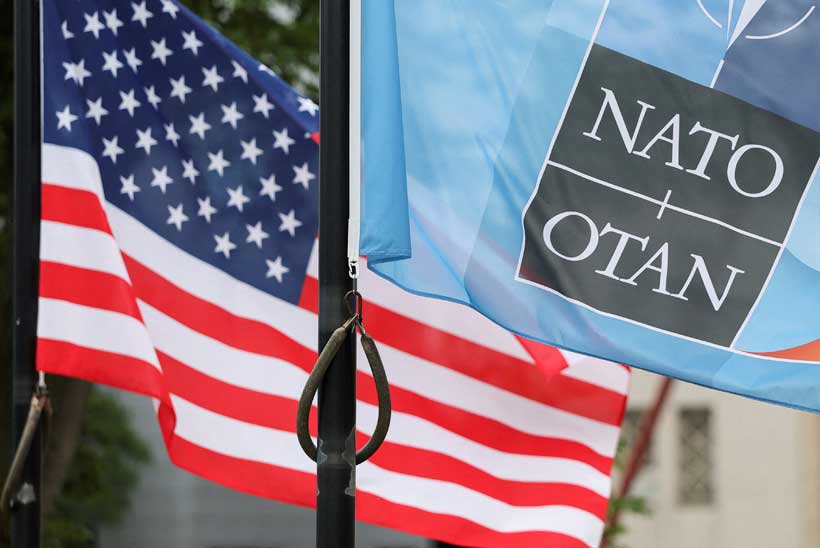
The United States is reportedly preparing a significant reduction in the military assets it allocates to NATO operations in Europe, according to a New York Times report citing senior European officials. The proposed changes include fewer fighter jets, surveillance aircraft, and support capabilities available for alliance missions.
Under the reported plan, the number of U.S. fighter aircraft assigned to NATO operations would be reduced, while maritime reconnaissance assets and aerial refuelling capabilities would also be scaled back. The plan reportedly includes redeploying key naval assets, including an aircraft carrier and a missile launching submarine.
The move follows earlier indications from U.S. military officials that Washington intended to “rightsize” its contributions to NATO’s force structure.
Why It Matters
The reported reductions signal a potential shift in U.S. defence priorities and could accelerate Europe’s push toward greater military self reliance. For decades, NATO’s military effectiveness has depended heavily on American airpower, intelligence, surveillance, logistics, and naval capabilities.
Stay ahead of the geopolitical week.
MD Briefing delivers expert analysis across five global fronts — the Indo-Pacific, energy, geoeconomics, European security, and the Middle East — every Monday morning. Free.
Any reduction in these assets could affect NATO’s ability to respond rapidly to crises, conduct long range operations, and maintain deterrence against potential adversaries. The move also reflects growing pressure from Washington for European allies to assume a larger share of collective defence responsibilities.
Strategic Implications
The proposed cuts align with the Trump administration’s long standing criticism that European governments spend too little on defence while relying disproportionately on U.S. military support.
The changes could encourage NATO members to invest more heavily in advanced aircraft, surveillance systems, missile defence, and naval capabilities. At the same time, they may raise concerns about alliance readiness during a period of heightened geopolitical competition and security challenges.
Key Stakeholders
- United States
- NATO
- European allies
- Donald Trump administration
- U.S. Department of Defense
- Eastern European member states
- Russia
Future Outlook
If implemented, the reductions could reshape NATO’s defence posture and accelerate efforts by European governments to expand military spending and capabilities.
Much will depend on whether allies can fill potential capability gaps left by reduced U.S. contributions. The debate is also likely to feature prominently in future NATO discussions as member states reassess burden sharing and long term security commitments.
The proposal may ultimately mark another step toward a more European led defence framework within the alliance, while preserving U.S. support for major contingencies rather than routine force commitments.
With information from Reuters.
