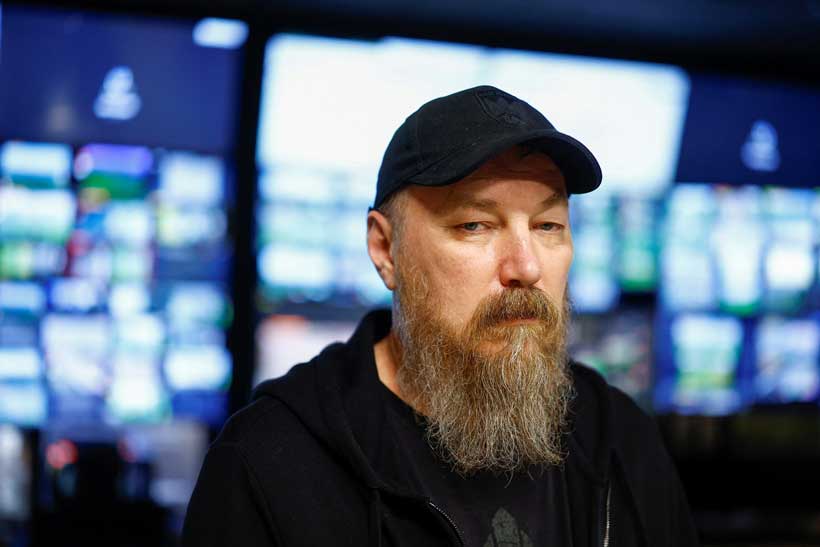
In an underground bunker, Ukraine’s drone forces commander, Robert Brovdi, is analyzing vast amounts of information to plan a campaign aimed at cutting Crimea off from Russia. The increasing drone strikes by Ukraine have disrupted military logistics and fuel supplies in Crimea, which has led to the introduction of fuel rationing there. Brovdi reports that traffic on the Novorossiya highway, a vital Russian military supply route to Crimea, has decreased by over two-thirds due to Ukrainian operations, with expectations of complete control over the road soon. He confidently predicts that Ukraine will isolate Crimea in the near future.
Brovdi describes the ease of attacking vehicles on the exposed highway, and while Russia’s defense ministry did not comment, President Putin acknowledged that Ukraine’s strikes have caused damage but asserted they do not threaten the economy. Military analysts note that Ukraine’s mid-range strikes have disrupted Russian supply lines, slowing their advances and weakening air defenses, which has allowed for longer-range strikes on critical infrastructure. Brovdi aims to create challenging conditions for Russian military personnel, making it difficult for them to remain in occupied territories.
Having transitioned from a grain trader to a military leader, Brovdi has significantly increased the scale of drone operations since taking command last June. The number of combat sorties has skyrocketed, and their effectiveness is demonstrated by the destruction of numerous Russian air defense systems. By targeting key military resources in Russia, Brovdi aims to inflict consequential losses that will diminish Moscow’s capability and desire to continue the conflict. He insists that Ukraine does not target civilians, despite Russia’s accusations.
Drone technology has enabled Ukraine to potentially cut off Crimea, but achieving broader strategic goals will still require ground offensives. Brovdi, who is wanted by Russia for terrorism, leads his air operations from a secure underground location. His unit, formed at the onset of the Russian invasion, has become Ukraine’s most formidable drone brigade, meticulously recording each strike. The command center is equipped with advanced technology to archive terabytes of data for future strategic use.
Brovdi approaches warfare with a business mindset, comparing the military operations to logistical endeavors he previously managed. He aims to reduce human error in warfare through data analysis, reflecting on the high kill rates achieved by his unit that have made significant contributions to reducing Russian troop strength. According to Brovdi, Ukraine’s drone units, which comprise a small fraction of the military, have accounted for about a third of Russian losses in the past year.
Looking ahead, Brovdi plans to expand the drone forces to make up 5% of the army, emphasizing that increasing the use of unmanned aerial vehicles throughout the military will enhance their impact on enemy targets.
With information from Reuters